Pediatric Clinic, Department of Surgical and Biomedical Sciences, Università degli Studi di Perugia, 06123 Perugia, Italy.
Medical Genetics Unit, S. Maria della Misericordia Hospital, and University of Perugia, 06123 Perugia, Italy.
Int J Mol Sci. 2017 Oct 29;18(11):2273. doi: 10.3390/ijms18112273.
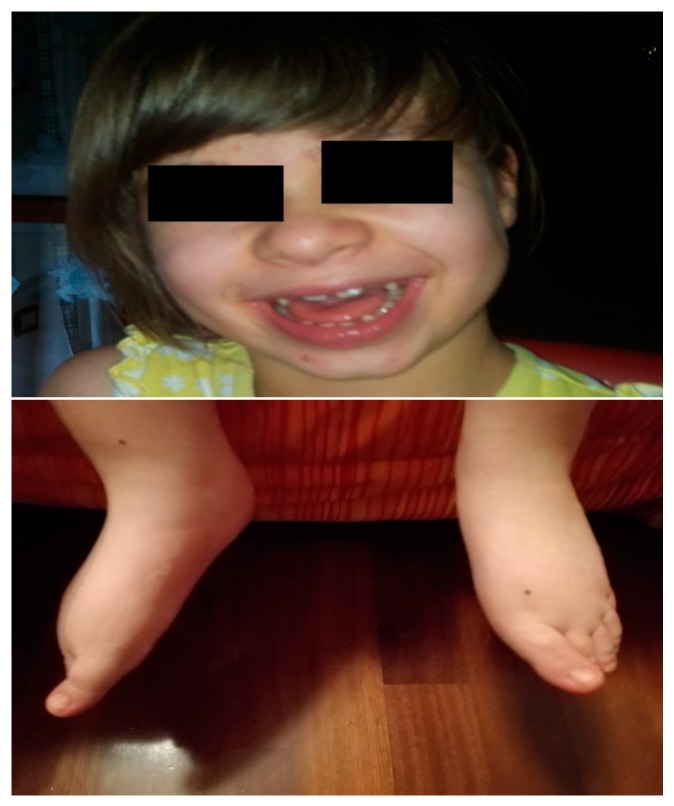
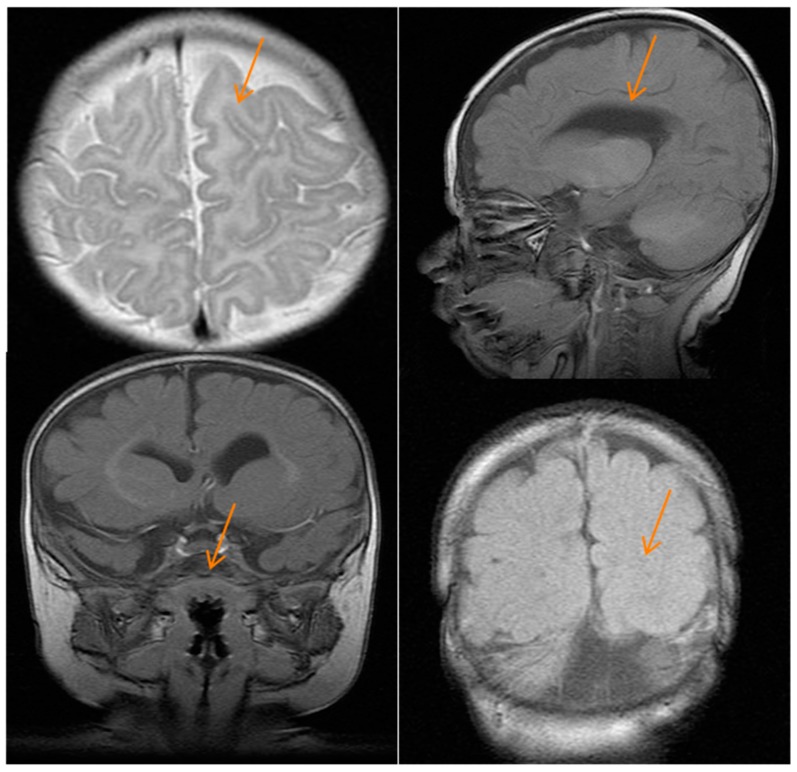
Malformations of the cerebral cortex are an important cause of developmental disabilities and epilepsy. Neurological disorders caused by abnormal neuronal migration have been observed to occur with mutations in tubulin genes. The α- and β-tubulin genes encode cytoskeletal proteins, which play a role in the developing brain. TUBA1A mutations are associated with a wide spectrum of neurological problems, which are characterized by peculiar clinical details and neuroradiologic patterns. This manuscript describes the case of a nine-year-old girl with microcephaly, mild facial dysmorphisms, epileptic seizures, and severe developmental delay, with a de novo heterozygous c.320A>G [p.(His 107 Arg)] mutation in gene, and the clinical aspects and neuroimaging features of "lissencephaly syndrome" are summarized. This case shows that mutations lead to a variety of brain malformations ranging from lissencephaly with perisylvian pachygyria to diffuse posteriorly predominant pachygyria, combined with internal capsule dysgenesis, cerebellar dysplasia, and callosal hypotrophy. This peculiar neuroradiological pattern, in combination with the usually severe clinical presentation, suggests the need for future molecular studies to address the mechanisms of mutation-induced neuropathology.
大脑皮层发育畸形是导致发育障碍和癫痫的重要原因。研究发现,微管蛋白基因突变会导致神经元迁移异常,从而引发神经系统疾病。α-和β-微管蛋白基因编码细胞骨架蛋白,在大脑发育过程中发挥作用。TUBA1A 基因突变与广泛的神经问题有关,其特点是具有特殊的临床细节和神经影像学模式。本文描述了一例 9 岁女孩的病例,该女孩患有小头畸形、轻度面部畸形、癫痫发作和严重发育迟缓,携带新发生的杂合 c.320A>G [p.(His 107 Arg)]基因突变,总结了“无脑回畸形综合征”的临床方面和神经影像学特征。该病例表明,TUBA1A 基因突变导致多种脑畸形,从伴有侧脑室周围脑回肥厚的无脑回畸形到弥漫性后部优势脑回肥厚,伴有内囊发育不良、小脑发育不良和胼胝体变薄。这种特殊的神经影像学模式,结合通常严重的临床表现,提示未来需要进行分子研究,以阐明 TUBA1A 基因突变引起的神经病理学机制。