Soavelomandroso Anna P, Gaudin Françoise, Hoys Sandra, Nicolas Valérie, Vedantam Gayatri, Janoir Claire, Bouttier Sylvie
EA4043, Unité Bactéries Pathogènes et Santé (UBaPS), Univ. Paris-Sud, Université Paris-Saclay, Châtenay-Malabry, France.
Institut Paris Saclay d'Innovation Thérapeutique (IPSIT), UMS IPSIT Université Paris-Sud - US 31 INSERM - UMS 3679 CNRS, Plateforme d'Histologie souris Immunopathologie de Clamart - PHIC, Clamart, France.
Front Microbiol. 2017 Oct 25;8:2086. doi: 10.3389/fmicb.2017.02086. eCollection 2017.
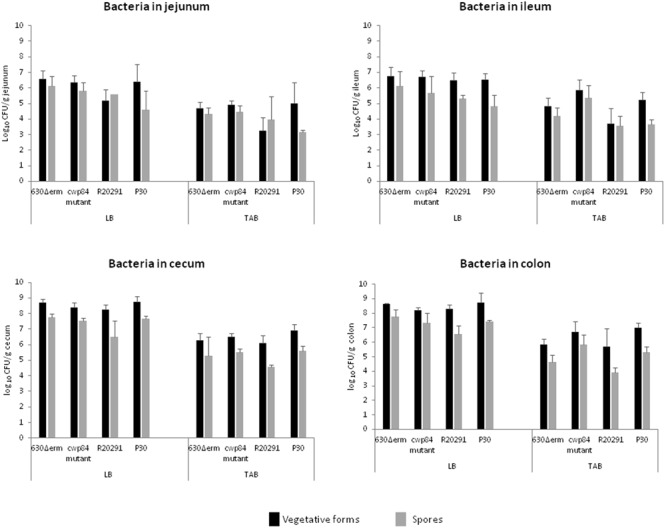
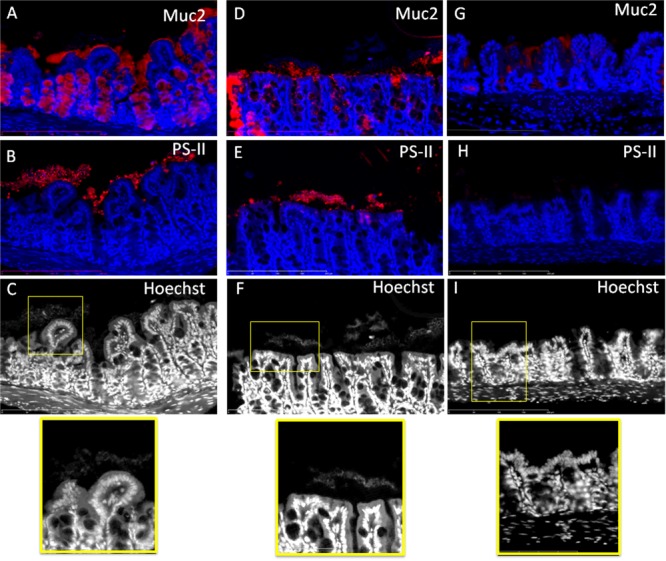
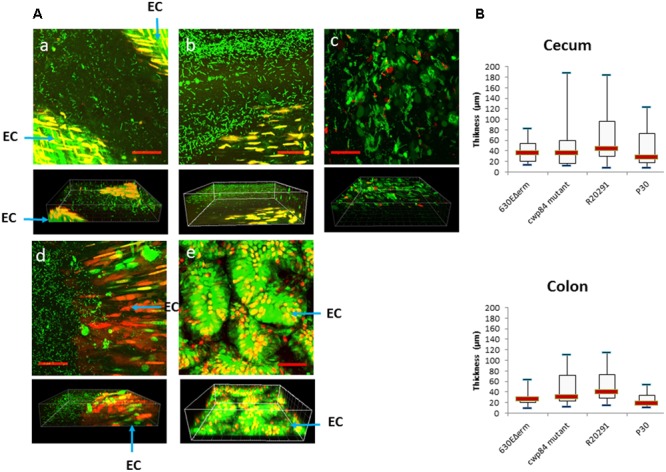
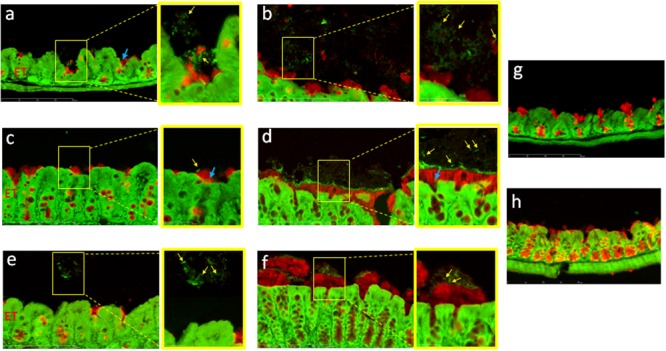
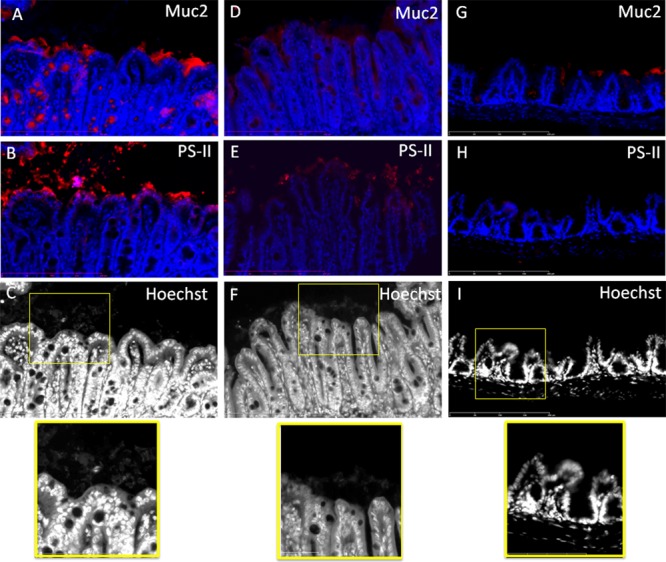
infection (CDI) is a major healthcare-associated disease with high recurrence rates. Host colonization is critical for the infectious process, both in first episodes and in recurrent disease, with biofilm formation playing a key role. The ability of to form a biofilm on abiotic surfaces is established, but has not yet been confirmed in the intestinal tract. Here, four different isolates of , which are biofilm producers, were studied for their ability to colonize germ-free mice. The level of colonization achieved was similar for all isolates in the different parts of the murine gastrointestinal tract, but pathogen burden was higher in the cecum and colon. Confocal laser scanning microscopy revealed that bacteria were distributed heterogeneously over the intestinal tissue, without contact with epithelial cells. The R20291 strain, which belongs to the Ribotype 027 lineage, displayed a unique behavior compared to the other strains by forming numerous aggregates. By immunochemistry analyses, we showed that bacteria were localized inside and outside the mucus layer, irrespective of the strains tested. Most bacteria were entrapped in 3-D structures overlaying the mucus layer. For the R20291 strain, the cell-wall associated polysaccharide PS-II was detected in large amounts in the 3-D structure. As this component has been detected in the extrapolymeric matrix of biofilms, our data suggest strongly that at least the R20291 strain is organized in the mono-associated mouse model in glycan-rich biofilm architecture, which sustainably maintains bacteria outside the mucus layer.
艰难梭菌感染(CDI)是一种主要的医疗保健相关疾病,复发率很高。宿主定植对于感染过程至关重要,无论是在初次发作还是复发性疾病中,生物膜形成都起着关键作用。艰难梭菌在非生物表面形成生物膜的能力已得到证实,但尚未在肠道中得到证实。在这里,对四种不同的艰难梭菌分离株(它们都是生物膜产生菌)进行了在无菌小鼠中定植能力的研究。所有分离株在小鼠胃肠道不同部位实现的定植水平相似,但盲肠和结肠中的病原体负荷更高。共聚焦激光扫描显微镜显示,艰难梭菌在肠道组织中分布不均,不与上皮细胞接触。属于核糖体分型027谱系的R20291菌株通过形成大量聚集体,与其他菌株相比表现出独特的行为。通过免疫化学分析,我们表明,无论测试的菌株如何,细菌都定位在黏液层内外。大多数细菌被困在覆盖黏液层的三维结构中。对于R20291菌株,在三维结构中大量检测到与细胞壁相关的多糖PS-II。由于该成分已在艰难梭菌生物膜的胞外聚合物基质中检测到,我们的数据强烈表明,至少R20291菌株在单关联小鼠模型中以富含聚糖的生物膜结构组织,可持续地将细菌维持在黏液层之外。