Adamkova Katerina, Yi Young-Joo, Petr Jaroslav, Zalmanova Tereza, Hoskova Kristyna, Jelinkova Pavla, Moravec Jiri, Kralickova Milena, Sutovsky Miriam, Sutovsky Peter, Nevoral Jan
Department of Veterinary Sciences, Faculty of Agriculture, Food and Natural Resources, Czech University of Life Sciences Prague, 6-Suchdol, Prague, Czech Republic.
Division of Biotechnology, Safety, Environment and Life Science Institute, College of Environmental and Bioresource Sciences, Chonbuk National University, Iksan, 54596 South Korea.
J Anim Sci Biotechnol. 2017 Nov 1;8:83. doi: 10.1186/s40104-017-0214-0. eCollection 2017.
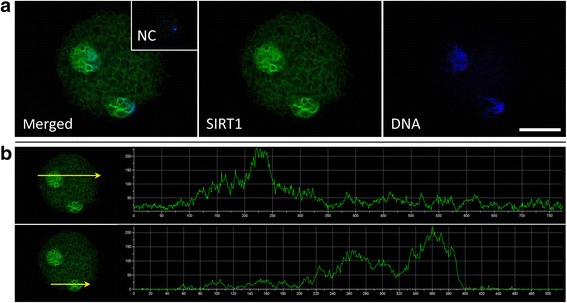
The histone code is an established epigenetic regulator of early embryonic development in mammals. The lysine residue K9 of histone H3 (H3K9) is a prime target of SIRT1, a member of NAD-dependent histone deacetylase family of enzymes targeting both histone and non-histone substrates. At present, little is known about SIRT1-modulation of H3K9 in zygotic pronuclei and its association with the success of preimplantation embryo development. Therefore, we evaluated the effect of SIRT1 activity on H3K9 methylation and acetylation in porcine zygotes and the significance of H3K9 modifications for early embryonic development.
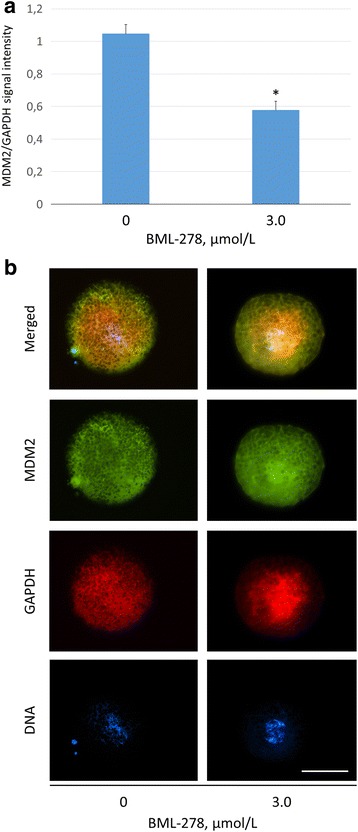
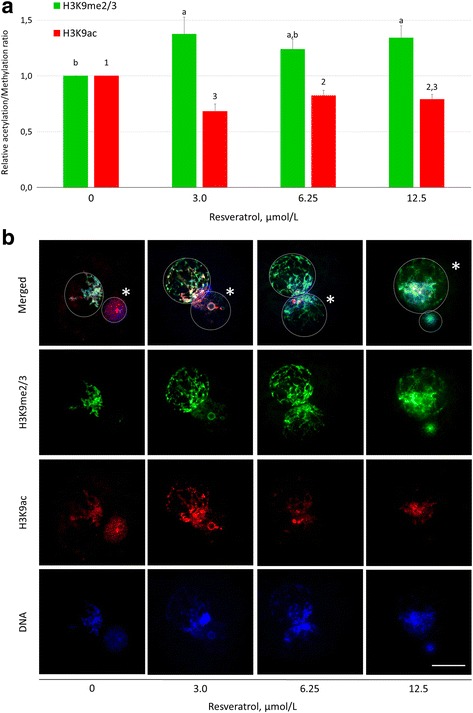
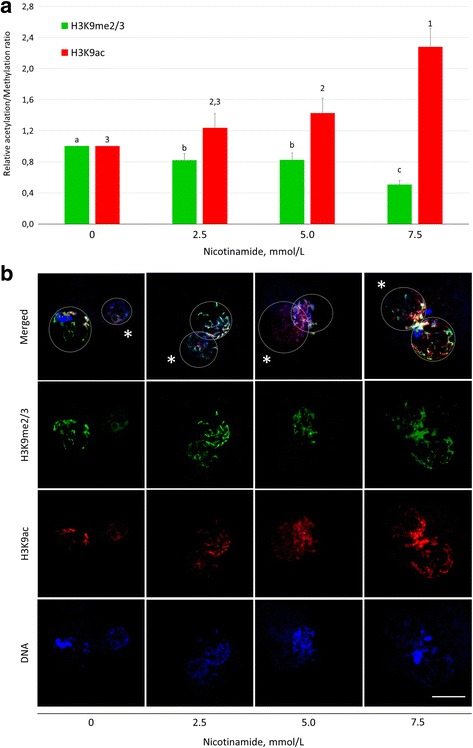
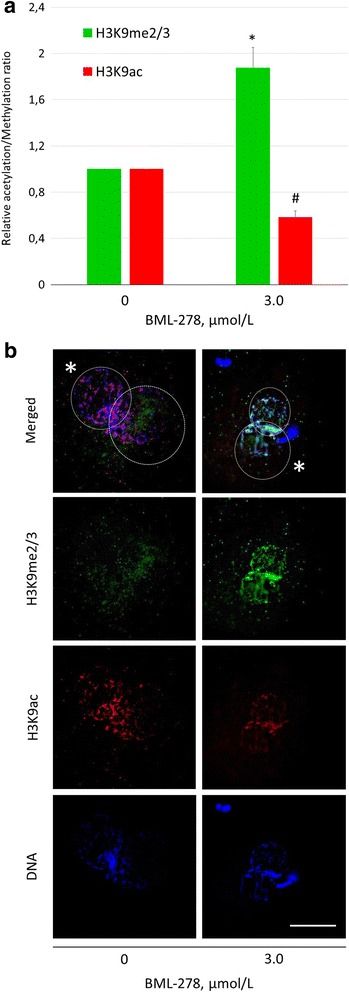
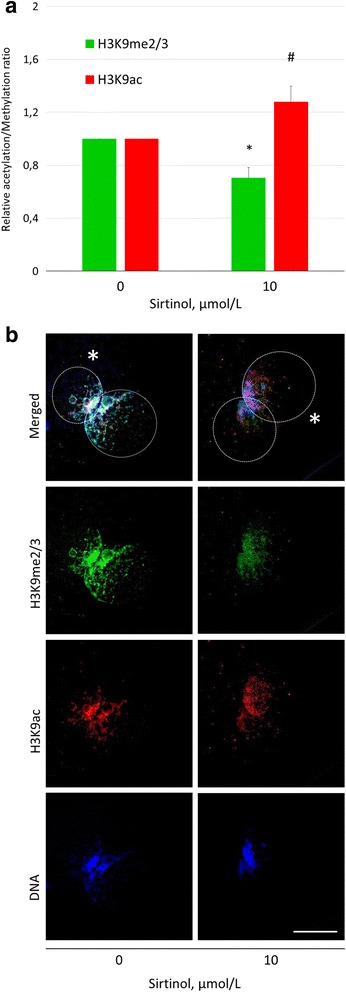
Our results show that SIRT1 activators resveratrol and BML-278 increased H3K9 methylation and suppressed H3K9 acetylation in both the paternal and maternal pronucleus. Inversely, SIRT1 inhibitors nicotinamide and sirtinol suppressed methylation and increased acetylation of pronuclear H3K9. Evaluation of early embryonic development confirmed positive effect of selective SIRT1 activation on blastocyst formation rate (5.2 ± 2.9% versus 32.9 ± 8.1% in vehicle control and BML-278 group, respectively; ≤ 0.05). Stimulation of SIRT1 activity coincided with fluorometric signal intensity of ooplasmic ubiquitin ligase MDM2, a known substrate of SIRT1 and known limiting factor of epigenome remodeling.
We conclude that SIRT1 modulates zygotic histone code, obviously through direct deacetylation and via non-histone targets resulting in increased H3K9me3. These changes in zygotes lead to more successful pre-implantation embryonic development and, indeed, the specific SIRT1 activation due to BML-278 is beneficial for in vitro embryo production and blastocyst achievement.
组蛋白密码是哺乳动物早期胚胎发育中一种既定的表观遗传调节因子。组蛋白H3(H3K9)的赖氨酸残基K9是SIRT1的主要作用靶点,SIRT1是烟酰胺腺嘌呤二核苷酸(NAD)依赖性组蛋白脱乙酰酶家族的成员之一,该家族的酶作用于组蛋白和非组蛋白底物。目前,关于合子原核中SIRT1对H3K9的调节作用及其与植入前胚胎发育成功的关系知之甚少。因此,我们评估了SIRT1活性对猪受精卵中H3K9甲基化和乙酰化的影响,以及H3K9修饰对早期胚胎发育的意义。
我们的结果表明,SIRT1激活剂白藜芦醇和BML-278增加了父本和母本原核中H3K9的甲基化,并抑制了H3K9的乙酰化。相反,SIRT1抑制剂烟酰胺和sirtinol抑制了原核H3K9的甲基化并增加了其乙酰化。对早期胚胎发育的评估证实,选择性激活SIRT1对囊胚形成率有积极影响(分别为5.2±2.9%和32.9±8.1%,与溶剂对照组和BML-278组相比;P≤0.05)。SIRT1活性的刺激与卵质泛素连接酶MDM2的荧光信号强度一致,MDM2是SIRT1的已知底物和表观基因组重塑的已知限制因子。
我们得出结论,SIRT1调节合子组蛋白密码,显然是通过直接去乙酰化和经由非组蛋白靶点导致H3K9me3增加。合子中的这些变化导致更成功的植入前胚胎发育,事实上,BML-278引起的特异性SIRT1激活有利于体外胚胎生产和囊胚形成。