Department of Ophthalmology and Visual Sciences, Kellogg Eye Center, University of Michigan, 1000 Wall St, Ann Arbor, MI, 48105, USA.
Department of Biologic and Materials Sciences, School of Dentistry, University of Michigan, 1011 N. University, Ann Arbor, MI, 48109, USA.
BMC Genomics. 2017 Nov 9;18(1):854. doi: 10.1186/s12864-017-4236-y.
Tissue regeneration requires a series of steps, beginning with generation of the necessary cell mass, followed by cell migration into damaged area, and ending with differentiation and integration with surrounding tissues. Temporal regulation of these steps lies at the heart of the regenerative process, yet its basis is not well understood. The ability of zebrafish to dedifferentiate mature "post-mitotic" myocytes into proliferating myoblasts that in turn regenerate lost muscle tissue provides an opportunity to probe the molecular mechanisms of regeneration.
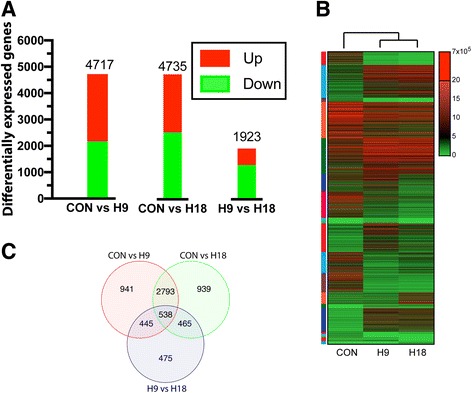
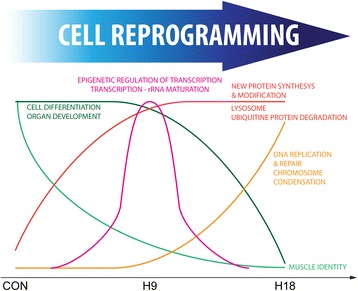
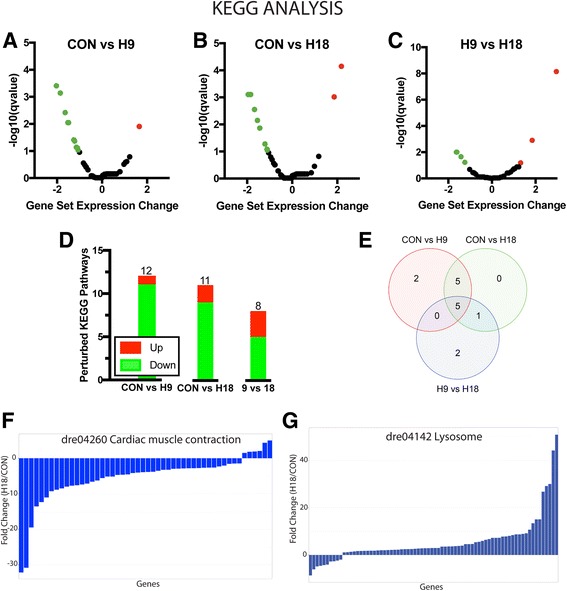
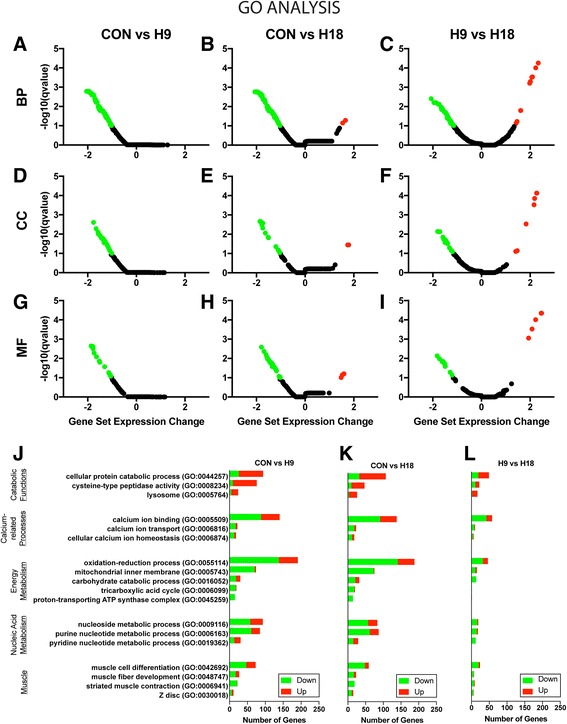
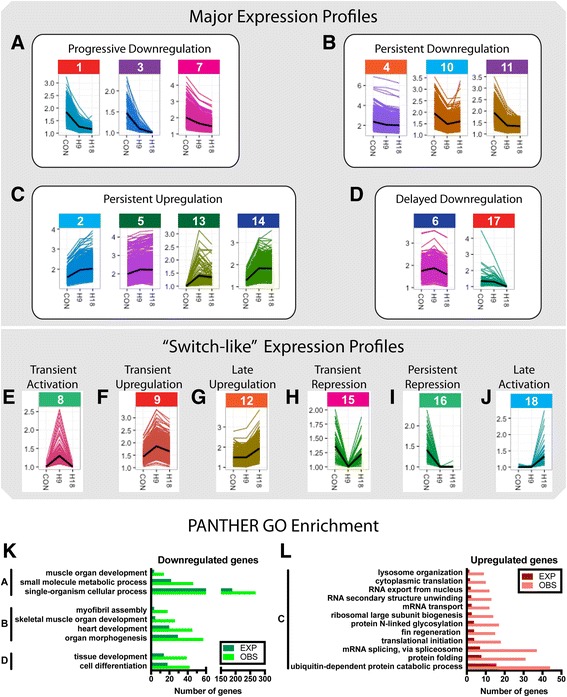
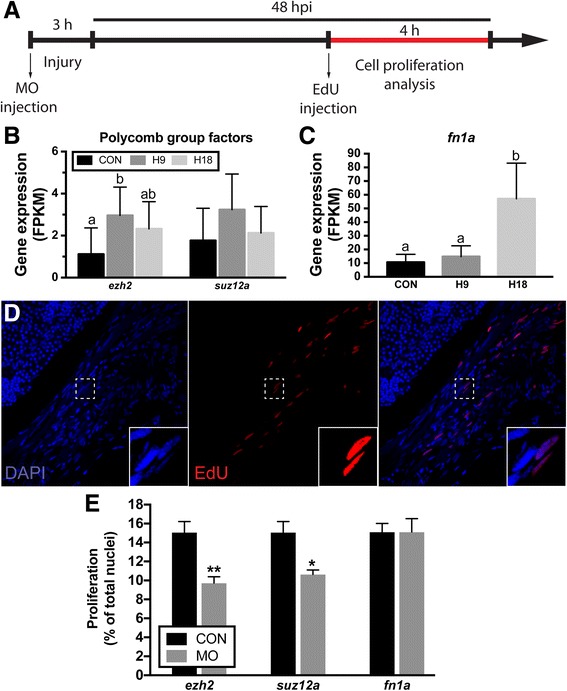
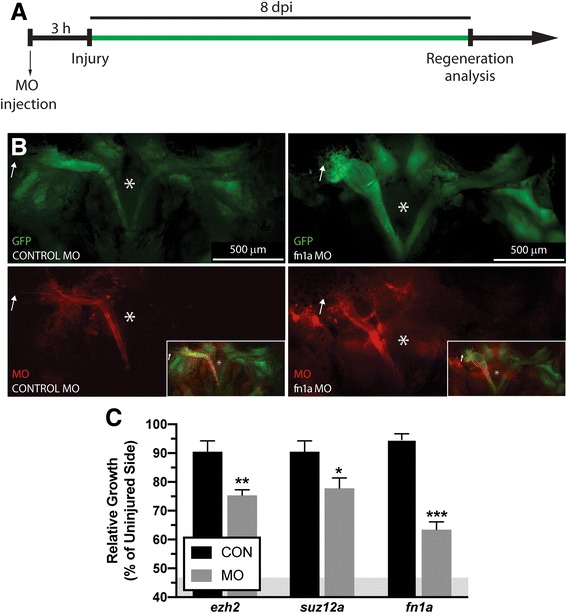
Following subtotal excision of adult zebrafish lateral rectus muscle, dedifferentiating residual myocytes were collected at two time points prior to cell cycle reentry and compared to uninjured muscles using RNA-seq. Functional annotation (GAGE or K-means clustering followed by GO enrichment) revealed a coordinated response encompassing epigenetic regulation of transcription, RNA processing, and DNA replication and repair, along with protein degradation and translation that would rewire the cellular proteome and metabolome. Selected candidate genes were phenotypically validated in vivo by morpholino knockdown. Rapidly induced gene products, such as the Polycomb group factors Ezh2 and Suz12a, were necessary for both efficient dedifferentiation (i.e. cell reprogramming leading to cell cycle reentry) and complete anatomic regeneration. In contrast, the late activated gene fibronectin was important for efficient anatomic muscle regeneration but not for the early step of myocyte cell cycle reentry.
Reprogramming of a "post-mitotic" myocyte into a dedifferentiated myoblast requires a complex coordinated effort that reshapes the cellular proteome and rewires metabolic pathways mediated by heritable yet nuanced epigenetic alterations and molecular switches, including transcription factors and non-coding RNAs. Our studies show that temporal regulation of gene expression is programmatically linked to distinct steps in the regeneration process, with immediate early expression driving dedifferentiation and reprogramming, and later expression facilitating anatomical regeneration.
组织再生需要一系列步骤,首先是产生必要的细胞群,然后是细胞迁移到受损区域,最后是分化并与周围组织整合。这些步骤的时间调节是再生过程的核心,但它的基础还不是很清楚。斑马鱼能够使成熟的“有丝分裂后”肌细胞去分化为增殖的成肌细胞,而这些成肌细胞反过来又能再生失去的肌肉组织,这为研究再生的分子机制提供了机会。
在成年斑马鱼的外侧直肌部分切除后,在细胞周期重新进入之前的两个时间点收集去分化的残余肌细胞,并与未受伤的肌肉进行 RNA-seq 比较。功能注释(GAGE 或 K-均值聚类,然后是 GO 富集)显示了一个协调的反应,包括转录的表观遗传调控、RNA 处理和 DNA 复制和修复,以及蛋白质降解和翻译,这将重新构建细胞的蛋白质组和代谢组。选择的候选基因通过体内形态发生缺陷验证进行表型验证。快速诱导的基因产物,如 Polycomb 组因子 Ezh2 和 Suz12a,对于有效的去分化(即导致细胞周期重新进入的细胞重编程)和完全的解剖再生都是必要的。相比之下,晚期激活的基因纤维连接蛋白对于有效的解剖肌肉再生很重要,但对于肌细胞细胞周期重新进入的早期步骤则不重要。
将“有丝分裂后”肌细胞重新编程为去分化的成肌细胞需要一个复杂的协调努力,它重塑了细胞的蛋白质组,并重新布线了代谢途径,这是由可遗传但细微的表观遗传改变和分子开关介导的,包括转录因子和非编码 RNA。我们的研究表明,基因表达的时间调节与再生过程中的不同步骤有程序上的联系,早期表达驱动去分化和重编程,而晚期表达促进解剖学再生。