Phadke Sujal S, Maclean Calum J, Zhao Serena Y, Mueller Emmi A, Michelotti Lucas A, Norman Kaitlyn L, Kumar Anuj, James Timothy Y
Department of Ecology and Evolutionary Biology, University of Michigan, Ann Arbor, Michigan 48109.
Department of Molecular, Cellular, and Developmental Biology, University of Michigan, Ann Arbor, Michigan 48109.
G3 (Bethesda). 2018 Jan 4;8(1):63-78. doi: 10.1534/g3.117.300245.
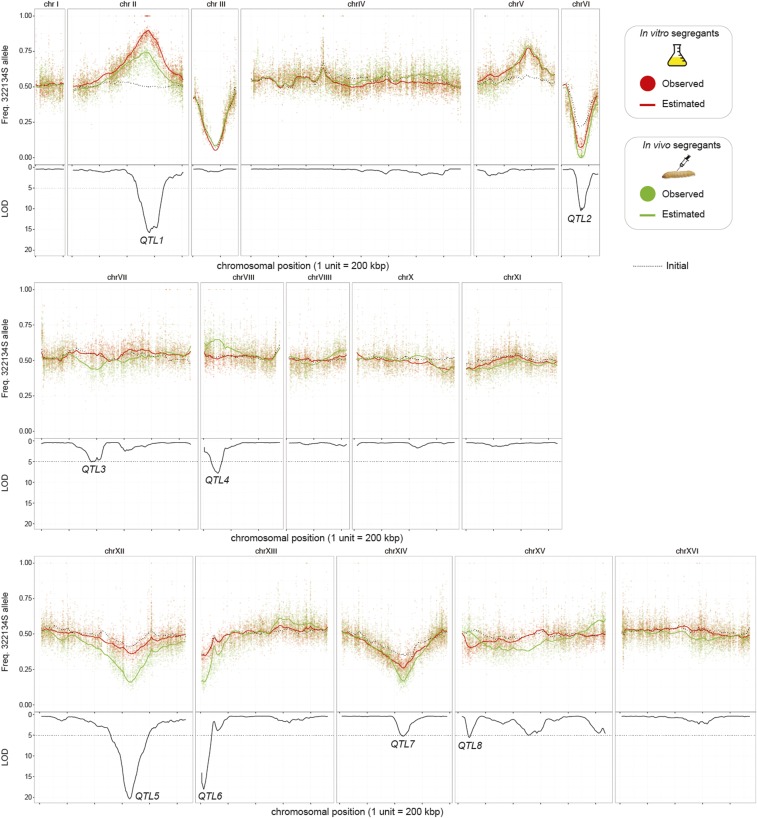
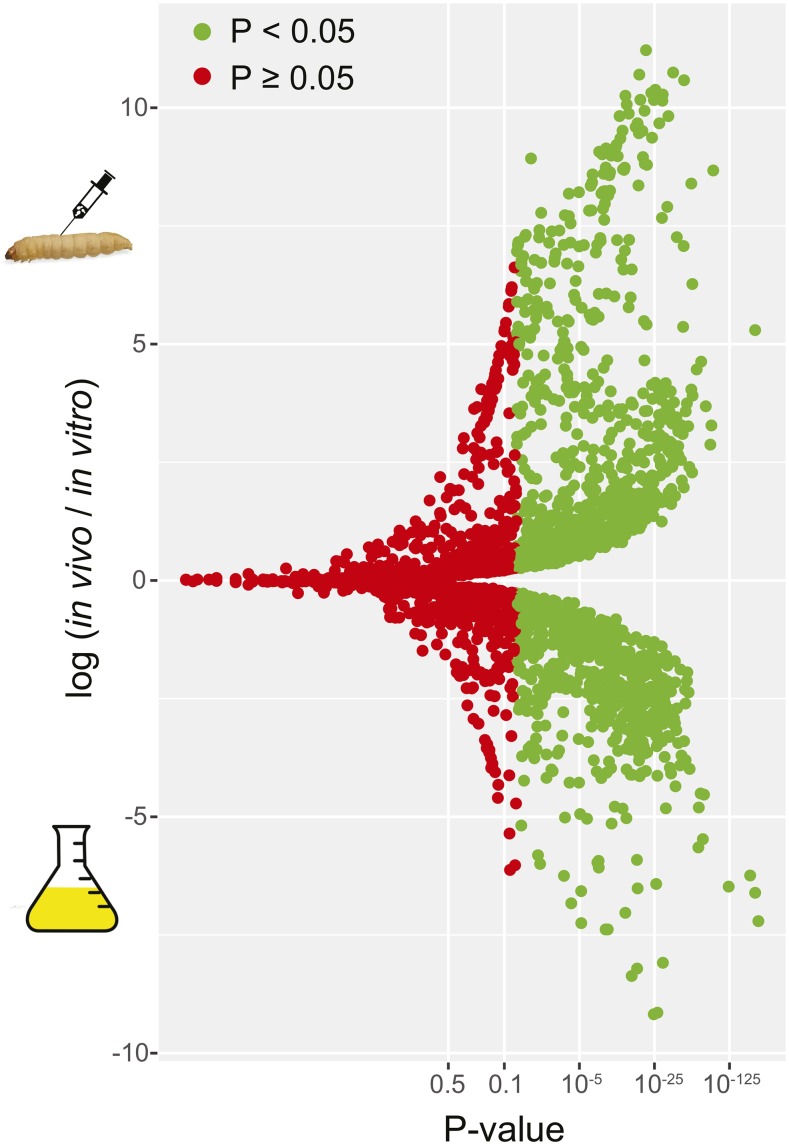
Environmental opportunistic pathogens can exploit vulnerable hosts through expression of traits selected for in their natural environments. Pathogenicity is itself a complicated trait underpinned by multiple complex traits, such as thermotolerance, morphology, and stress response. The baker's yeast, , is a species with broad environmental tolerance that has been increasingly reported as an opportunistic pathogen of humans. Here we leveraged the genetic resources available in yeast and a model insect species, the greater waxmoth , to provide a genome-wide analysis of pathogenicity factors. Using serial passaging experiments of genetically marked wild-type strains, a hybrid strain was identified as the most fit genotype across all replicates. To dissect the genetic basis for pathogenicity in the hybrid isolate, bulk segregant analysis was performed which revealed eight quantitative trait loci significantly differing between the two bulks with alleles from both parents contributing to pathogenicity. A second passaging experiment with a library of deletion mutants for most yeast genes identified a large number of mutations whose relative fitness differed , including mutations in genes controlling cell wall integrity, mitochondrial function, and tyrosine metabolism. Yeast is presumably subjected to a massive assault by the innate insect immune system that leads to melanization of the host and to a large bottleneck in yeast population size. Our data support that resistance to the innate immune response of the insect is key to survival in the host and identifies shared genetic mechanisms between and other opportunistic fungal pathogens.
环境机会致病菌可通过表达在其自然环境中被选择的性状来利用易感染的宿主。致病性本身是一个复杂的性状,由多个复杂性状支撑,如耐热性、形态学和应激反应。面包酵母是一种具有广泛环境耐受性的物种,越来越多地被报道为人类的机会致病菌。在这里,我们利用酵母和一种模式昆虫物种——大蜡螟中可用的遗传资源,对致病因子进行全基因组分析。通过对基因标记的野生型菌株进行连续传代实验,鉴定出一个杂交菌株是所有重复实验中最适合的基因型。为了剖析杂交分离株中致病性的遗传基础,进行了混合分离分析,结果显示两个混合群体之间有8个数量性状位点存在显著差异,双亲的等位基因都对致病性有贡献。用大多数酵母基因的缺失突变体文库进行的第二轮传代实验鉴定出大量相对适应性不同的突变,包括控制细胞壁完整性、线粒体功能和酪氨酸代谢的基因突变。酵母可能受到昆虫先天免疫系统的大规模攻击,这导致宿主黑化以及酵母种群数量大幅减少。我们的数据支持对昆虫先天免疫反应的抗性是在宿主体内存活的关键,并确定了酵母与其他机会性真菌病原体之间共有的遗传机制。