Laboratory of Protein Structure, International Institute of Molecular and Cell Biology, 02-109 Warsaw, Poland.
Institute of Biophysics of the Czech Academy of Sciences, 612 65 Brno, Czech Republic; Regional Centre of Advanced Technologies and Materials, Department of Physical Chemistry, Faculty of Science, Palacky University Olomouc, 771 46 Olomouc, Czech Republic.
J Biol Chem. 2018 Jan 5;293(1):191-202. doi: 10.1074/jbc.M117.798256. Epub 2017 Nov 9.
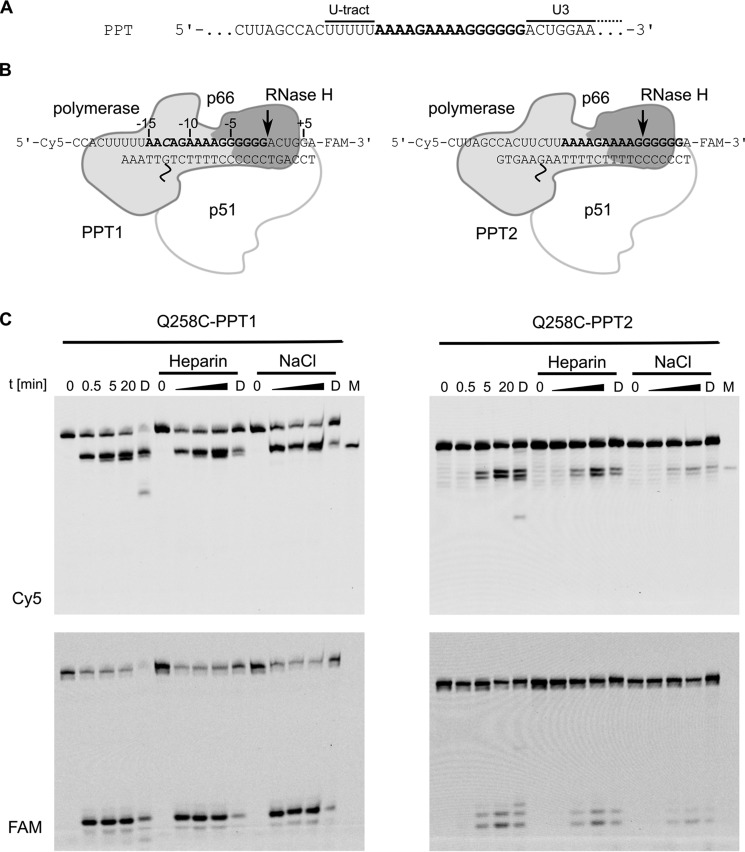
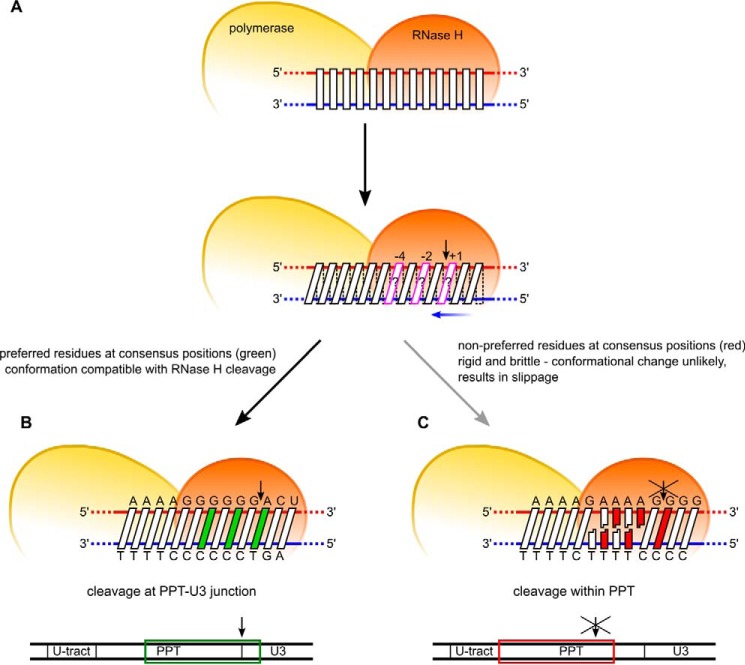
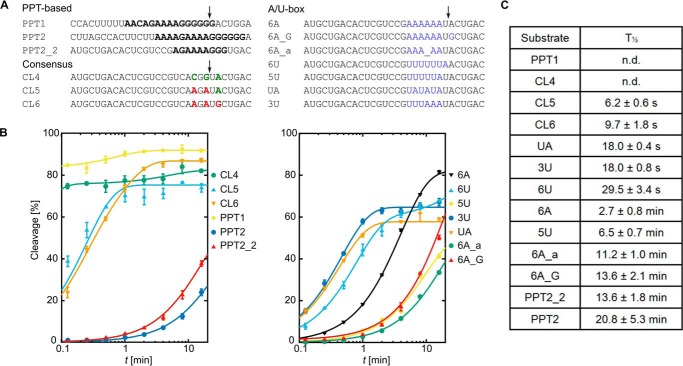
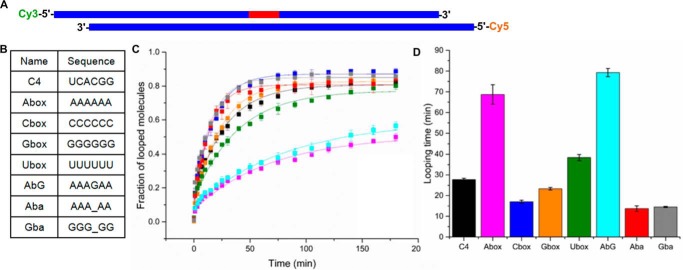
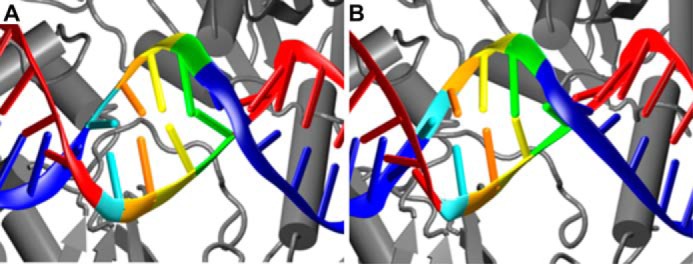
HIV-1 reverse transcriptase (RT) possesses both DNA polymerase activity and RNase H activity that act in concert to convert single-stranded RNA of the viral genome to double-stranded DNA that is then integrated into the DNA of the infected cell. Reverse transcriptase-catalyzed reverse transcription critically relies on the proper generation of a polypurine tract (PPT) primer. However, the mechanism of PPT primer generation and the features of the PPT sequence that are critical for its recognition by HIV-1 RT remain unclear. Here, we used a chemical cross-linking method together with molecular dynamics simulations and single-molecule assays to study the mechanism of PPT primer generation. We found that the PPT was specifically and properly recognized within covalently tethered HIV-1 RT-nucleic acid complexes. These findings indicated that recognition of the PPT occurs within a stable catalytic complex after its formation. We found that this unique recognition is based on two complementary elements that rely on the PPT sequence: RNase H sequence preference and incompatibility of the poly(rA/dT) tract of the PPT with the nucleic acid conformation that is required for RNase H cleavage. The latter results from rigidity of the poly(rA/dT) tract and leads to base-pair slippage of this sequence upon deformation into a catalytically relevant geometry. In summary, our results reveal an unexpected mechanism of PPT primer generation based on specific dynamic properties of the poly(rA/dT) segment and help advance our understanding of the mechanisms in viral RNA reverse transcription.
HIV-1 逆转录酶 (RT) 兼具 DNA 聚合酶活性和 RNase H 活性,它们协同作用将病毒基因组的单链 RNA 转化为双链 DNA,然后将其整合到感染细胞的 DNA 中。逆转录酶催化的逆转录过程严重依赖于正确生成多聚嘌呤(PPT)引物。然而,PPT 引物生成的机制以及对 HIV-1 RT 识别至关重要的 PPT 序列特征仍不清楚。在这里,我们使用化学交联方法结合分子动力学模拟和单分子测定来研究 PPT 引物生成的机制。我们发现 PPT 在共价连接的 HIV-1 RT-核酸复合物中被特异性和正确识别。这些发现表明,在其形成后,PPT 的识别发生在稳定的催化复合物内。我们发现这种独特的识别基于两个互补的元素,它们依赖于 PPT 序列:RNase H 序列偏好和 PPT 的多聚 (rA/dT) 片段与 RNase H 切割所需的核酸构象不兼容。后者源于多聚 (rA/dT) 片段的刚性,导致该序列在变形为催化相关构象时碱基对滑移。总之,我们的结果揭示了基于多聚 (rA/dT) 片段的特定动态特性的 PPT 引物生成的意外机制,并有助于我们深入了解病毒 RNA 逆转录的机制。