Chronic Disease Laboratory, Institutes for Life Sciences and School of Medicine, South China University of Technology, Guangzhou, 510006, China.
Liver Immunology Laboratory, Institute of Immunology and The CAS Key Laboratory of Innate Immunity and Chronic Disease, School of Life Sciences, University of Science and Technology of China, Hefei, 230027, China.
Sci Rep. 2017 Nov 10;7(1):15246. doi: 10.1038/s41598-017-15661-6.
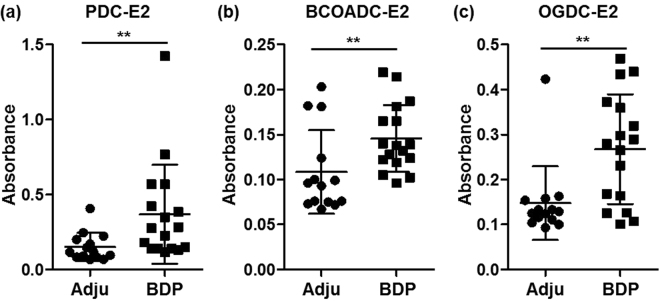
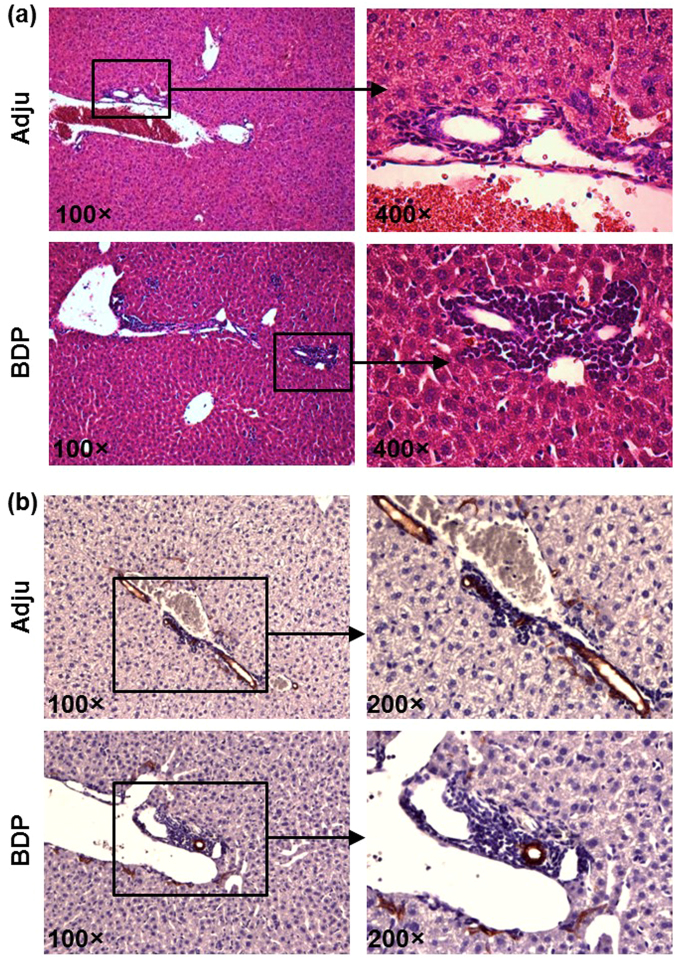
Primary biliary cholangitis (PBC) is an autoimmune liver disease characterized by the destruction of interlobular biliary ductules, which progressively leads to cholestasis, hepatic fibrosis, cirrhosis, and eventually liver failure. Several mouse models have been used to clarify the pathogenesis of PBC and are generally considered reflective of an autoimmune cholangitis. Most models focus on issues of molecular mimicry between the E2 subunit of the pyruvate dehydrogenase complex (PDC-E2), the major mitochondrial autoantigen of PBC and xenobiotic cross reactive chemicals. None have focused on the classic models of breaking tolerance, namely immunization with self-tissue. Here, we report a novel mouse model of autoimmune cholangitis via immunization with syngeneic bile duct protein (BDP). Our results demonstrate that syngeneic bile duct antigens efficiently break immune tolerance of recipient mice, capturing several key features of PBC, including liver-specific inflammation focused on portal tract areas, increased number and activation state of CD4 and CD8 T cells in the liver and spleen. Furthermore, the germinal center (GC) responses in the spleen were more enhanced in our mouse model. Finally, these mice were 100% positive for anti-mitochondrial antibodies (AMAs). In conclusion, we developed a novel mouse model of PBC that may help to elucidate the detailed mechanism of this complex disease.
原发性胆汁性胆管炎(PBC)是一种自身免疫性肝病,其特征为小叶间胆管的破坏,这逐渐导致胆汁淤积、肝纤维化、肝硬化,最终导致肝功能衰竭。已经使用了几种小鼠模型来阐明 PBC 的发病机制,这些模型通常被认为反映了自身免疫性胆管炎。大多数模型都集中在丙酮酸脱氢酶复合物(PDC-E2)的 E2 亚基、PBC 的主要线粒体自身抗原和外源性化学物质之间的分子模拟问题上。没有一个模型集中在打破自身耐受的经典模型上,即自身组织免疫接种。在这里,我们通过用同种异体胆管蛋白(BDP)免疫来报告一种新的自身免疫性胆管炎小鼠模型。我们的结果表明,同种异体胆管抗原有效地打破了受者小鼠的免疫耐受,捕获了 PBC 的几个关键特征,包括以门管区为中心的肝脏特异性炎症、肝脏和脾脏中 CD4 和 CD8 T 细胞的数量增加和激活状态。此外,我们的小鼠模型中脾脏中的生发中心(GC)反应得到了更增强。最后,这些小鼠对线粒体抗体(AMAs)的阳性率为 100%。总之,我们开发了一种新的 PBC 小鼠模型,这可能有助于阐明这种复杂疾病的详细机制。