Anbuhl Kelsey L, Benichoux Victor, Greene Nathaniel T, Brown Andrew D, Tollin Daniel J
Neuroscience Training Program, University of Colorado Anschutz Medical Campus, Aurora, CO 80045, USA.
Department of Physiology & Biophysics, University of Colorado Anschutz Medical Campus, Aurora, CO 80045, USA.
Hear Res. 2017 Dec;356:35-50. doi: 10.1016/j.heares.2017.10.015. Epub 2017 Nov 1.
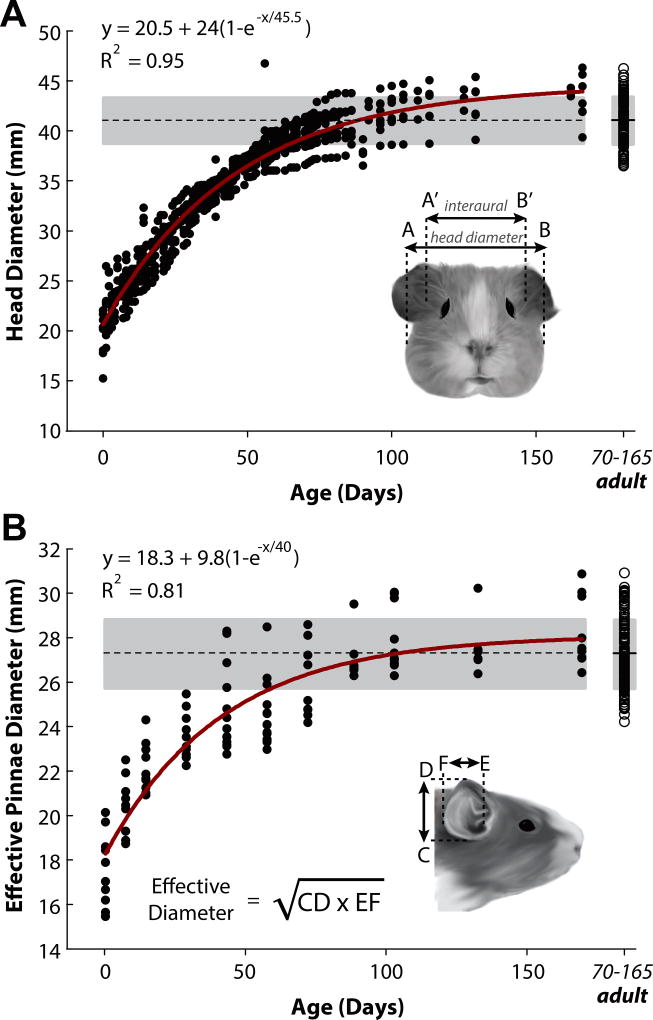
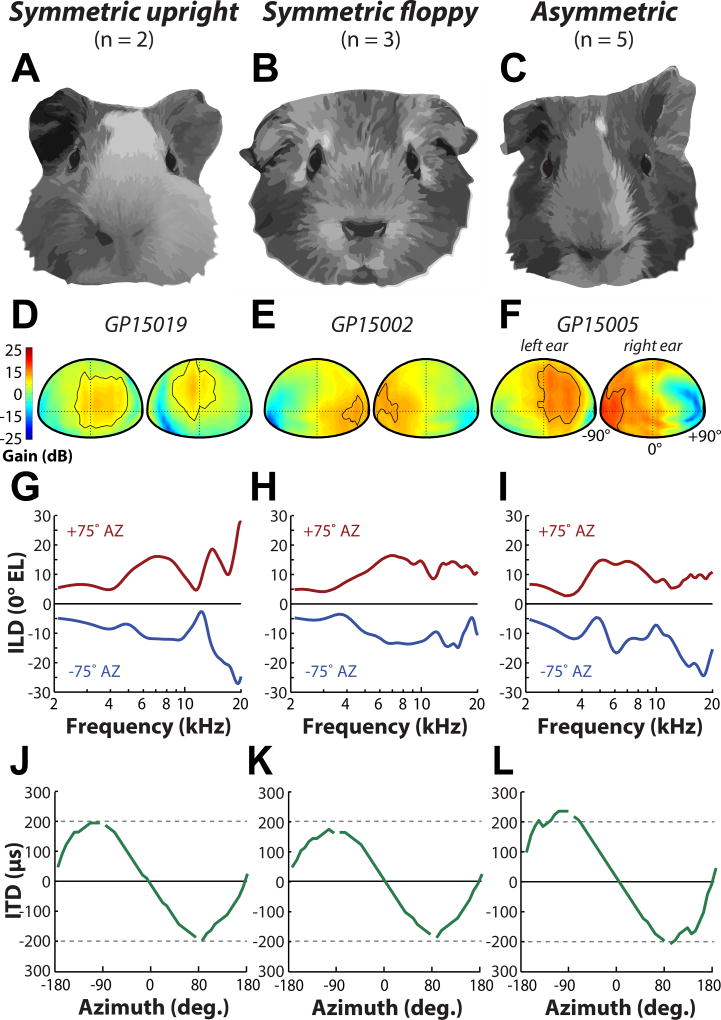
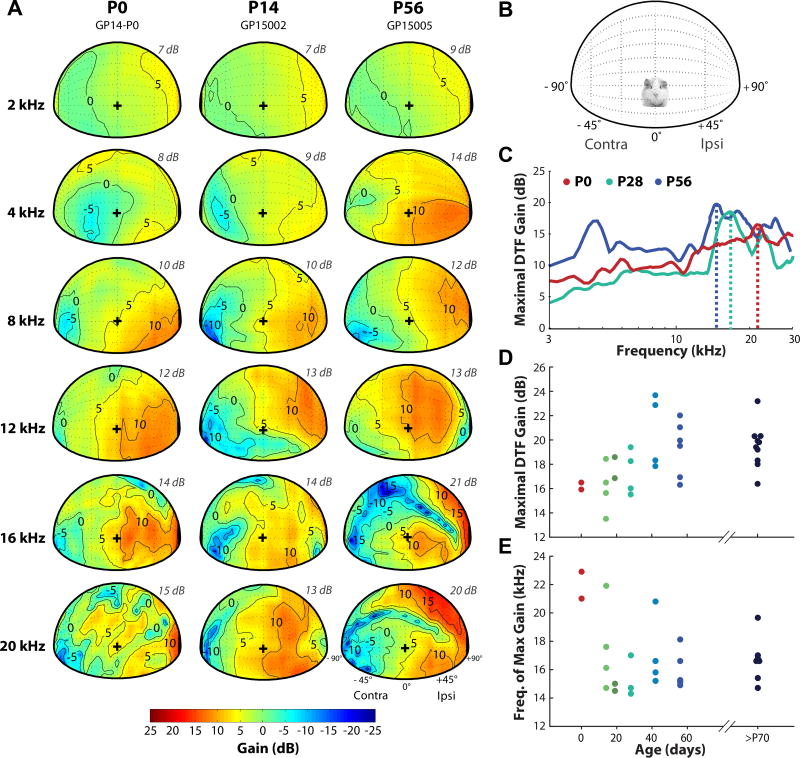
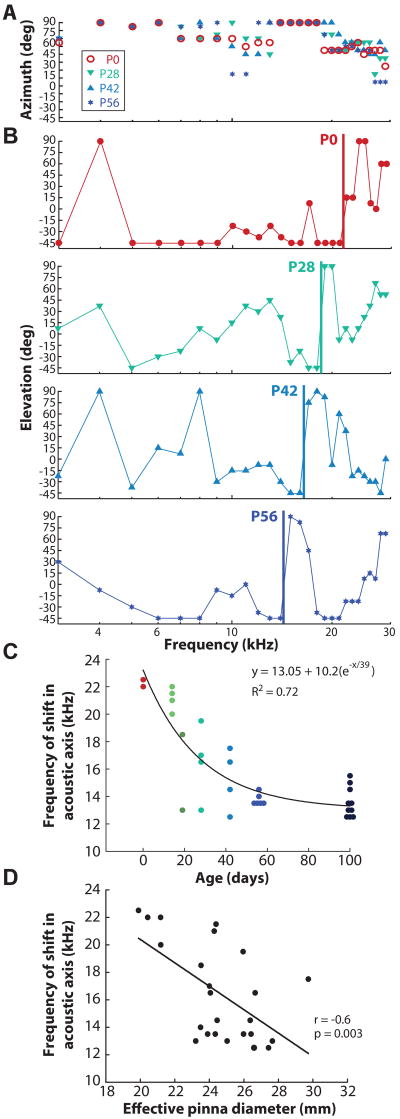
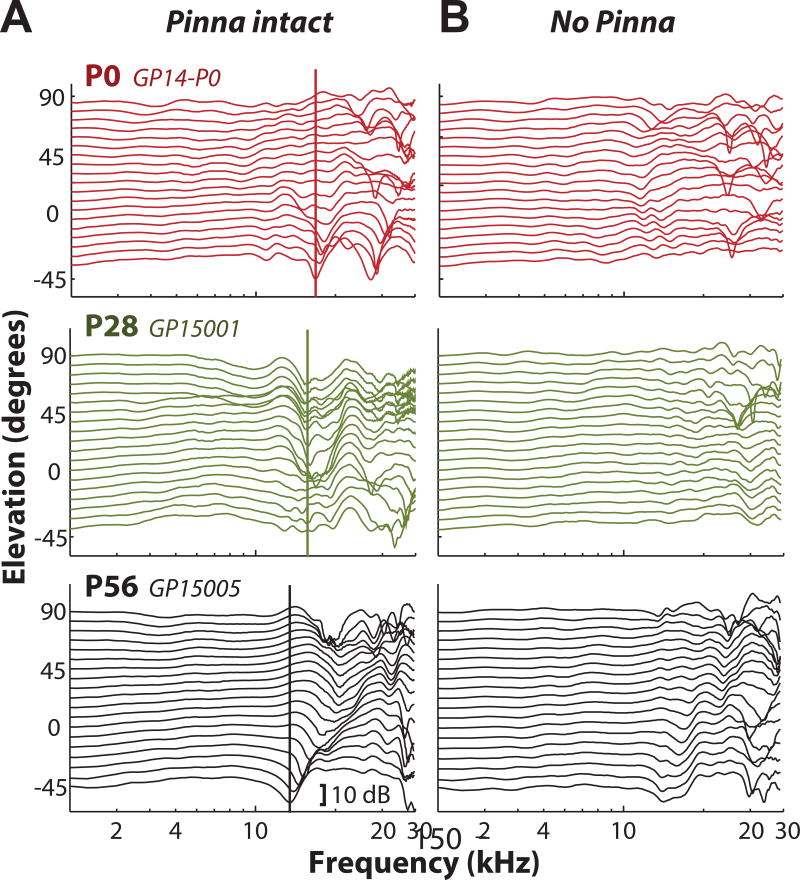
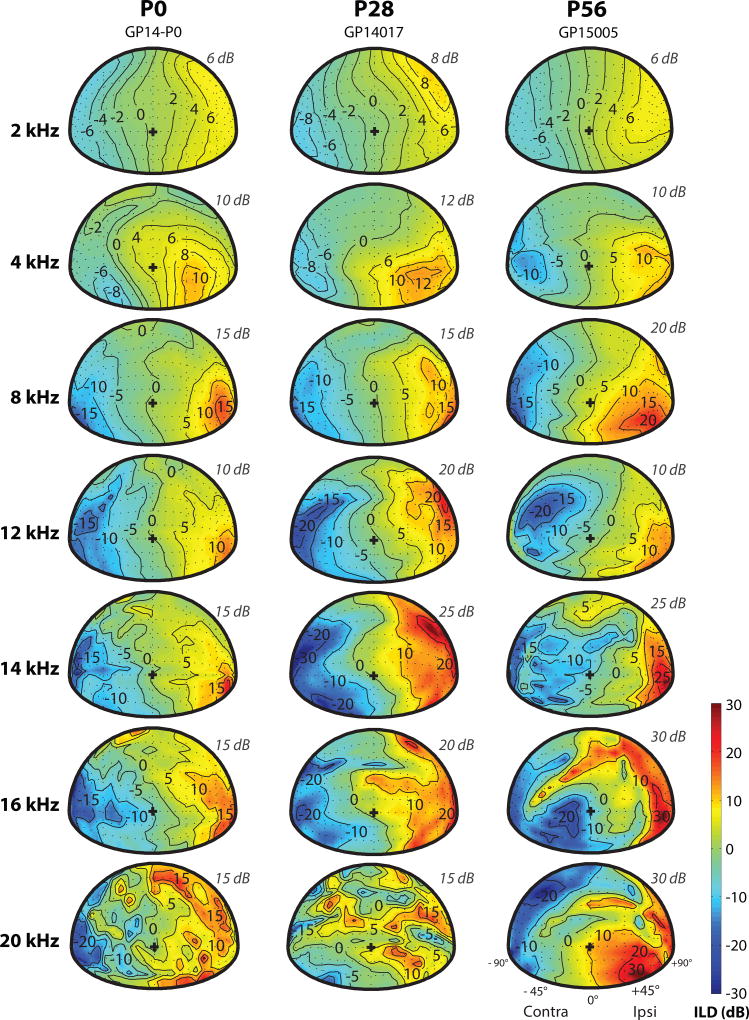
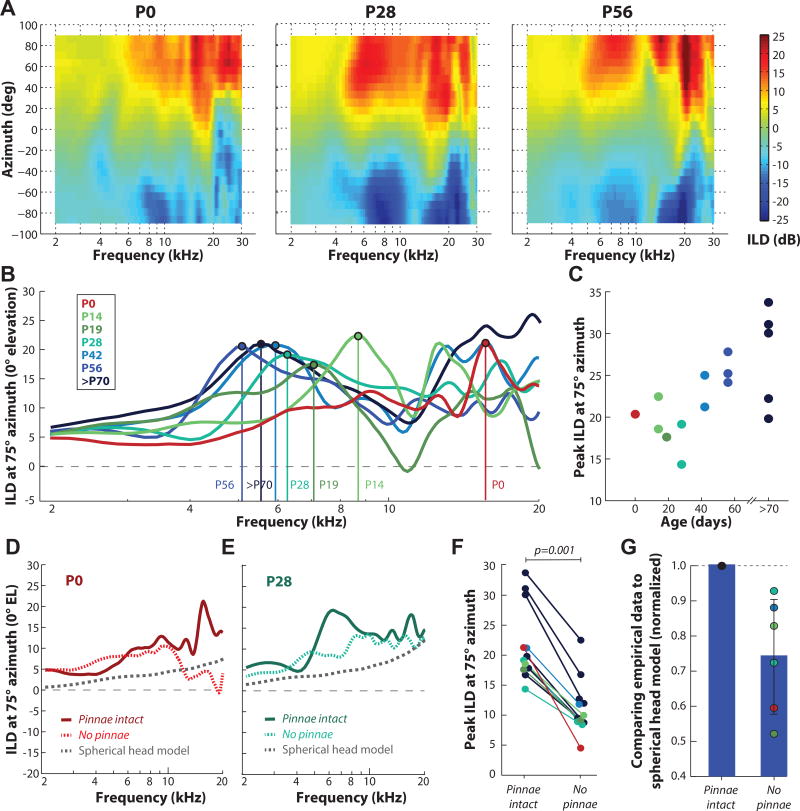
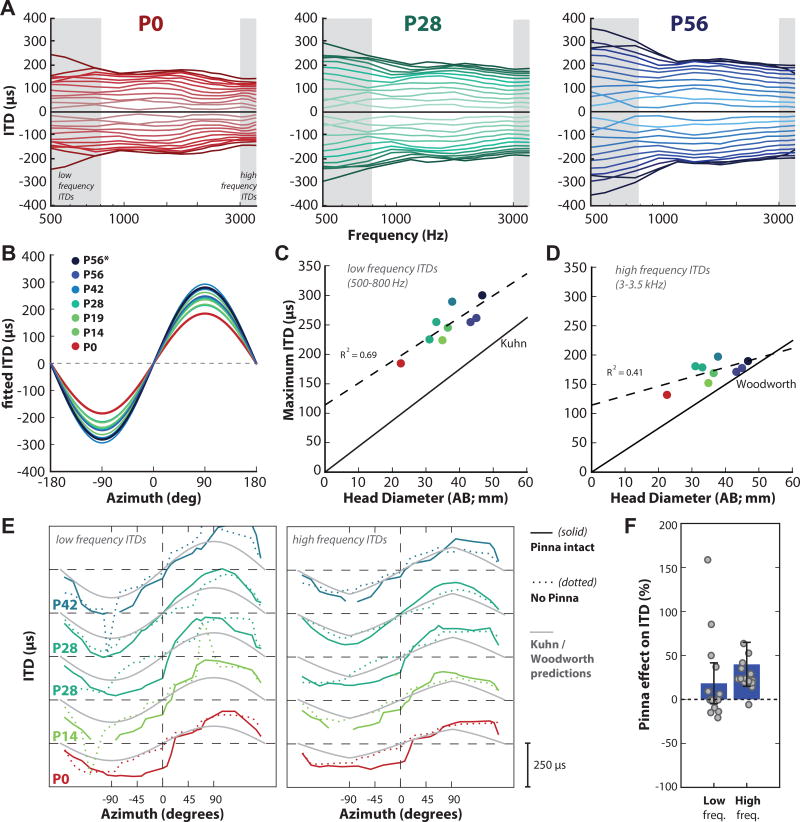
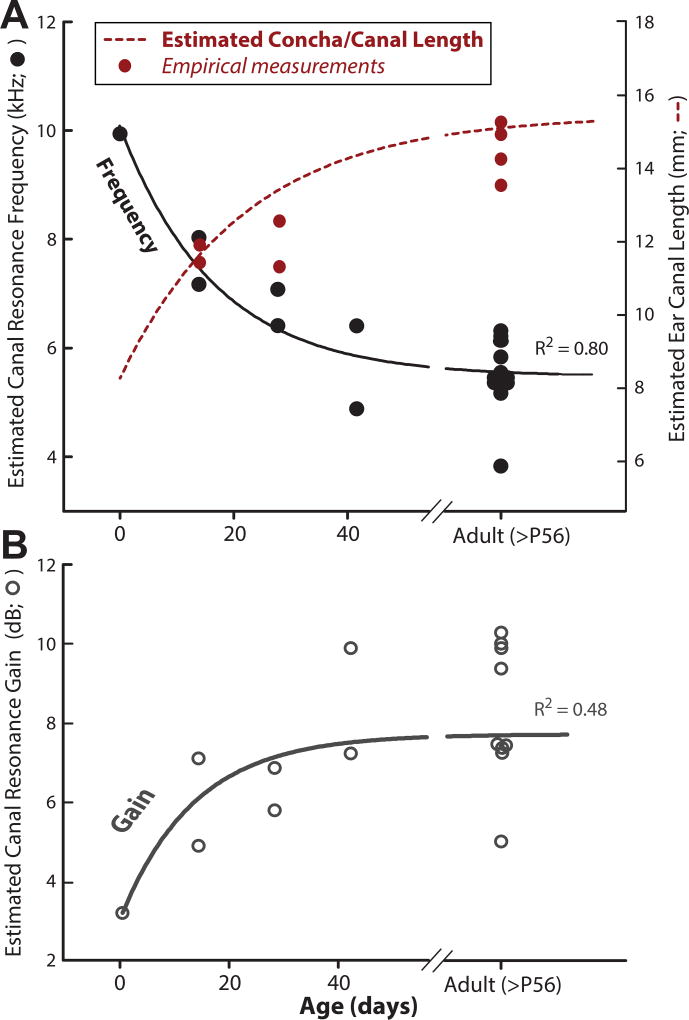
The morphology of the head and pinna shape the spatial and frequency dependence of sound propagation that give rise to the acoustic cues to sound source location. During early development, the physical dimensions of the head and pinna increase rapidly. Thus, the binaural (interaural time and level differences, ITD and ILD) and monaural (spectral shape) cues are also hypothesized to change rapidly. Complex interactions between the size and shape of the head and pinna limit the accuracy of simple acoustical models (e.g. spherical) and necessitate empirical measurements. Here, we measured the cues to location in the developing guinea pig, a precocial species commonly used for studies of the auditory system. We measured directional transfer functions (DTFs) and the dimensions of the head and pinna in guinea pigs from birth (P0) through adulthood. Dimensions of the head and pinna increased by 87% and 48%, respectively, reaching adult values by ∼8 weeks (P56). The monaural acoustic gain produced by the head and pinna increased with frequency and age, with maximum gains at higher frequencies (>8 kHz) reaching values of 10-21 dB for all ages. The center frequency of monaural spectral notches also decreased with age, from higher frequencies (∼17 kHz) at P0 to lower frequencies (∼12 kHz) in adults. In all animals, ILDs and ITDs were dependent on both frequency and spatial location. Over development, the maximum ILD magnitude increased from ∼15 dB at P0 to ∼30 dB in adults (at frequencies >8 kHz), while the maximum low frequency ITDs increased from ∼185 μs at P0 to ∼300 μs in adults. These results demonstrate that the changes in the acoustical cues are directly related to changes in head and pinna morphology.
头部和耳廓的形态塑造了声音传播的空间和频率依赖性,这些依赖性产生了声源定位的声学线索。在早期发育过程中,头部和耳廓的物理尺寸迅速增加。因此,也有人假设双耳线索(双耳时间和电平差异,ITD和ILD)和单耳线索(频谱形状)会迅速变化。头部和耳廓的大小与形状之间的复杂相互作用限制了简单声学模型(例如球形)的准确性,因此需要进行实证测量。在这里,我们测量了发育中的豚鼠(一种常用于听觉系统研究的早熟物种)的定位线索。我们测量了豚鼠从出生(P0)到成年期的方向传递函数(DTF)以及头部和耳廓的尺寸。头部和耳廓的尺寸分别增加了87%和48%,在约8周龄(P56)时达到成年值。头部和耳廓产生的单耳声学增益随频率和年龄增加,所有年龄段在较高频率(>8kHz)处的最大增益达到10-21dB。单耳频谱凹陷的中心频率也随年龄降低,从P0时的较高频率(约17kHz)降至成年时的较低频率(约12kHz)。在所有动物中,ILD和ITD均取决于频率和空间位置。在发育过程中,最大ILD幅度从P0时的约15dB增加到成年时的约30dB(在频率>8kHz时),而最大低频ITD从P0时的约185μs增加到成年时的约300μs。这些结果表明,声学线索的变化与头部和耳廓形态的变化直接相关。