Paudel Indira, Cohen Shabtai, Shlizerman Lyudmila, Jaiswal Amit K, Shaviv Avi, Sadka Avi
Institute of Soil, Water and Environmental Sciences, ARO Volcani Center, Bet Dagan, 5025001, Israel.
Department of Soil and Water, The Robert H. Smith Faculty of Food Agriculture and Environment, The Hebrew University of Jerusalem, Rehovot, Israel.
Sci Rep. 2017 Nov 13;7(1):15429. doi: 10.1038/s41598-017-15762-2.
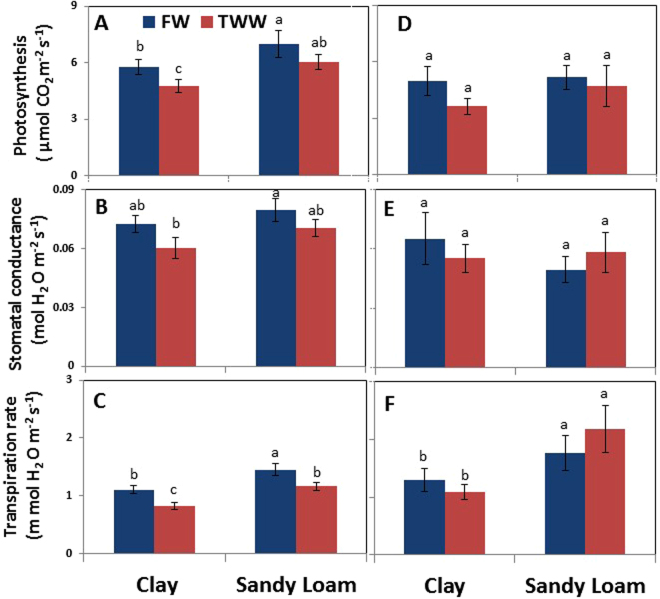
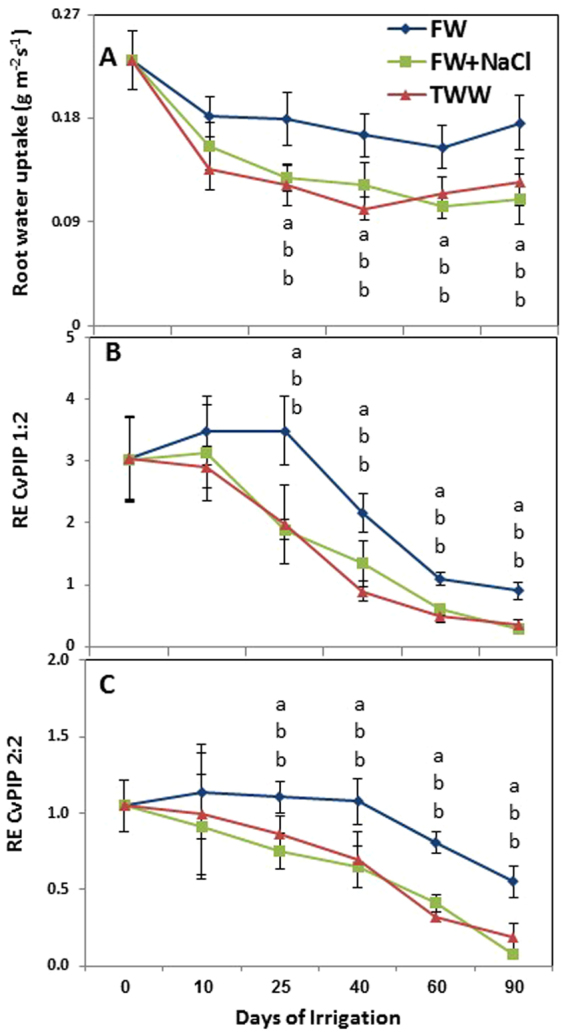
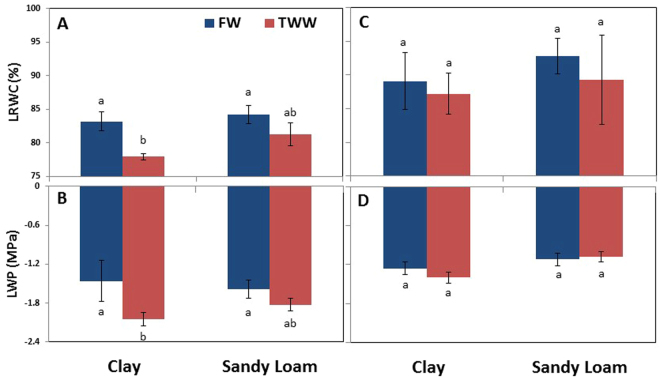
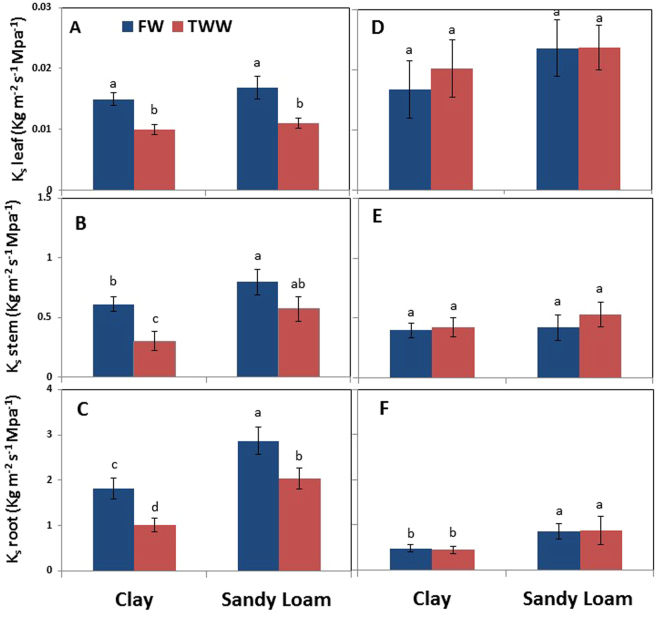
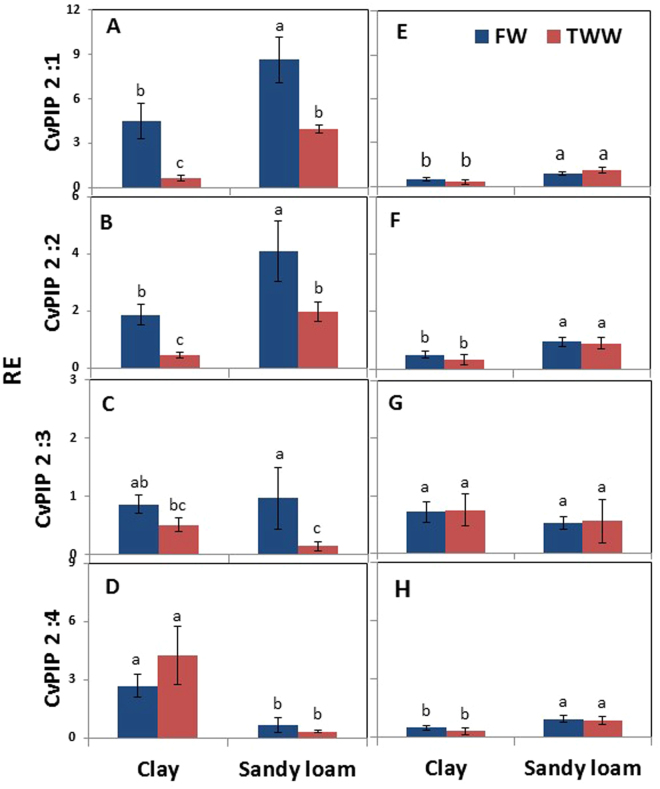
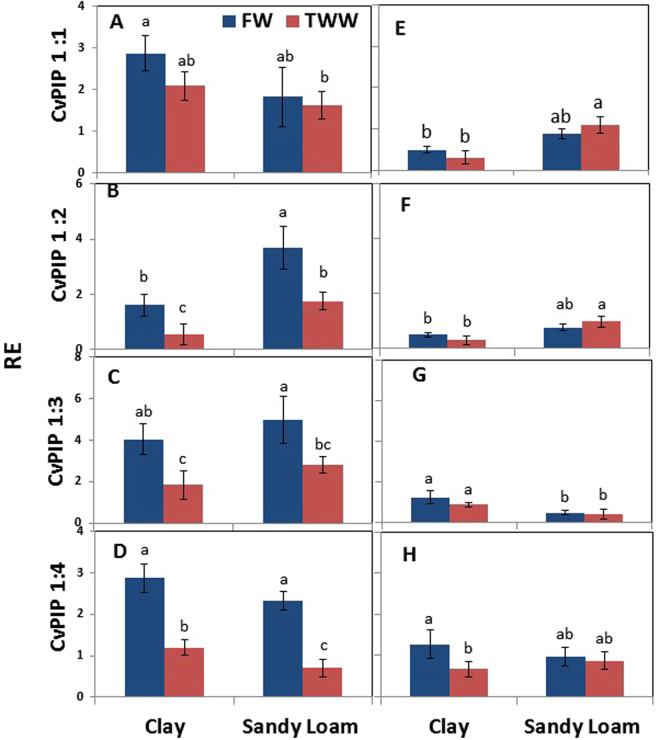
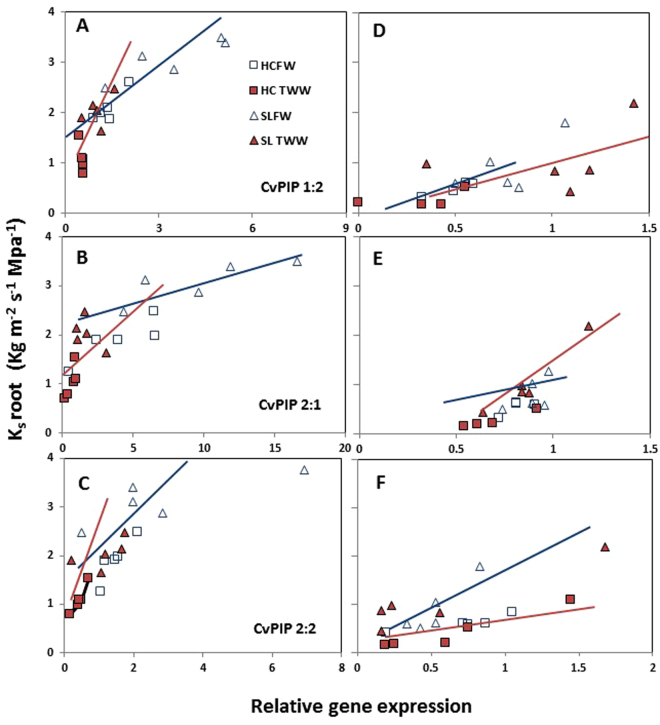
Citrus hydraulic physiology and PIP transcript levels were characterized in heavy (clay) and light (sandy loam) soils with and without treated waste water (TWW) irrigation after a summer irrigation season and at the end of a winter rainy season recovery period. Consistent reductions in clay soils compared to sandy loam were found for fresh water (FW) and TWW irrigation, respectively, in root water uptake, as well as in hydraulic conductivity of whole plant (K plant), stem (K stem) and root (K root). Transcript levels of most PIPs down-regulated following TWW irrigation in both soils, but relative gene expression of three PIPs was significantly higher in summer for sandy soil and FW than for clay soil and TWW; their mRNA levels was significantly correlated to K root. A pot experiment, which compared short term influences of saline and TWW found that both treatments, compared to FW, reduced root water uptake and PIPs mRNA levels by 2-fold after 20 days, and the decreases continued with time until the end of the experiment. These latter data indicated that salinity had an important influence. Our results suggest that plant hydraulic adjustment to soil texture and water quality occurs rapidly, i.e. within days, and is modulated by PIPs expression.
在一个夏季灌溉季节后以及冬季雨季恢复期结束时,对柑橘在重质(黏土)和轻质(砂壤土)土壤中,分别采用和不采用经处理的废水(TWW)灌溉的情况下,其水分生理和水孔蛋白(PIP)转录水平进行了表征。与砂壤土相比,在黏土中,分别采用淡水(FW)和TWW灌溉时,根的水分吸收以及整株植物(K植株)、茎(K茎)和根(K根)的导水率均持续降低。在两种土壤中,TWW灌溉后大多数PIP的转录水平均下调,但在夏季,三种PIP的相对基因表达在砂土和FW处理中显著高于黏土和TWW处理;它们的mRNA水平与K根显著相关。一项盆栽试验比较了盐分和TWW的短期影响,发现与FW相比,两种处理在20天后根的水分吸收和PIPs的mRNA水平均降低了2倍,并且这种降低随着时间持续到试验结束。这些数据表明盐分有重要影响。我们的结果表明,植物对土壤质地和水质的水分调节在数天内迅速发生,并且受PIPs表达的调节。