School of Pharmaceutical Sciences, Wenzhou Medical University; Wenzhou 325035, China.
Department of Forensic Medicine, School of Medicine, Xi'an Jiaotong University, Xi'an 710061, China.
Molecules. 2017 Nov 13;22(11):1960. doi: 10.3390/molecules22111960.
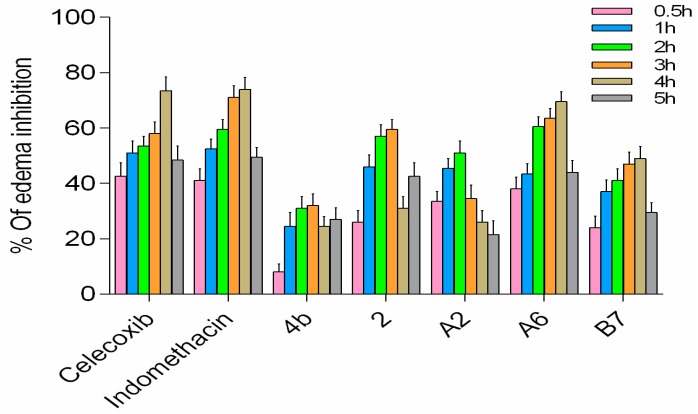
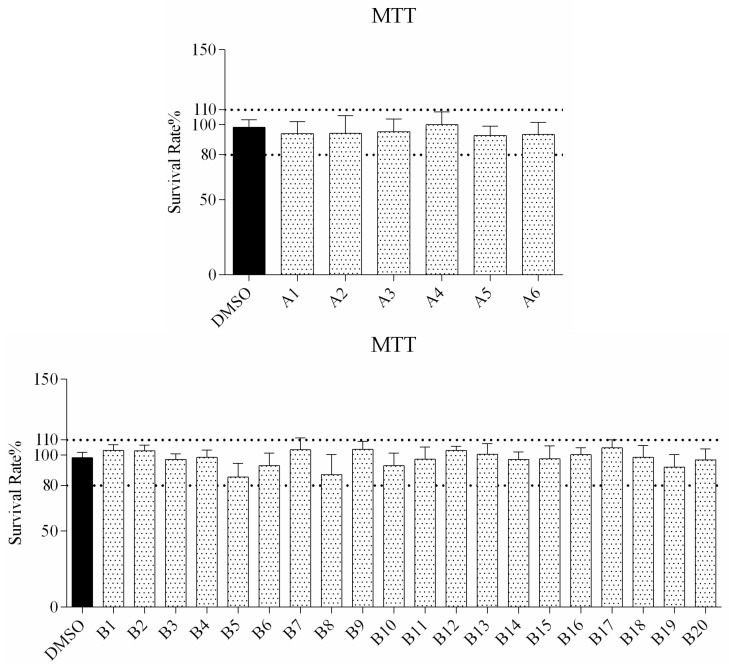
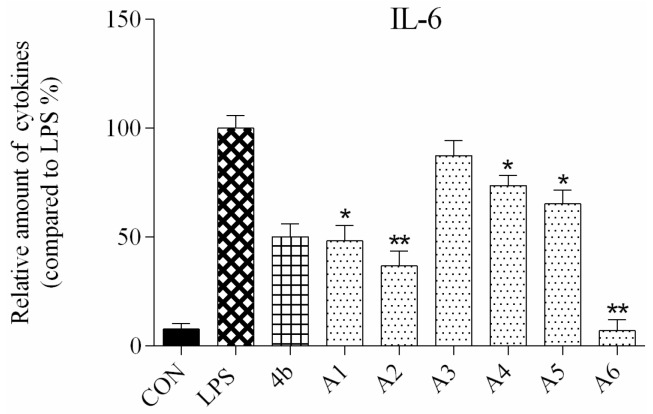
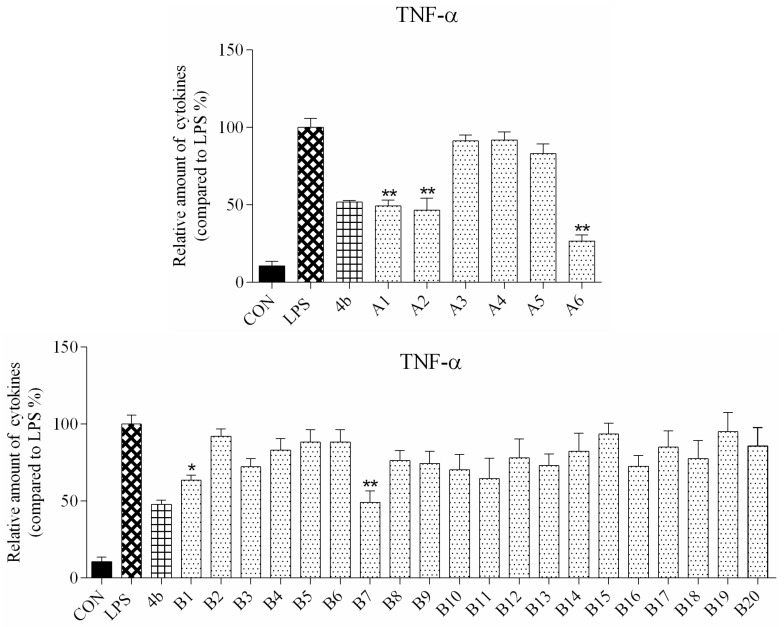
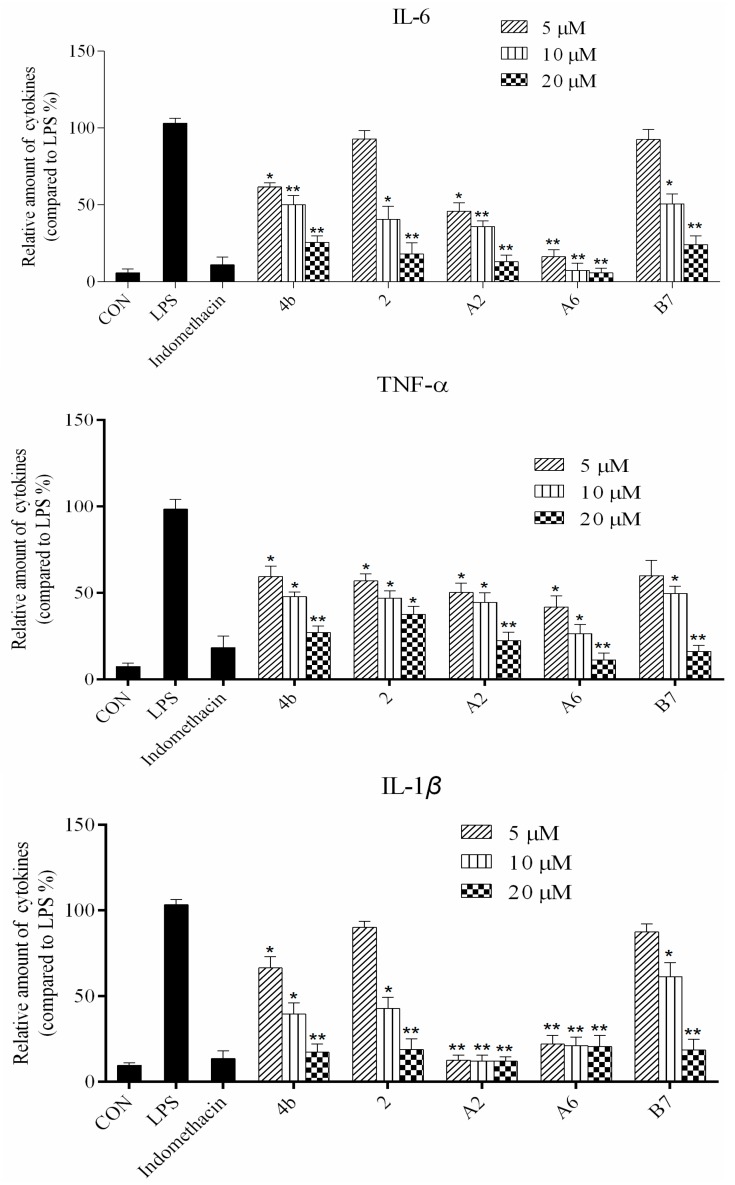
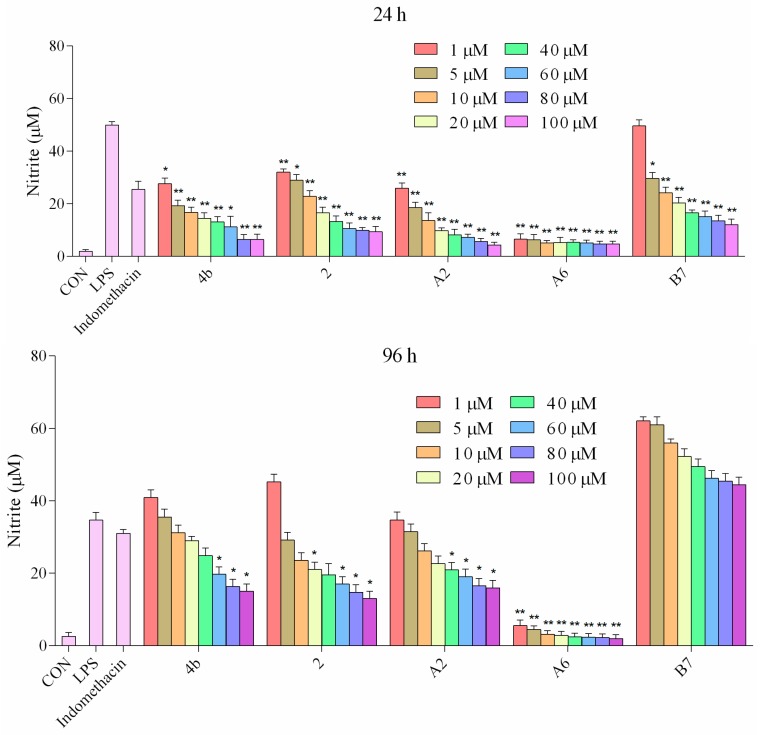
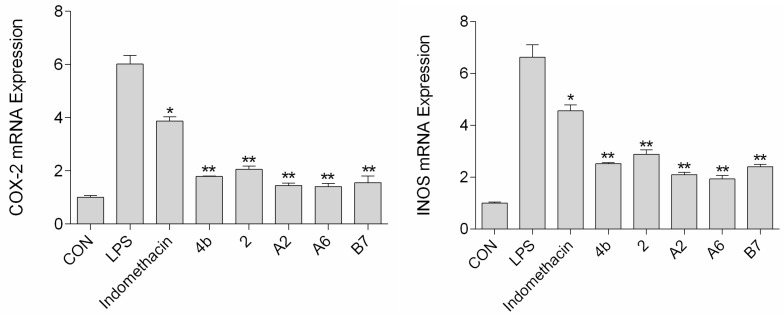
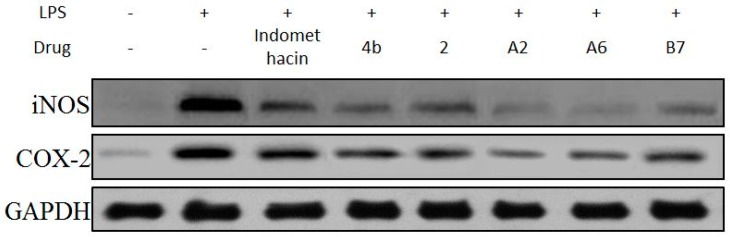
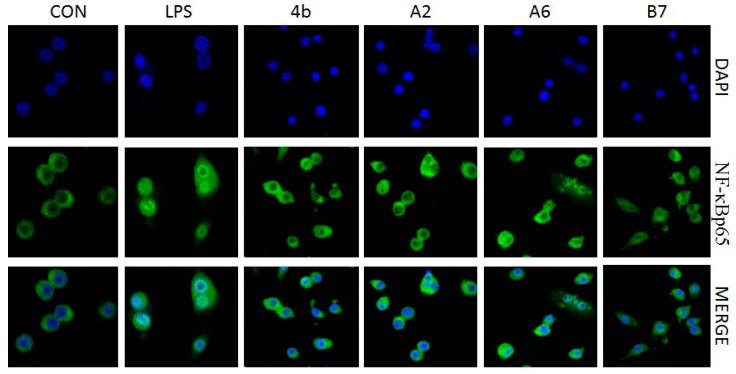
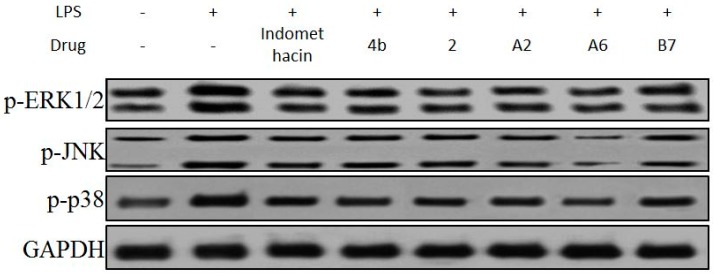
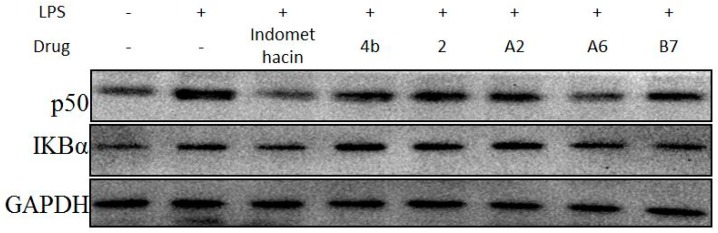
We designed and synthesized 26 prototype compounds and studied their anti-inflammatory activity and underlying molecular mechanisms. The inhibitory effects of the compounds on the production of nitric oxide (NO), cytokines, inflammatory-related proteins, and mRNAs in lipopolysaccharide (LPS)-stimulated macrophages were determined by the Griess assay, Enzyme linked immunosorbent assay (ELISA), Western blot analysis, and Reverse transcription-Polymerase Chain Reaction (RT-PCR), respectively. Our results indicated that treatment with , and significantly inhibited the secretion of NO and inflammatory cytokines in RAW264.7 cells without demonstrable cytotoxicity. It was also found that , and strongly suppressed the expression of inducible nitric oxide synthase (iNOS) and cyclooxygenase enzyme COX-2, and prevented nuclear translocation of nuclear factor κB (NF-κB) p65 by inhibiting the degradation of p50 and IκBα. Furthermore, the phosphorylation of mitogen-activated protein kinase (MAPKs) in LPS-stimulated RAW264.7 cells was significantly inhibited by , and . These findings suggest that , and may operate as an effective anti-inflammatory agent through inhibiting the activation of NF-κB and MAPK signaling pathways in macrophages. Moreover, rat paw swelling experiments showed that these compounds possess anti-inflammatory activity in vivo, with compound exhibiting similar activities to the reference drug Indomethacin.
我们设计并合成了 26 种原型化合物,并研究了它们的抗炎活性及其潜在的分子机制。通过格里塞斯测定法、酶联免疫吸附测定法(ELISA)、Western blot 分析和逆转录聚合酶链反应(RT-PCR),分别测定了化合物对脂多糖(LPS)刺激的巨噬细胞中一氧化氮(NO)、细胞因子、炎症相关蛋白和 mRNAs 产生的抑制作用。结果表明,化合物 、 和 处理可显著抑制 RAW264.7 细胞中 NO 和炎症细胞因子的分泌,且无明显细胞毒性。还发现化合物 、 和 可强烈抑制诱导型一氧化氮合酶(iNOS)和环氧化酶 COX-2 的表达,并通过抑制 p50 和 IκBα 的降解来阻止核因子 κB(NF-κB)p65 的核易位。此外,LPS 刺激的 RAW264.7 细胞中丝裂原活化蛋白激酶(MAPKs)的磷酸化也被 、 和 显著抑制。这些发现表明,化合物 、 和 可能通过抑制巨噬细胞中 NF-κB 和 MAPK 信号通路的激活来发挥有效的抗炎作用。此外,大鼠足肿胀实验表明,这些化合物在体内具有抗炎活性,其中化合物 表现出与参比药物吲哚美辛相似的活性。