Department of Chemistry, Indiana University, Bloomington, IN 47405, USA.
Department of Molecular & Cellular Biochemistry, Indiana University, Bloomington, IN 47405, USA.
Nucleic Acids Res. 2018 Jan 9;46(1):324-335. doi: 10.1093/nar/gkx1087.
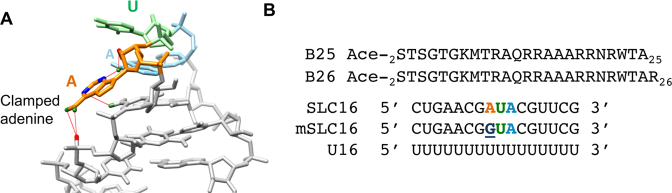
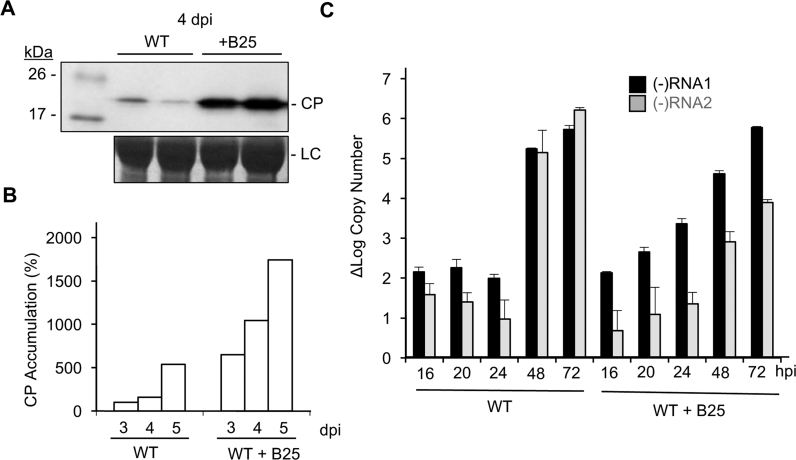
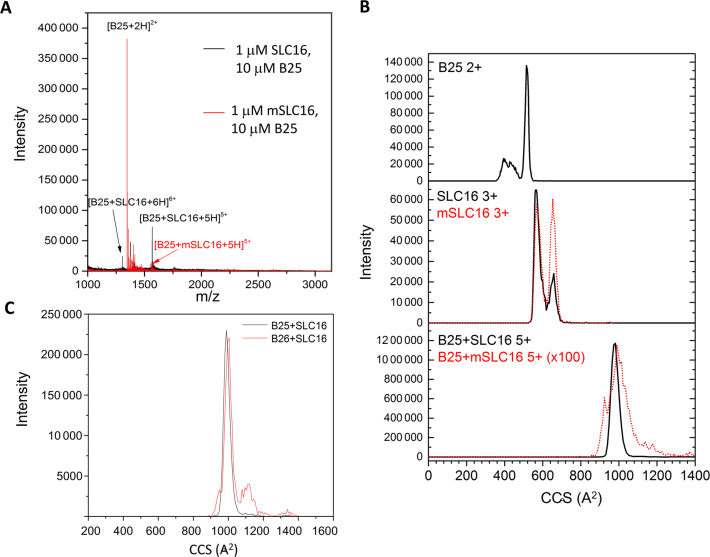
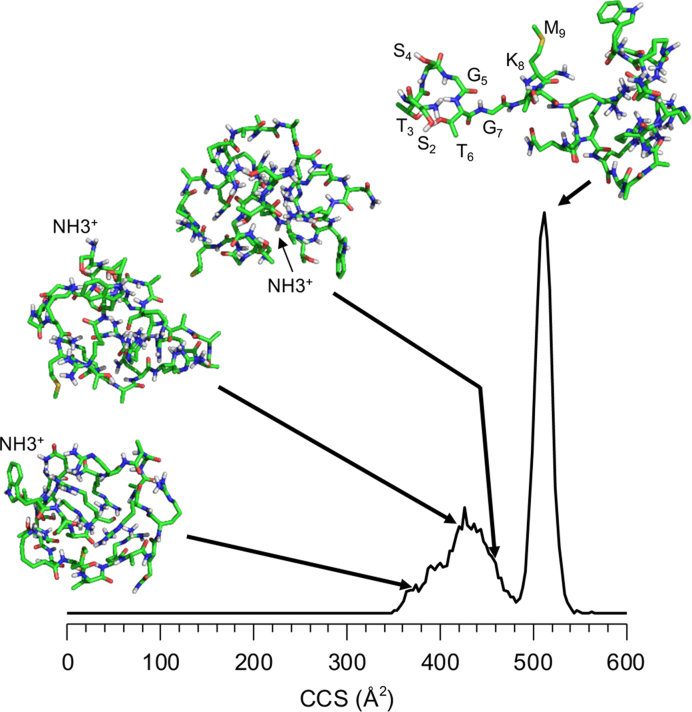
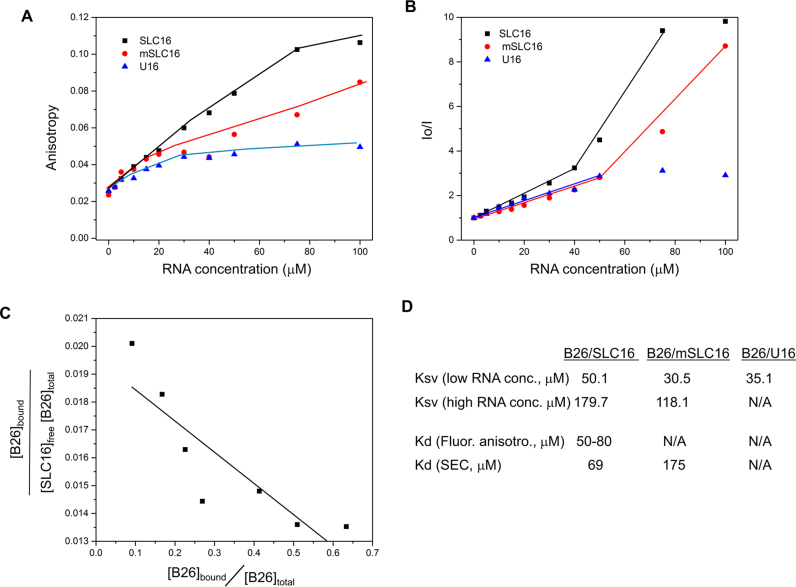
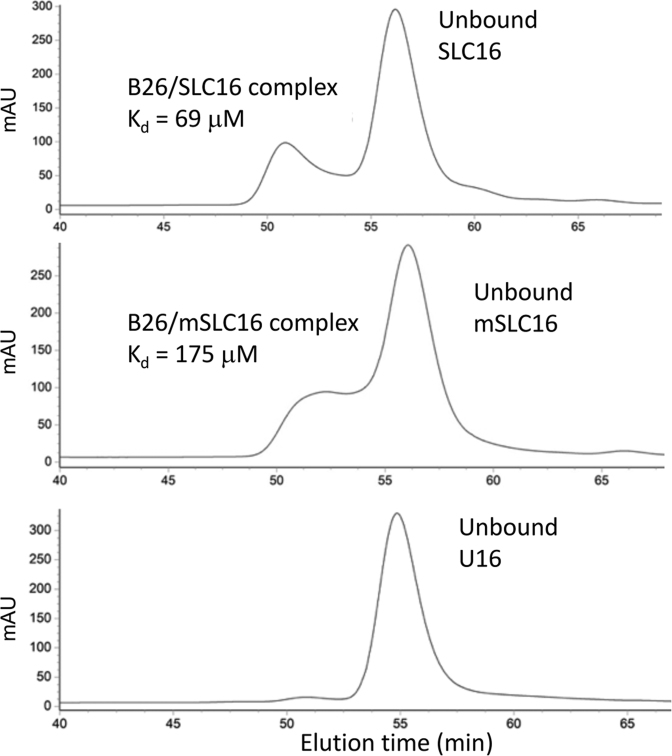
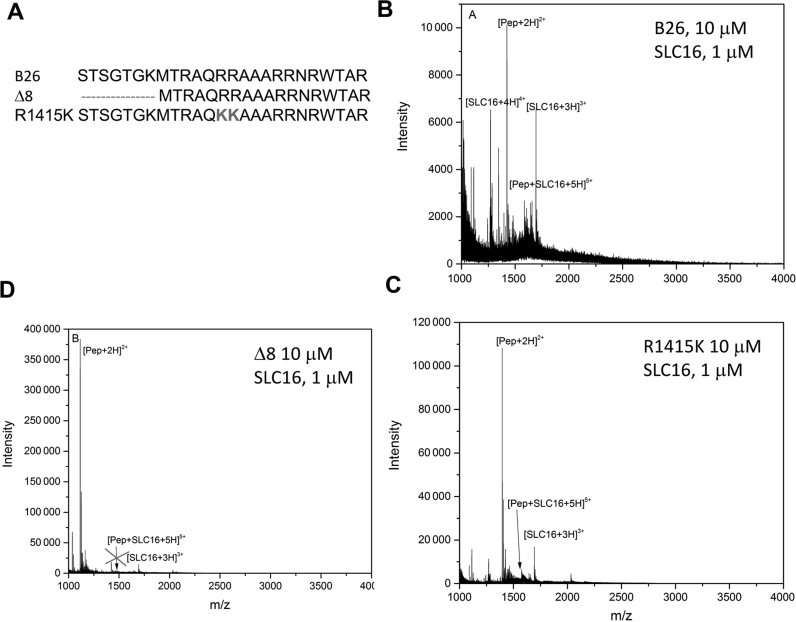
In the brome mosaic virus (BMV) virion, the coat protein (CP) selectively contacts the RNA motifs that regulate translation and RNA replication (Hoover et al., 2016. J. Virol. 90, 7748). We hypothesize that the unstructured N-terminal arm (NTA) of the BMV CP can specifically recognize RNA motifs. Using ion mobility spectrometry-mass spectrometry, we demonstrate that peptides containing the NTA of the CP were found to preferentially bind to an RNA hairpin motif that directs the initiation of BMV RNA synthesis. RNA binding causes the peptide to change from heterogeneous structures to a single family of structures. Fluorescence anisotropy, fluorescence quenching and size exclusion chromatography experiments all confirm that the NTA can specific recognize the RNA motif. The peptide introduced into plants along with BMV virion increased accumulation of the BMV CP and accelerated the rate of minus-strand RNA synthesis. The intrinsically disordered BMV NTA could thus specifically recognize BMV RNAs to affect viral infection.
在雀麦花叶病毒(BMV)病毒粒子中,外壳蛋白(CP)选择性地与调节翻译和 RNA 复制的 RNA 基序结合(Hoover 等人,2016 年。J. Virol. 90, 7748)。我们假设 BMV CP 的无规卷曲 N 端臂(NTA)可以特异性识别 RNA 基序。使用离子淌度质谱法,我们证明含有 CP NTA 的肽优先结合指导 BMV RNA 合成起始的 RNA 发夹基序。RNA 结合导致肽从异质结构转变为单一结构家族。荧光各向异性、荧光猝灭和尺寸排阻色谱实验均证实 NTA 可以特异性识别 RNA 基序。与 BMV 病毒粒子一起引入植物的肽增加了 BMV CP 的积累并加速了负链 RNA 合成的速度。因此,内在无序的 BMV NTA 可以特异性识别 BMV RNA 以影响病毒感染。