Anilkumar Ujval, Weisova Petronela, Schmid Jasmin, Bernas Tytus, Huber Heinrich J, Düssmann Heiko, Connolly Niamh M C, Prehn Jochen H M
Department of Physiology and Medical Physics and RCSI Centre for Systems Medicine, Royal College of Surgeons in Ireland, Dublin, Ireland.
PLoS One. 2017 Nov 16;12(11):e0188343. doi: 10.1371/journal.pone.0188343. eCollection 2017.
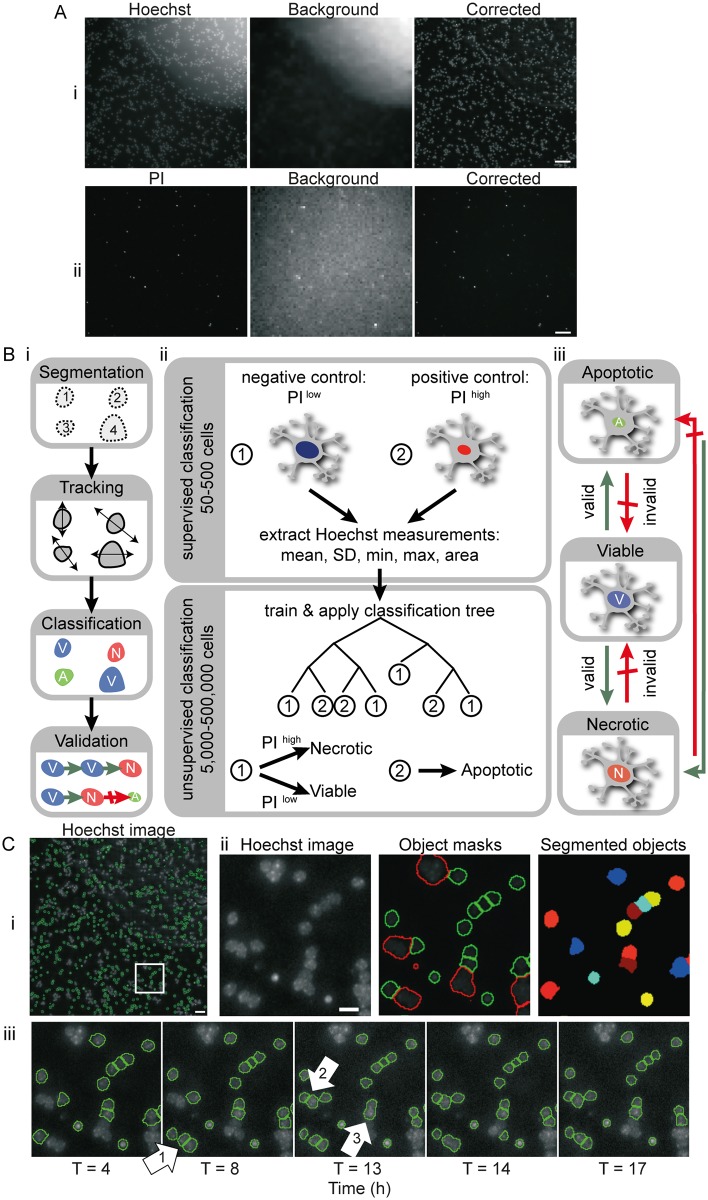
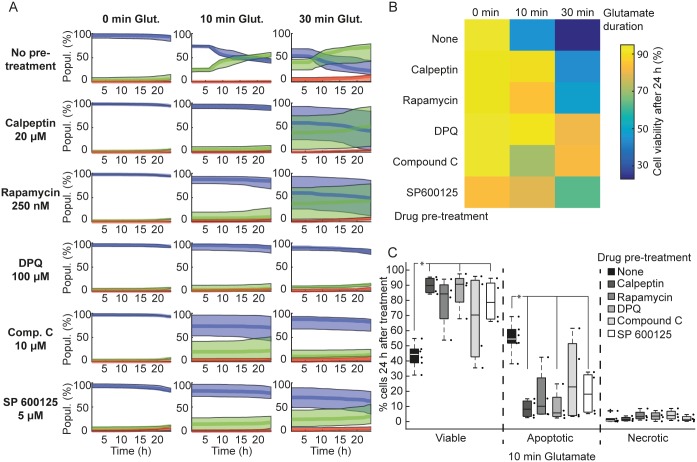
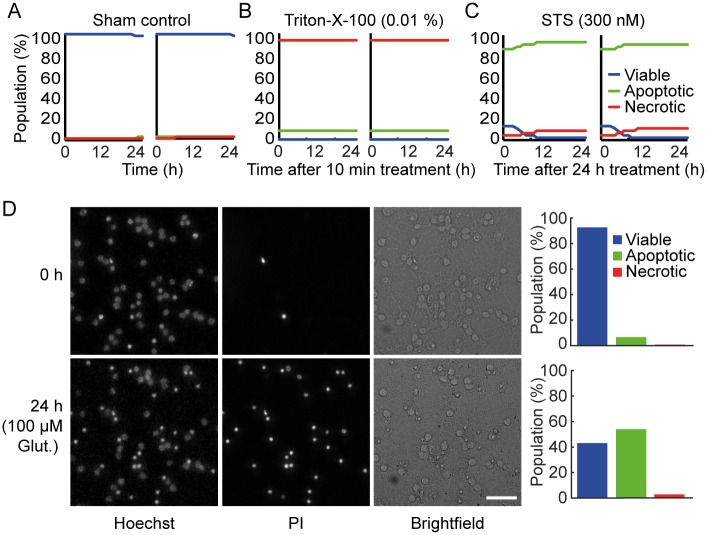
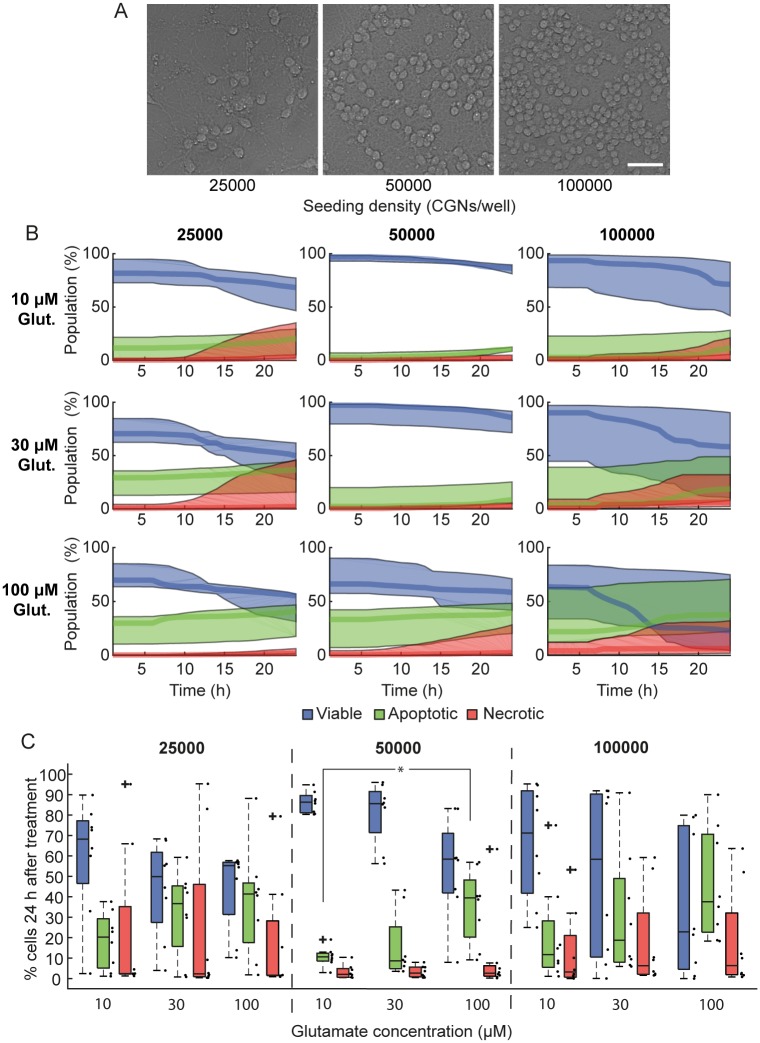
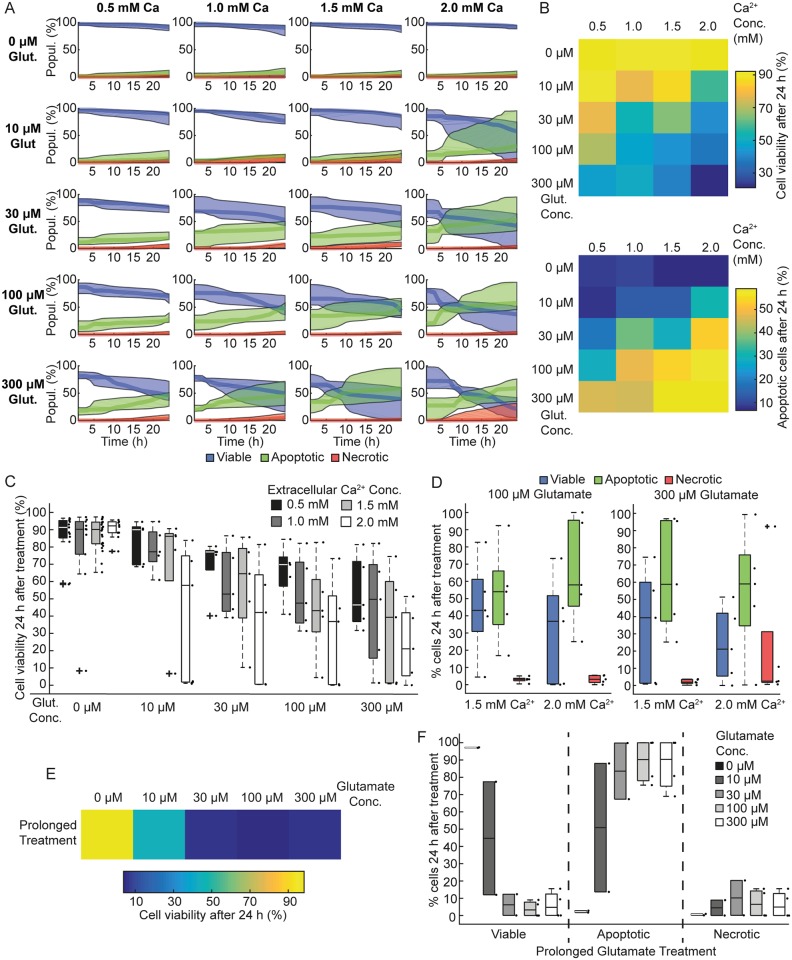
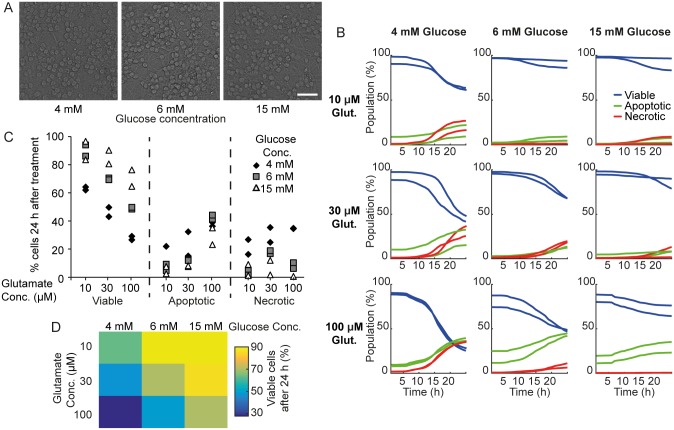
Cell death induced by excessive glutamate receptor overactivation, excitotoxicity, has been implicated in several acute and chronic neurological disorders. While numerous studies have demonstrated the contribution of biochemically and genetically activated cell death pathways in excitotoxic injury, the factors mediating passive, excitotoxic necrosis are less thoroughly investigated. To address this question, we developed a high content screening (HCS) based assay to collect high volumes of quantitative cellular imaging data and elucidated the effects of intrinsic and external factors on excitotoxic necrosis and apoptosis. The analysis workflow consisted of robust nuclei segmentation, tracking and a classification algorithm, which enabled automated analysis of large amounts of data to identify and quantify viable, apoptotic and necrotic neuronal populations. We show that mouse cerebellar granule neurons plated at low or high density underwent significantly increased necrosis compared to neurons seeded at medium density. Increased extracellular Ca2+ sensitized neurons to glutamate-induced excitotoxicity, but surprisingly potentiated cell death mainly through apoptosis. We also demonstrate that inhibition of various cell death signaling pathways (including inhibition of calpain, PARP and AMPK activation) primarily reduced excitotoxic apoptosis. Excitotoxic necrosis instead increased with low extracellular glucose availability. Our study is the first of its kind to establish and implement a HCS based assay to investigate the contribution of external and intrinsic factors to excitotoxic apoptosis and necrosis.
由过量谷氨酸受体过度激活所诱导的细胞死亡,即兴奋毒性,与多种急性和慢性神经疾病有关。虽然众多研究已证明生化和基因激活的细胞死亡途径在兴奋毒性损伤中的作用,但介导被动性兴奋毒性坏死的因素却较少得到深入研究。为解决这一问题,我们开发了一种基于高内涵筛选(HCS)的检测方法,以收集大量定量细胞成像数据,并阐明内在和外在因素对兴奋毒性坏死和凋亡的影响。分析流程包括稳健的细胞核分割、跟踪和分类算法,可对大量数据进行自动分析,以识别和量化存活、凋亡和坏死的神经元群体。我们发现,与以中等密度接种的神经元相比,以低密度或高密度接种的小鼠小脑颗粒神经元发生的坏死显著增加。细胞外Ca2+增加使神经元对谷氨酸诱导的兴奋毒性更敏感,但令人惊讶的是,它主要通过凋亡增强细胞死亡。我们还证明,抑制各种细胞死亡信号通路(包括抑制钙蛋白酶、PARP和AMPK激活)主要减少兴奋毒性凋亡。相反,随着细胞外葡萄糖可用性降低,兴奋毒性坏死增加。我们的研究首次建立并实施了一种基于HCS的检测方法,以研究外在和内在因素对兴奋毒性凋亡和坏死的作用。