Mard Seyyed Ali, Akbari Ghaidafeh, Mansouri Esrafil, Parsanahad Mahdi
Research Center for Infectious Diseases of Digestive System (Alimentary Tract Research Center), Physiology Research Center (PRC), Dept. of Physiology, School of Medicine, Ahvaz Jundishapur University of Medical Sciences, Ahvaz, Iran.
Cellular and Molecular Research Center, Department of Anatomic Sciences, School of Medicine, Ahvaz Jundishapur University of Medical Sciences, Ahvaz, Iran.
Iran J Basic Med Sci. 2017 Oct;20(10):1172-1177. doi: 10.22038/IJBMS.2017.9450.
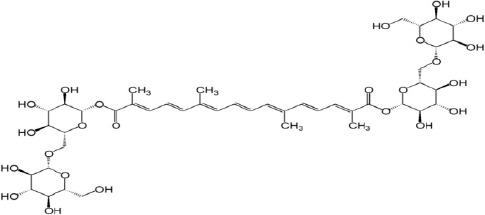
The objectives of the current study were to evaluate the effects of hepatic ischemia/reperfusion (IR) injury on the activity of antioxidant enzymes, biochemical factors, and histopathological changes in rat kidney, and to investigate the effect of crocin on IR-related changes.
Thirty-two male Wistar rats were randomly allocated into four groups (n=8). They were sham-operated, IR, crocin pre-treatment, and crocin pretreatment+IR groups. Sham-operated and Crocin pre-treatment groups received normal saline (N/S, 2 ml/day) and crocin (200 mg/kg) for seven consecutive days intraperitoneally (IP), respectively, then rats underwent laparotomy, only. IR and crocin pretreatment+IR groups received N/S and crocin with the same dose, time, and route, respectively, then rats underwent partial (70%) ischemia for 45 min that was followed by reperfusion for 60 min. At the end of the experiment, kidney specimens were taken for histopathological and antioxidant evaluations and also blood samples were obtained for biochemical analysis.
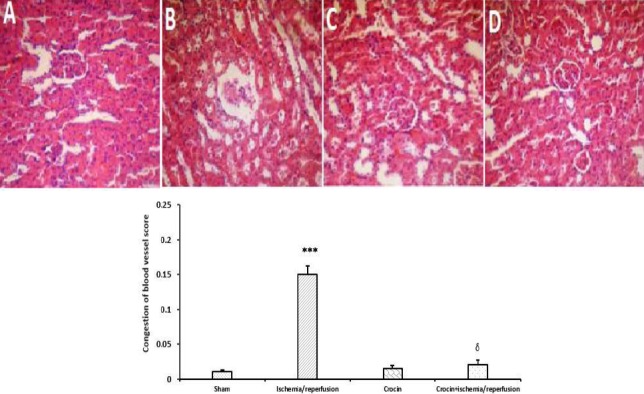
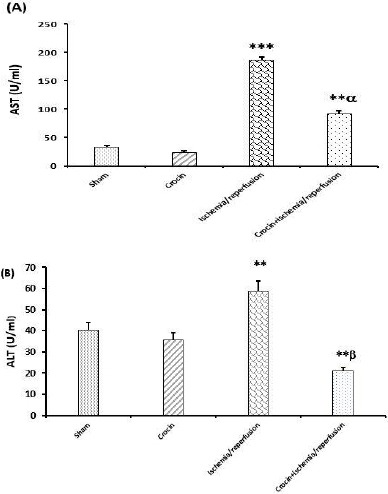
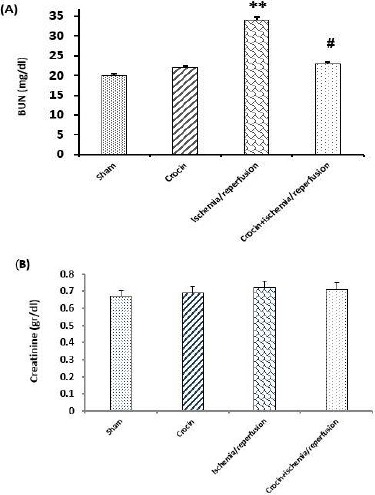
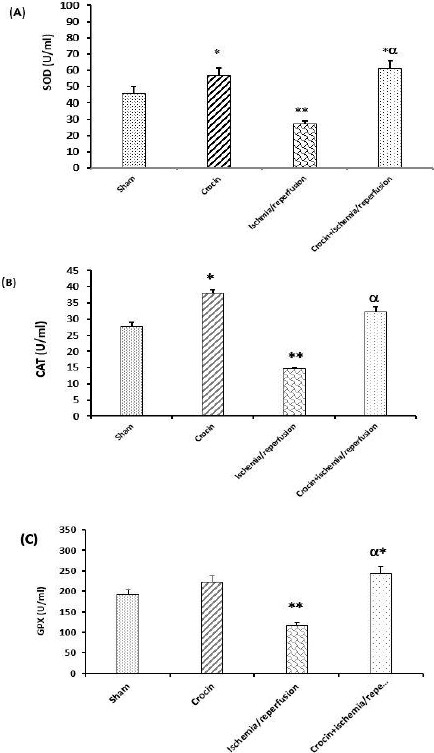
The results of the present study showed that crocin pre-treatment significantly increased the activity of antioxidants, decreased the serum levels of liver enzymes and blood urea nitrogen following IR-induced hepatic injury. Crocin also ameliorated kidney's histopathological disturbance beyond IR-induced hepatic injury.
Crocin as an antioxidant agent protected renal insult following liver IR injury by increasing the activity of antioxidant enzymes, reducing serum levels of liver enzymes, and improving histopathological changes.
本研究的目的是评估肝脏缺血/再灌注(IR)损伤对大鼠肾脏抗氧化酶活性、生化因子及组织病理学变化的影响,并研究藏红花素对IR相关变化的作用。
32只雄性Wistar大鼠随机分为四组(n = 8)。分别为假手术组、IR组、藏红花素预处理组和藏红花素预处理+IR组。假手术组和藏红花素预处理组分别连续7天腹腔注射生理盐水(N/S,2 ml/天)和藏红花素(200 mg/kg),然后仅进行剖腹手术。IR组和藏红花素预处理+IR组分别以相同剂量、时间和途径给予N/S和藏红花素,然后大鼠进行部分(70%)缺血45分钟,随后再灌注60分钟。实验结束时,取肾脏标本进行组织病理学和抗氧化评估,并采集血样进行生化分析。
本研究结果表明,藏红花素预处理可显著提高抗氧化剂活性,降低IR诱导的肝损伤后血清肝酶和血尿素氮水平。藏红花素还改善了IR诱导的肝损伤之外的肾脏组织病理学紊乱。
藏红花素作为一种抗氧化剂,通过提高抗氧化酶活性、降低血清肝酶水平和改善组织病理学变化,保护肝脏IR损伤后的肾脏损伤。