Branch Thomas, Stinton Shaun, Sharma Adrija, Lavoie Frederic, Guier Christian, Neyret Philippe
University Orthopedics, Decatur, GA, USA.
ArthroMetrix, 441 Armour Place NE, Atlanta, GA, 30324, USA.
BMC Musculoskelet Disord. 2017 Nov 17;18(1):463. doi: 10.1186/s12891-017-1798-4.
The presence of a positive pivot shift after surgical repair of the ACL is considered an important indicator of a failed reconstruction. The ability to predict the result of a pivot shift test after an ACL reconstruction using variables that can be measured prior to surgery could provide an indication of which patients may be at-risk of a poor surgical outcome.The purpose of this study was to determine whether structural characteristics of the femur and tibia, measured using plain radiographs, were associated with the result of the pivot shift test in unilateral ACL reconstructed patients.
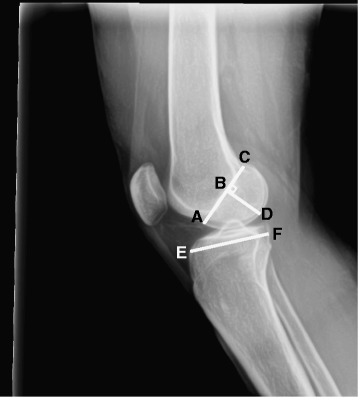
Sixteen patients who had undergone unilateral ACL reconstruction were divided into two groups based on the results of manual pivot shift testing: 1) Pivot group; and 2) No pivot group. All patients had standing true lateral radiographs of both knees. Structural measurements of the tibia and femur were made on both knees. In addition, two new variables were created to describe the tibiofemoral mismatch: 1) Femur Tibia Size Ratio (FTSR); and 2) Tibia to Posterior Femoral Condyle Ratio (TPFCR). These measures were compared within groups and between groups.
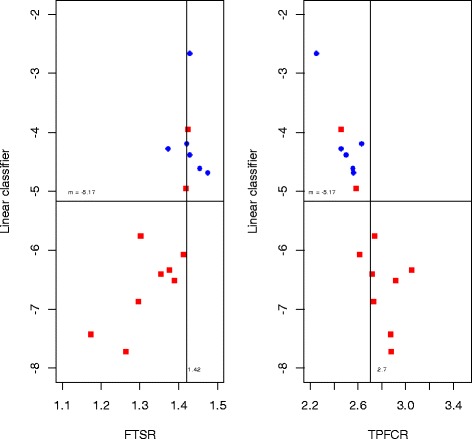
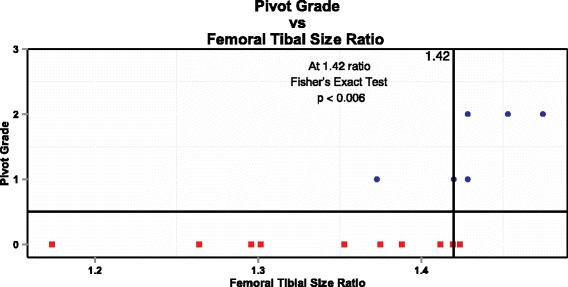
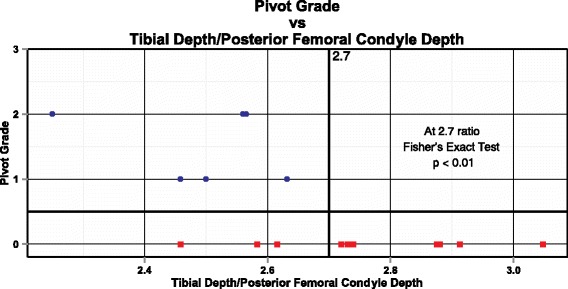
None of the individual structural characteristics were significantly different when compared between groups. No individual structural characteristics had a significant association with the presence of a positive pivot shift. When a between-group analysis was performed, both the FTSR (p < 0.03) and the TPFCR (p < 0.01) were significantly different between the Pivot group and the No Pivot group. A larger FTSR ratio, or a larger femur relative to the tibia, was associated with a positive pivot shift. A smaller TPFCR ratio, or a smaller tibial depth relative to the depth of the lateral posterior femoral condyle, was associated with a positive pivot shift.
Structural characteristics in the lateral femoral condyle and lateral tibial plateau were found to be associated with the presence of a positive pivot shift. These characteristics could separate between patients in the Pivot group and the No Pivot group. Two indices, the FTSR and the TPFCR, provided better predictive value than individual characteristics in identifying patients with a knee that was structurally "at-risk" for developing a positive pivot shift.
前交叉韧带(ACL)手术修复后出现阳性轴移被认为是重建失败的重要指标。利用术前可测量的变量来预测ACL重建后轴移试验结果的能力,可为哪些患者手术效果不佳提供风险提示。本研究的目的是确定使用普通X线片测量的股骨和胫骨结构特征是否与单侧ACL重建患者的轴移试验结果相关。
16例接受单侧ACL重建的患者根据手法轴移试验结果分为两组:1)轴移组;2)无轴移组。所有患者均拍摄了双膝关节站立位真正侧位X线片。对双膝关节的胫骨和股骨进行结构测量。此外,还创建了两个新变量来描述胫股不匹配情况:1)股骨胫骨尺寸比(FTSR);2)胫骨与股骨后髁比率(TPFCR)。对这些测量值在组内和组间进行比较。
组间比较时,各单一结构特征均无显著差异。没有单一结构特征与阳性轴移的存在有显著关联。进行组间分析时,轴移组和无轴移组之间的FTSR(p < 0.03)和TPFCR(p < 0.01)均有显著差异。FTSR比值越大,即相对于胫骨股骨越大,与阳性轴移相关。TPFCR比值越小,即相对于股骨外侧后髁深度胫骨深度越小,与阳性轴移相关。
发现股骨外侧髁和胫骨外侧平台的结构特征与阳性轴移的存在相关。这些特征可区分轴移组和无轴移组的患者。在识别膝关节结构上有发生阳性轴移“风险”的患者时,FTSR和TPFCR这两个指标比单一特征具有更好的预测价值。