Department of Human Nutrition, Foods, and Exercise, Fralin Translational Obesity Research Center, College of Agriculture and Life Science, Virginia Tech, Blacksburg, VA 24061, USA.
Department of Human Nutrition, Foods, and Exercise, Fralin Translational Obesity Research Center, College of Agriculture and Life Science, Virginia Tech, Blacksburg, VA 24061, USA.
J Nutr Biochem. 2018 Apr;54:1-10. doi: 10.1016/j.jnutbio.2017.10.004. Epub 2017 Oct 23.
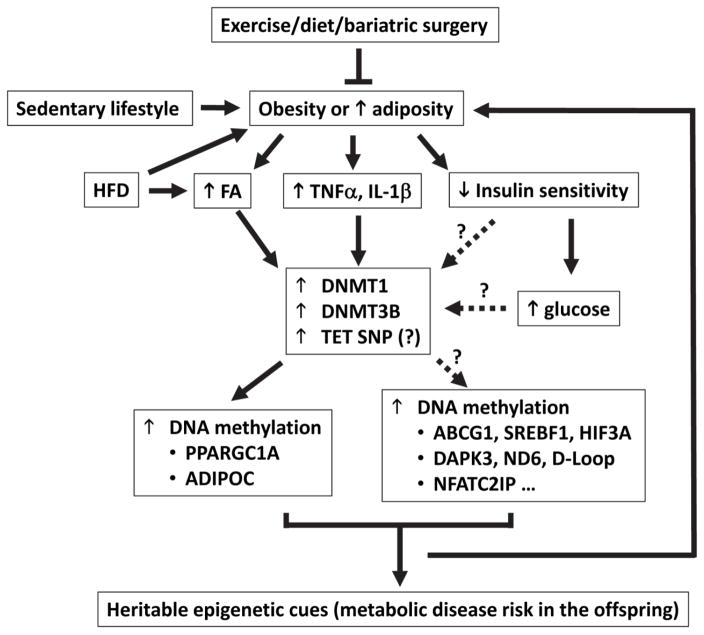
Environmental factors (e.g., malnutrition and physical inactivity) contribute largely to metabolic disorders including obesity, type 2 diabetes, cardiometabolic disease and nonalcoholic fatty liver diseases. The abnormalities in metabolic activity and pathways have been increasingly associated with altered DNA methylation, histone modification and noncoding RNAs, whereas lifestyle interventions targeting diet and physical activity can reverse the epigenetic and metabolic changes. Here we review recent evidence primarily from human studies that links DNA methylation reprogramming to metabolic derangements or improvements, with a focus on cross-tissue (e.g., the liver, skeletal muscle, pancreas, adipose tissue and blood samples) epigenetic markers, mechanistic mediators of the epigenetic reprogramming, and the potential of using epigenetic traits to predict disease risk and intervention response. The challenges in epigenetic studies addressing the mechanisms of metabolic diseases and future directions are also discussed and prospected.
环境因素(例如,营养不良和缺乏身体活动)在很大程度上导致代谢紊乱,包括肥胖、2 型糖尿病、心脏代谢疾病和非酒精性脂肪性肝病。代谢活动和途径的异常与 DNA 甲基化、组蛋白修饰和非编码 RNA 的改变越来越相关,而针对饮食和身体活动的生活方式干预可以逆转表观遗传和代谢变化。在这里,我们主要回顾来自人类研究的最新证据,这些证据将 DNA 甲基化重编程与代谢紊乱或改善联系起来,重点关注跨组织(例如,肝脏、骨骼肌、胰腺、脂肪组织和血液样本)的表观遗传标记物、表观遗传重编程的机制介导物,以及利用表观遗传特征来预测疾病风险和干预反应的潜力。还讨论了在解决代谢疾病的机制方面的表观遗传研究中的挑战和未来方向,并进行了展望。