Chan Wai-Kit, Price David J, Pratt Thomas
Centre for Integrative Physiology, Edinburgh Medical School Biomedical Sciences, The University of Edinburgh, Edinburgh, EH8 9XD, UK.
Centre for Integrative Physiology, Edinburgh Medical School Biomedical Sciences, The University of Edinburgh, Edinburgh, EH8 9XD, UK
Biol Open. 2017 Dec 15;6(12):1933-1942. doi: 10.1242/bio.028605.
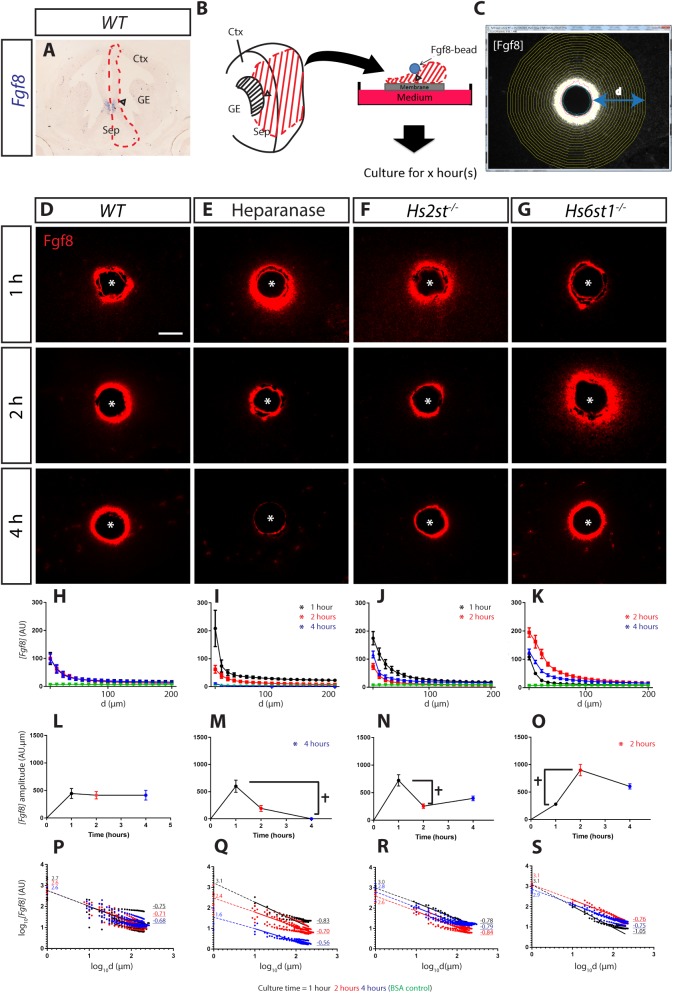
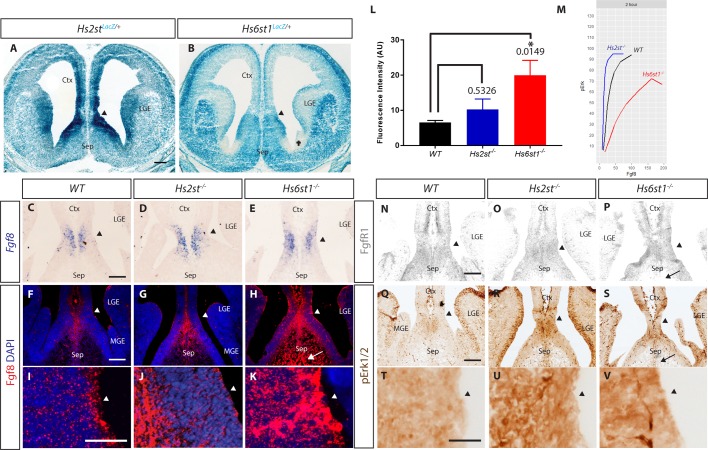
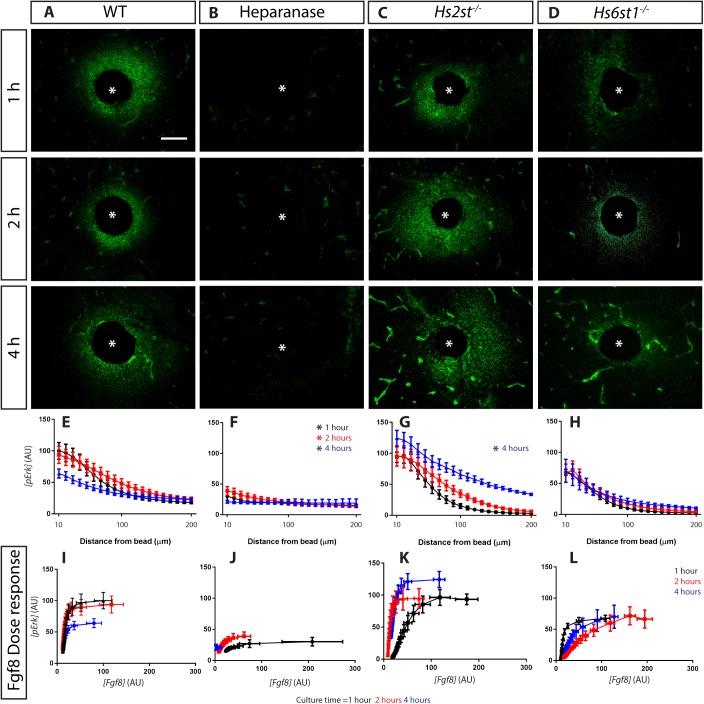
Fibroblast growth factor (FGF) morphogen signalling through the evolutionarily ancient extracellular signalling-regulated kinase/mitogen activated protein kinase (ERK/MAPK) pathway recurs in many neural and non-neural developmental contexts, and understanding the mechanisms that regulate FGF/ERK function are correspondingly important. The glycosaminoglycan heparan sulphate (HS) binds to FGFs and exists in an enormous number of differentially sulphated forms produced by the action of HS modifying enzymes, and so has the potential to present an extremely large amount of information in FGF/ERK signalling. Although there have been many studies demonstrating that HS is an important regulator of FGF function, experimental evidence on the role of the different HS modifying enzymes on FGF gradient formation has been lacking until now. We challenged developing mouse neural tissue, in which HS had either been enzymatically removed by heparanase treatment or lacking either the HS modifying enzymes Hs2st ( tissue) or Hs6st1 ( tissue), with exogenous Fgf8 to gain insight on how HS and the function of these two HS modifying enzymes impacts on Fgf8 gradient formation from an exogenously supplied source of Fgf8 protein. We discover that two different HS modifying enzymes, and , indeed differentially modulate the properties of emerging Fgf8 protein concentration gradients and the Erk signalling output in response to Fgf8 in living tissue in cultures. Both Hs2st and Hs6st1 are required for stable Fgf8 gradients to form as rapidly as they do in wild-type tissue while only Hs6st1 has a significant effect on suppressing the levels of Fgf8 protein in the gradient compared to wild type. Next we show that Hs2st and Hs6st1 act to antagonise and agonise the Erk signalling in response to Fgf8 protein, respectively, in cultures of living tissue. Examination of endogenous Fgf8 protein and Erk signalling outputs in and embryos suggests that our findings have physiological relevance Our discovery identifies a new class of mechanism to tune Fgf8 function by regulated expression of Hs2st and Hs6st1 that is likely to have broader application to the >200 other signalling proteins that interact with HS and their function in neural development and disease.
成纤维细胞生长因子(FGF)通过进化上古老的细胞外信号调节激酶/丝裂原活化蛋白激酶(ERK/MAPK)途径进行形态发生信号传导,在许多神经和非神经发育环境中反复出现,因此了解调节FGF/ERK功能的机制相应地很重要。糖胺聚糖硫酸乙酰肝素(HS)与FGF结合,并以由HS修饰酶作用产生的大量不同硫酸化形式存在,因此有潜力在FGF/ERK信号传导中呈现极大量的信息。尽管有许多研究表明HS是FGF功能的重要调节因子,但直到现在,关于不同HS修饰酶在FGF梯度形成中的作用的实验证据仍然缺乏。我们用外源性Fgf8刺激发育中的小鼠神经组织,其中HS要么通过肝素酶处理被酶促去除,要么缺乏HS修饰酶Hs2st(组织)或Hs6st1(组织),以深入了解HS和这两种HS修饰酶的功能如何影响从外源性供应的Fgf8蛋白源形成Fgf8梯度。我们发现,两种不同的HS修饰酶,确实在体外培养的活组织中对新兴的Fgf8蛋白浓度梯度的特性和响应Fgf8的Erk信号输出进行了不同的调节。Hs2st和Hs6st1都是稳定的Fgf8梯度像在野生型组织中那样快速形成所必需的,而与野生型相比,只有Hs6st1对抑制梯度中Fgf8蛋白的水平有显著影响。接下来我们表明,在活组织的体外培养中,Hs2st和Hs6st1分别对响应Fgf8蛋白的Erk信号传导起拮抗和激动作用。对Hs2st和Hs6st1基因敲除胚胎中内源性Fgf8蛋白和Erk信号输出的检查表明,我们的发现具有生理相关性。我们的发现确定了一种通过调节Hs2st和Hs6st1的表达来调节Fgf8功能的新机制类别,这可能更广泛地应用于与HS相互作用的其他200多种信号蛋白及其在神经发育和疾病中的功能。