Ibáñez Francisco J, Farías Mónica A, Retamal-Díaz Angello, Espinoza Janyra A, Kalergis Alexis M, González Pablo A
Departamento de Genética Molecular y Microbiología, Facultad de Ciencias Biológicas, Millennium Institute on Immunology and Immunotherapy, Pontificia Universidad Católica de Chile, Santiago, Chile.
Departamento de Endocrinología, Escuela de Medicina, Facultad de Medicina, Pontificia Universidad Católica de Chile, Santiago, Chile.
Front Microbiol. 2017 Oct 31;8:2108. doi: 10.3389/fmicb.2017.02108. eCollection 2017.
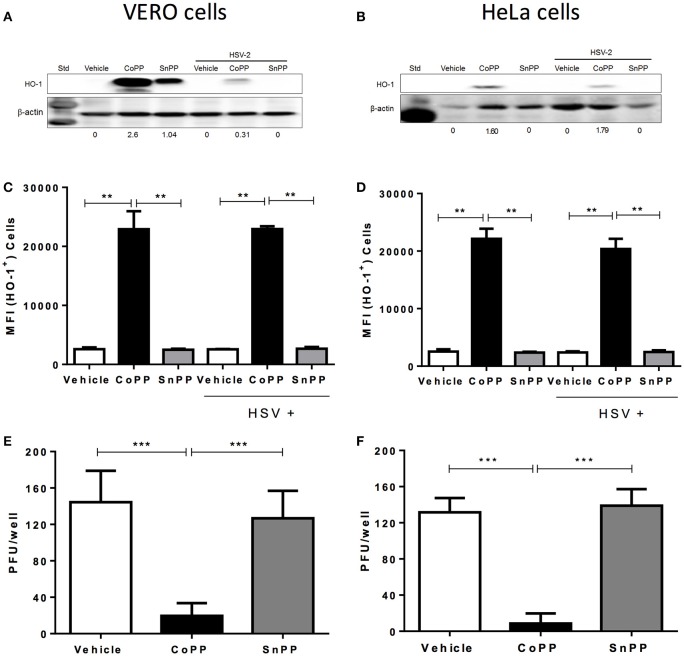
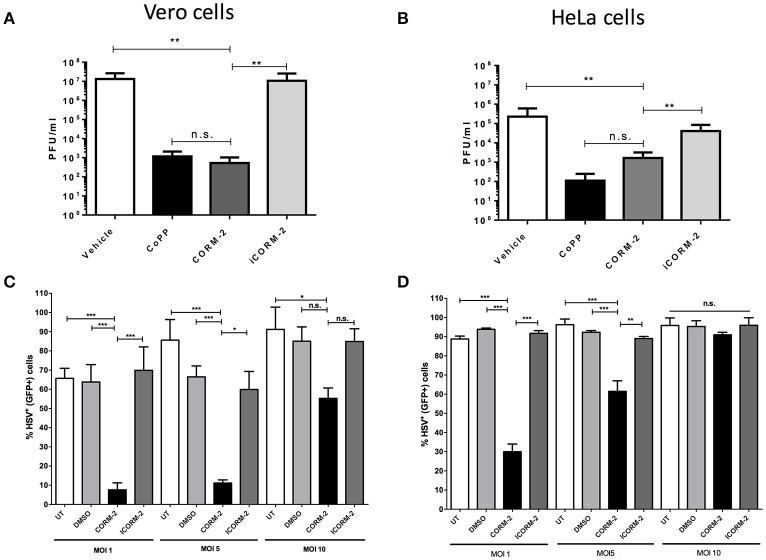
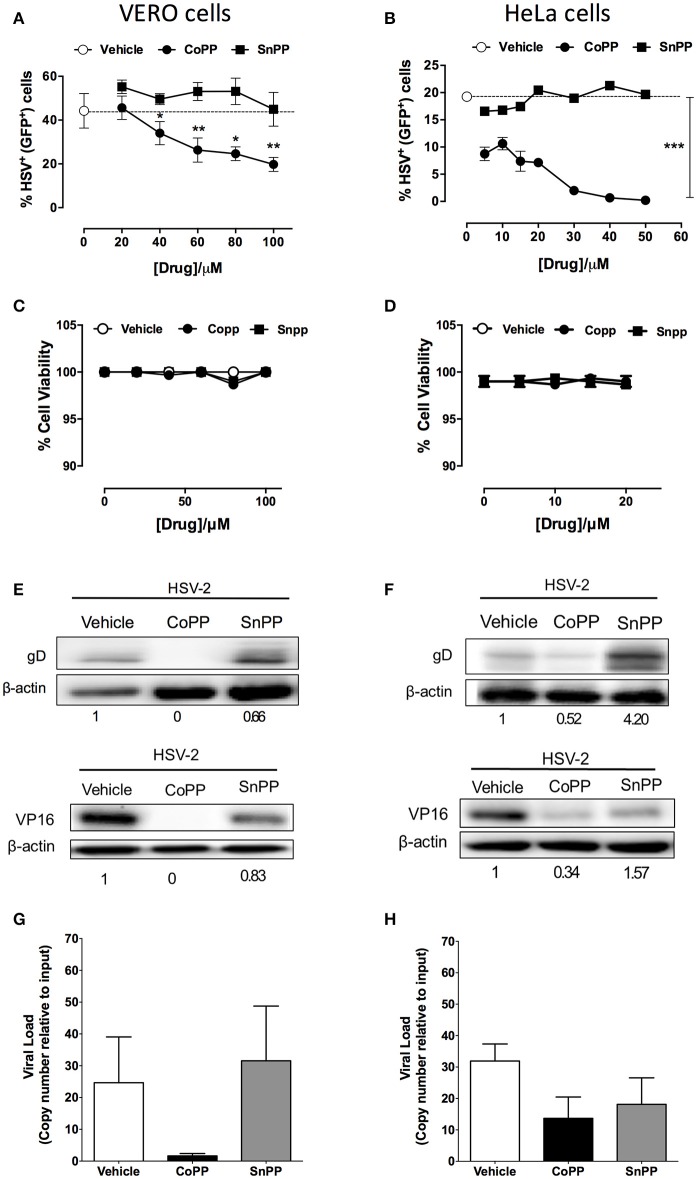
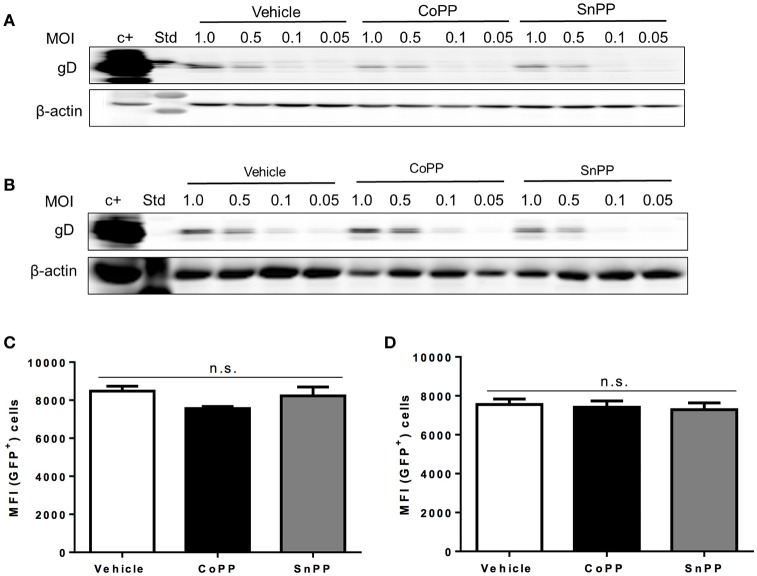
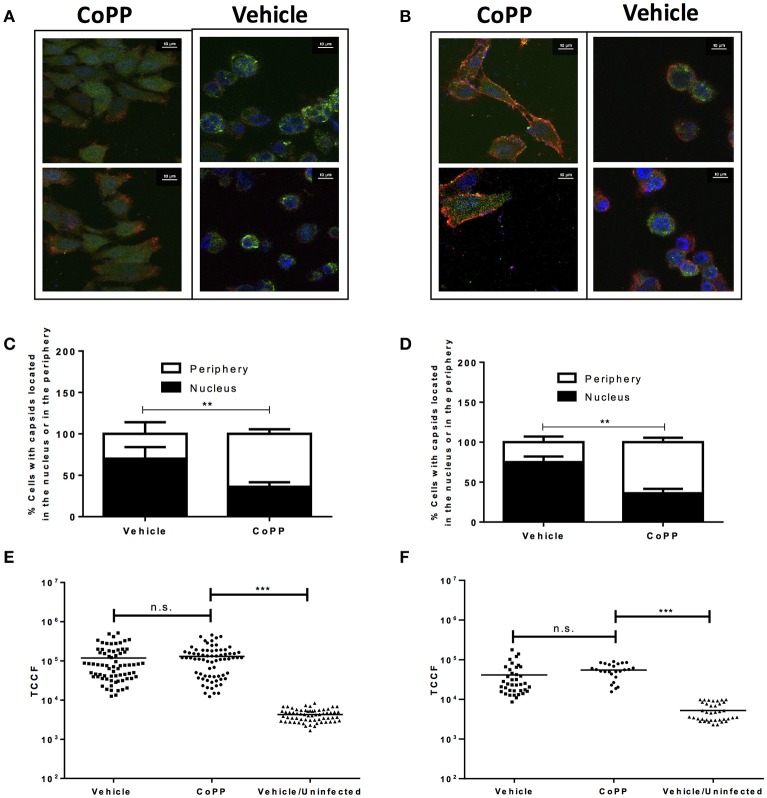
Heme oxygenase-1 (HO-1) is an inducible enzyme that is expressed in response to physical and chemical stresses, such as ultraviolet radiation, hyperthermia, hypoxia, reactive oxygen species (ROS), as well as cytokines, among others. Its activity can be positively modulated by cobalt protoporphyrin (CoPP) and negatively by tin protoporphirin (SnPP). Once induced, HO-1 degrades iron-containing heme into ferrous iron (Fe), carbon monoxide (CO) and biliverdin. Importantly, numerous products of HO-1 are cytoprotective with anti-apoptotic, anti-oxidant, anti-inflammatory, and anti-cancer effects. The products of HO-1 also display antiviral properties against several viruses, such as the human immunodeficiency virus (HIV), influenza, hepatitis B, hepatitis C, and Ebola virus. Here, we sought to assess the effect of modulating HO-1 activity over herpes simplex virus type 2 (HSV-2) infection in epithelial cells and neurons. There are no vaccines against HSV-2 and treatment options are scarce in the immunosuppressed, in which drug-resistant variants emerge. By using HSV strains that encode structural and non-structural forms of the green fluorescent protein (GFP), we found that pharmacological induction of HO-1 activity with CoPP significantly decreases virus plaque formation and the expression of virus-encoded genes in epithelial cells as determined by flow cytometry and western blot assays. CoPP treatment did not affect virus binding to the cell surface or entry into the cytoplasm, but rather downstream events in the virus infection cycle. Furthermore, we observed that treating cells with a CO-releasing molecule (CORM-2) recapitulated some of the anti-HSV effects elicited by CoPP. Taken together, these findings indicate that HO-1 activity interferes with the replication cycle of HSV and that its antiviral effects can be recapitulated by CO.
血红素加氧酶-1(HO-1)是一种诱导型酶,可响应物理和化学应激而表达,如紫外线辐射、热疗、缺氧、活性氧(ROS)以及细胞因子等。其活性可被钴原卟啉(CoPP)正向调节,被锡原卟啉(SnPP)负向调节。一旦被诱导,HO-1会将含铁血红素降解为亚铁离子(Fe)、一氧化碳(CO)和胆绿素。重要的是,HO-1的众多产物具有细胞保护作用,具有抗凋亡、抗氧化、抗炎和抗癌作用。HO-1的产物还对多种病毒具有抗病毒特性,如人类免疫缺陷病毒(HIV)、流感病毒、乙型肝炎病毒、丙型肝炎病毒和埃博拉病毒。在此,我们试图评估调节HO-1活性对单纯疱疹病毒2型(HSV-2)在上皮细胞和神经元中感染的影响。目前尚无针对HSV-2的疫苗,且在免疫抑制人群中治疗选择匮乏,其中会出现耐药变体。通过使用编码绿色荧光蛋白(GFP)结构和非结构形式的HSV毒株,我们发现用CoPP进行HO-1活性的药理学诱导可显著减少病毒空斑形成以及病毒编码基因的表达,这通过流式细胞术和蛋白质印迹分析得以确定。CoPP处理不影响病毒与细胞表面的结合或进入细胞质,而是影响病毒感染周期中的下游事件。此外,我们观察到用一氧化碳释放分子(CORM-2)处理细胞可重现CoPP引发的一些抗HSV效应。综上所述,这些发现表明HO-1活性会干扰HSV的复制周期,且其抗病毒效应可被CO重现。