Manohar Sanjay G, Pertzov Yoni, Husain Masud
Dept Experimental Psychology and Nuffield Dept of Clinical Neuroscience, University of Oxford, United Kingdom.
Dept of Psychology, The Hebrew University of Jerusalem, Israel.
Curr Opin Behav Sci. 2017 Oct;17:20-26. doi: 10.1016/j.cobeha.2017.05.023.
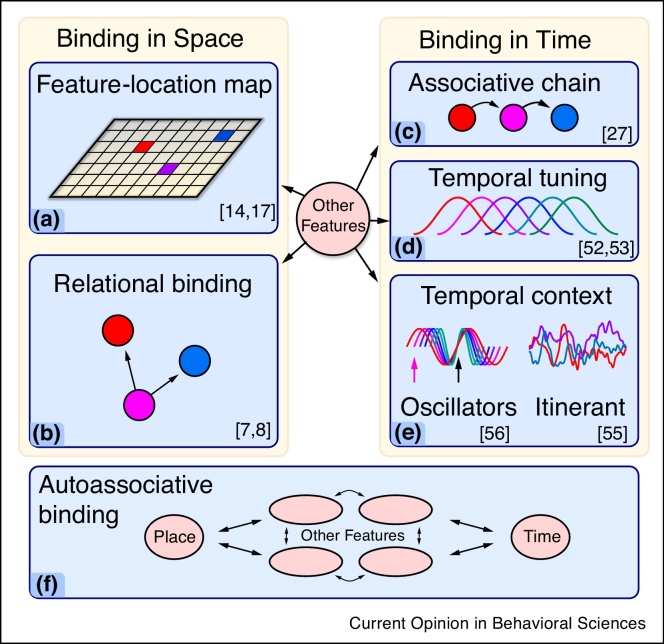
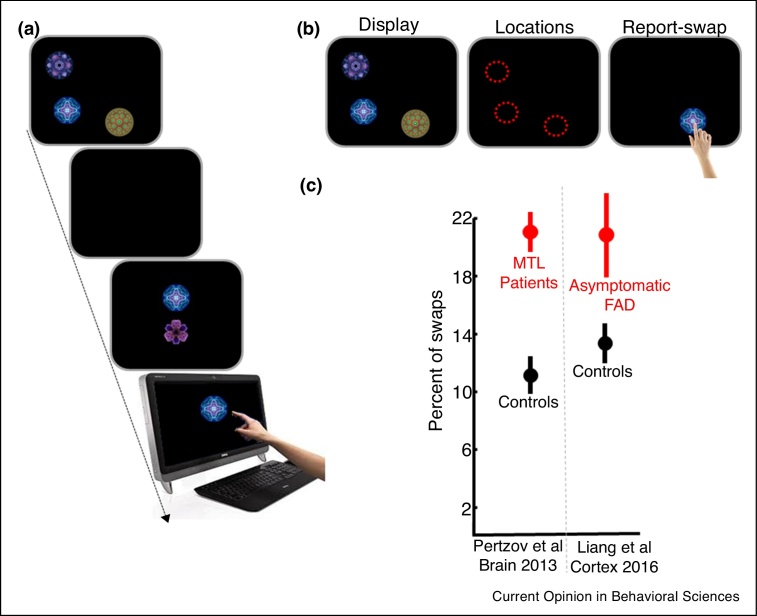
Space and time appear to play key roles in the way that information is organized in short-term memory (STM). Some argue that they are crucial contexts within which other stored features are embedded, allowing binding of information that belongs together within STM. Here we review recent behavioral, neurophysiological and imaging studies that have sought to investigate the nature of spatial, sequential and duration representations in STM, and how these might break down in disease. Findings from these studies point to an important role of the hippocampus and other medial temporal lobe structures in aspects of STM, challenging conventional accounts of involvement of these regions in only long-term memory.
空间和时间似乎在短期记忆(STM)中信息的组织方式上起着关键作用。一些人认为,它们是其他存储特征所嵌入的关键背景,使得在STM中属于同一类别的信息能够被绑定在一起。在这里,我们回顾了最近的行为学、神经生理学和影像学研究,这些研究试图探究STM中空间、序列和持续时间表征的本质,以及它们在疾病中可能如何瓦解。这些研究的结果表明,海马体和其他内侧颞叶结构在STM的各个方面发挥着重要作用,这对这些区域仅参与长期记忆的传统观点提出了挑战。