Department of Otolaryngology-Head and Neck Surgery, Johns Hopkins University School of Medicine, Baltimore, Maryland.
Department of Pathology, Johns Hopkins University School of Medicine, Baltimore, Maryland.
Cancer Res. 2018 Jan 1;78(1):168-181. doi: 10.1158/0008-5472.CAN-17-0836. Epub 2017 Nov 27.
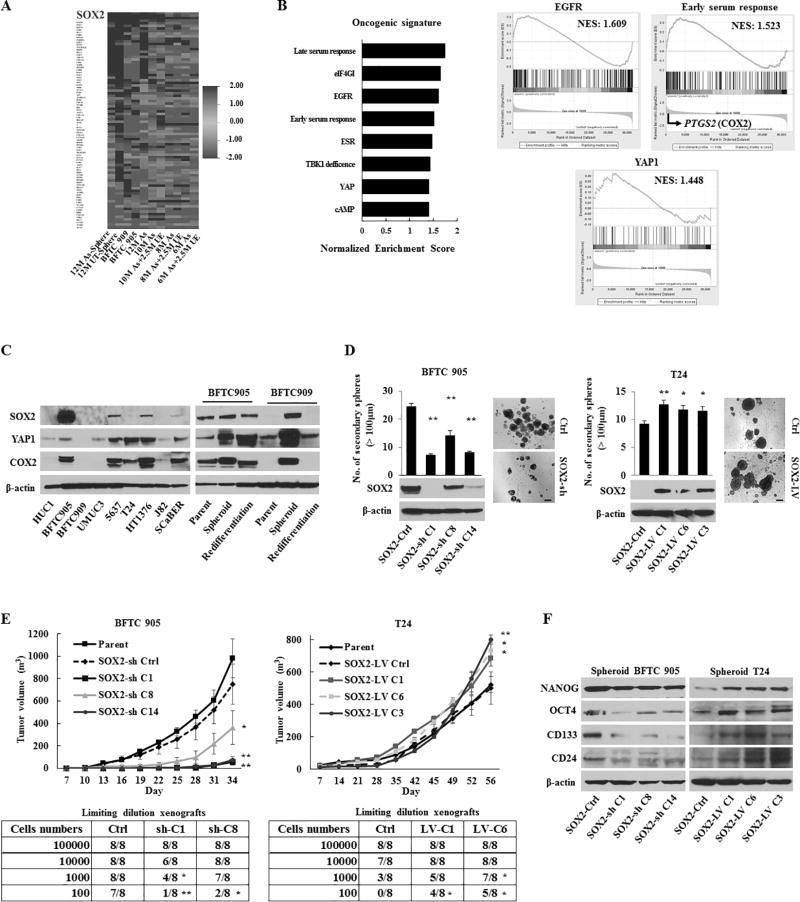
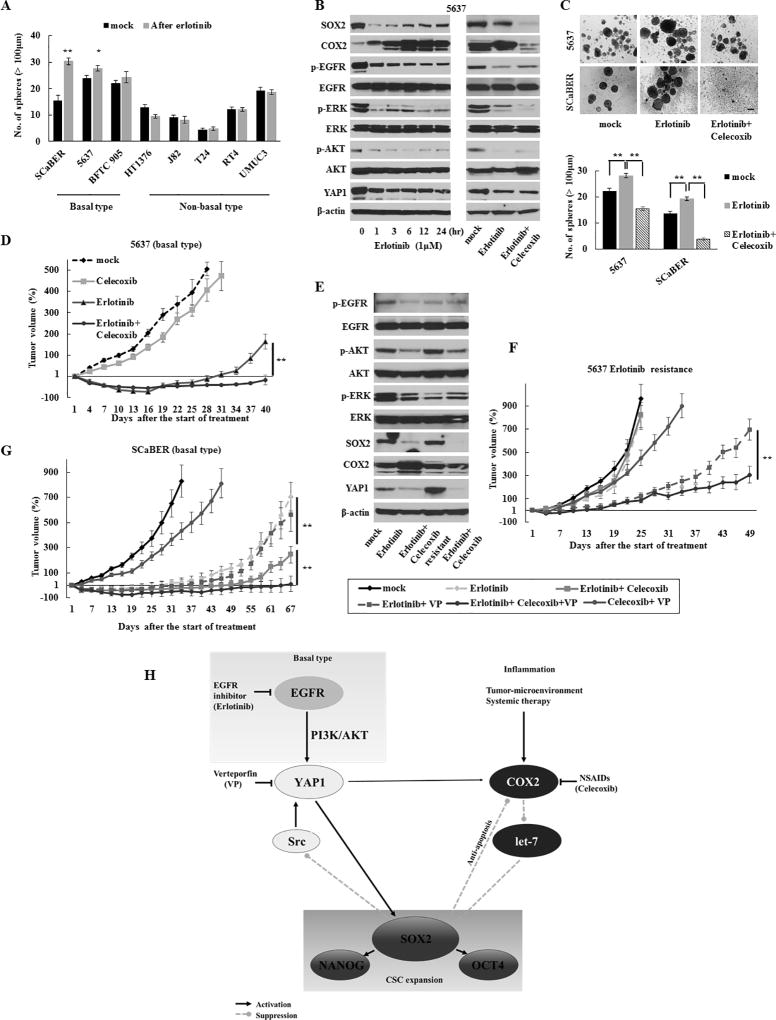
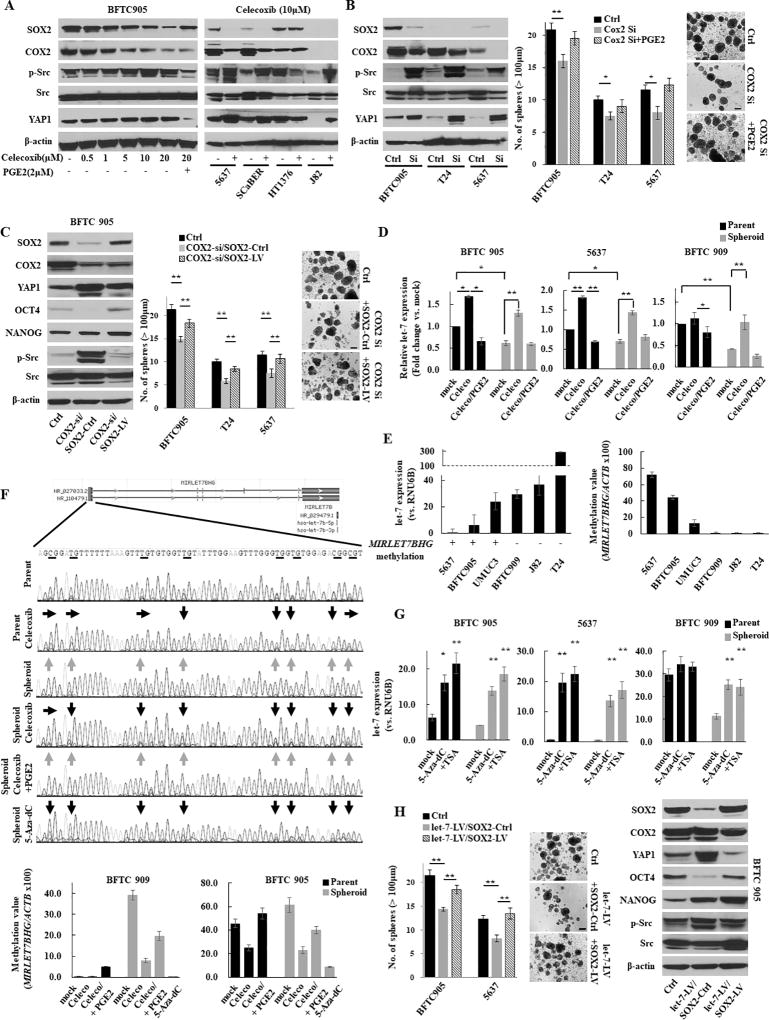
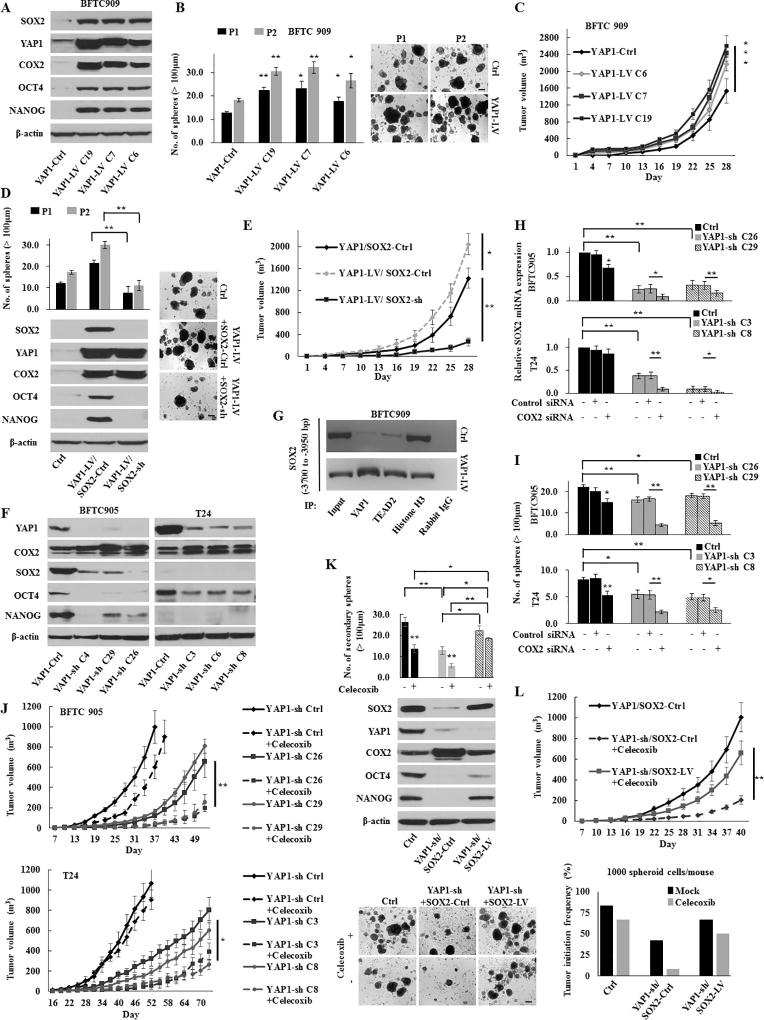
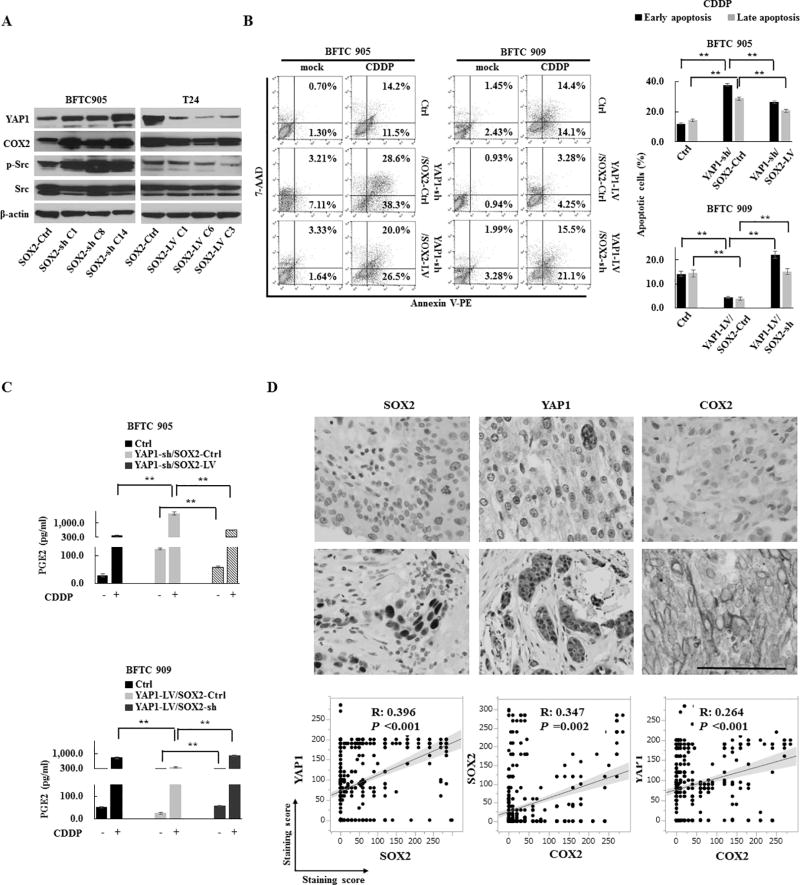
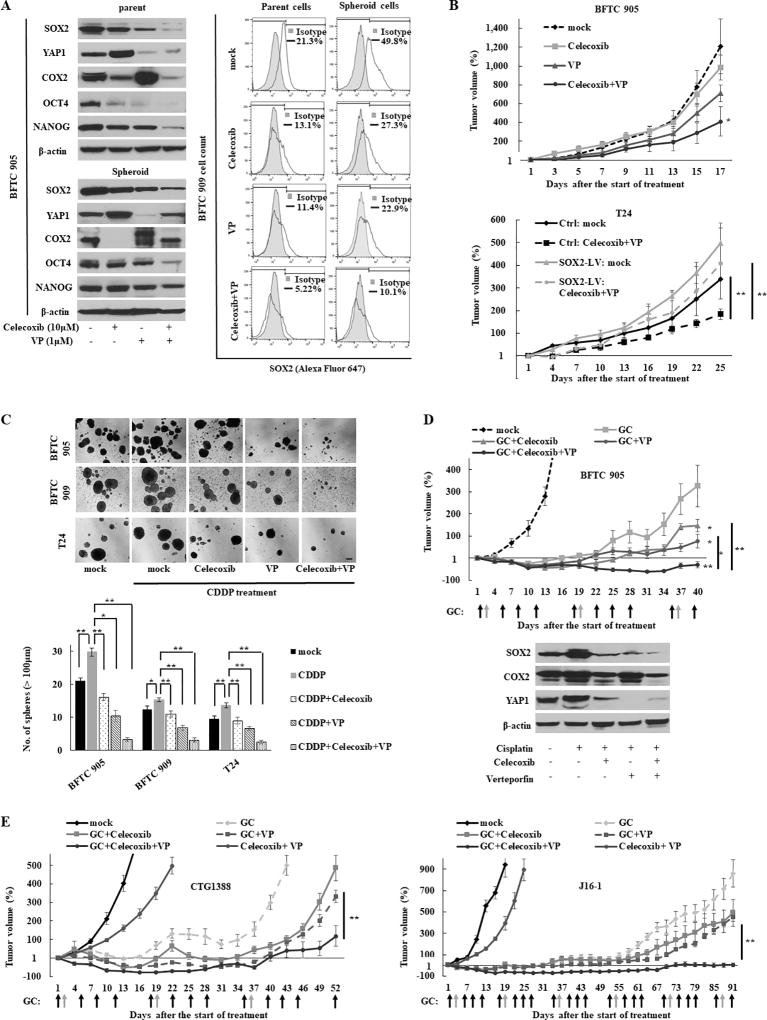
Overcoming acquired drug resistance remains a core challenge in the clinical management of human cancer, including in urothelial carcinoma of the bladder (UCB). Cancer stem-like cells (CSC) have been implicated in the emergence of drug resistance but mechanisms and intervention points are not completely understood. Here, we report that the proinflammatory COX2/PGE2 pathway and the YAP1 growth-regulatory pathway cooperate to recruit the stem cell factor SOX2 in expanding and sustaining the accumulation of urothelial CSCs. Mechanistically, COX2/PGE2 signaling induced promoter methylation of let-7, resulting in its downregulation and subsequent SOX2 upregulation. YAP1 induced SOX2 expression more directly by binding its enhancer region. In UCB clinical specimens, positive correlations in the expression of SOX2, COX2, and YAP1 were observed, with coexpression of COX2 and YAP1 particularly commonly observed. Additional investigations suggested that activation of the COX2/PGE2 and YAP1 pathways also promoted acquired resistance to EGFR inhibitors in basal-type UCB. In a mouse xenograft model of UCB, dual inhibition of COX2 and YAP1 elicited a long-lasting therapeutic response by limiting CSC expansion after chemotherapy and EGFR inhibition. Our findings provide a preclinical rationale to target these pathways concurrently with systemic chemotherapy as a strategy to improve the clinical management of UCB. These findings offer a preclinical rationale to target the COX2 and YAP1 pathways concurrently with systemic chemotherapy to improve the clinical management of UCB, based on evidence that these two pathways expand cancer stem-like cell populations that mediate resistance to chemotherapy. .
克服获得性耐药仍然是人类癌症临床管理的核心挑战,包括膀胱癌(UCB)。癌症干细胞样细胞(CSC)被认为与耐药性的出现有关,但机制和干预点尚不完全清楚。在这里,我们报告促炎 COX2/PGE2 途径和 YAP1 生长调节途径合作招募干细胞因子 SOX2,以扩大和维持尿路上皮 CSC 的积累。在机制上,COX2/PGE2 信号诱导 let-7 的启动子甲基化,导致其下调,随后 SOX2 上调。YAP1 通过结合其增强子区域更直接地诱导 SOX2 表达。在 UCB 临床标本中,观察到 SOX2、COX2 和 YAP1 的表达呈正相关,COX2 和 YAP1 的共表达尤为常见。进一步的研究表明,COX2/PGE2 和 YAP1 途径的激活也促进了基底型 UCB 对 EGFR 抑制剂的获得性耐药。在 UCB 的小鼠异种移植模型中,通过在化疗和 EGFR 抑制后限制 CSC 扩增,联合抑制 COX2 和 YAP1 引发了持久的治疗反应。我们的研究结果为联合使用这些途径与系统化疗作为改善 UCB 临床管理的策略提供了临床前依据,因为这些途径扩大了介导化疗耐药的癌症干细胞样细胞群体。