Department of Hematology, VU University Medical Center, De Boelelaan 1117, 1081HV, Amsterdam, The Netherlands.
Drugs. 2018 Jan;78(1):19-37. doi: 10.1007/s40265-017-0841-y.
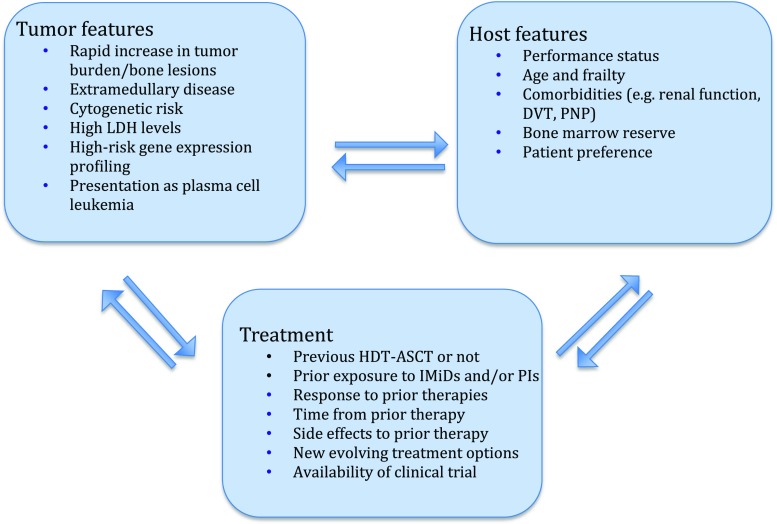
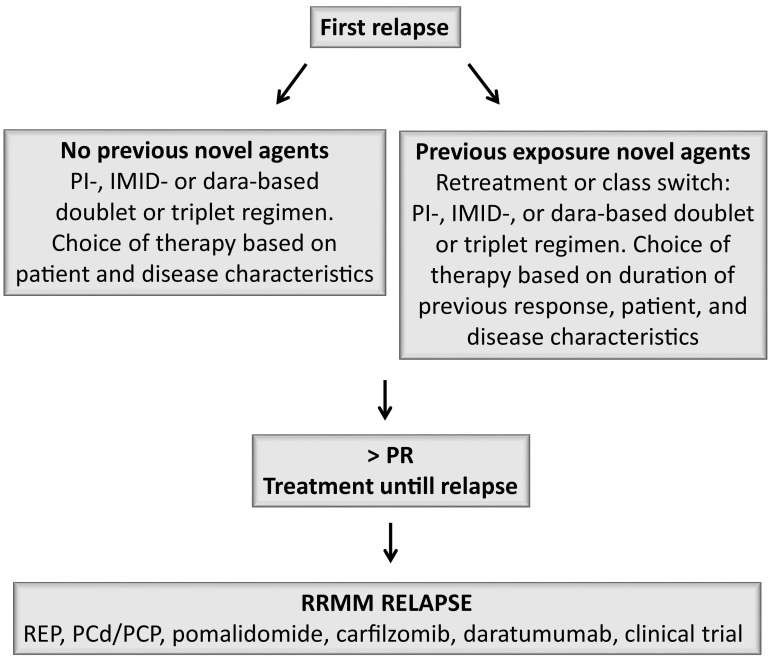
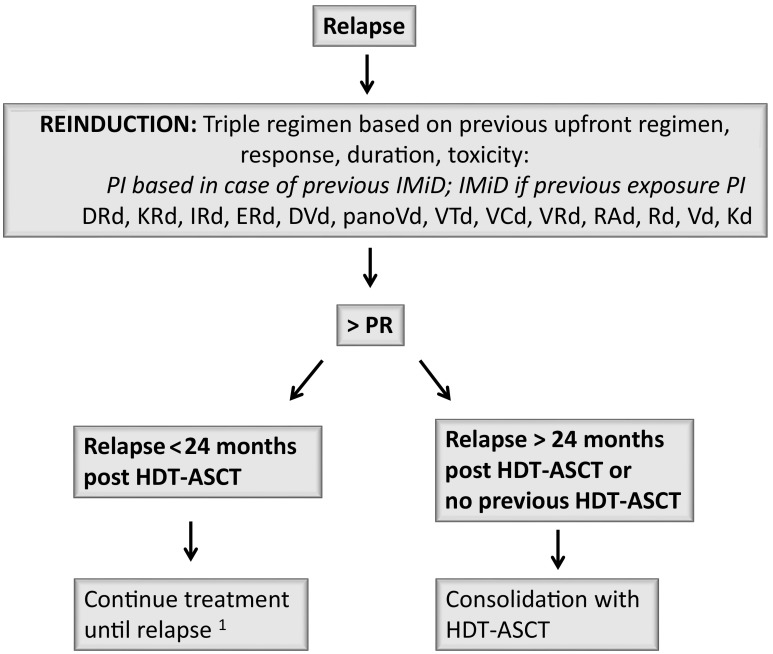
Although survival of multiple myeloma patients has at least doubled during recent years, most patients eventually relapse, and treatment at this stage may be particularly complex. At the time of relapse, the use of alternative drugs to those given upfront is current practice. However, many new options are currently available for the treatment of relapsed multiple myeloma, including recently approved drugs, such as the second- and third-generation proteasome inhibitors carfilzomib and ixazomib, the immunomodulatory agent pomalidomide, the monoclonal antibodies daratumumab and elotuzumab and the histone deacetylase inhibitor panobinostat, but also new targeted agents are under active investigation (e.g. signal transduction modulators, kinesin spindle protein inhibitors, and inhibitors of NF-kB, MAPK, AKT). We here describe a new paradigm for the treatment of relapsed multiple myeloma. The final goal should be finding a balance among efficacy, toxicity, and cost and, at the end of the road, achieving long-lasting control of the disease and eventually even cure in a subset of patients.
尽管近年来多发性骨髓瘤患者的生存率至少提高了一倍,但大多数患者最终仍会复发,此时的治疗可能特别复杂。在复发时,目前的做法是使用与初始治疗不同的药物。然而,目前有许多新的选择可用于治疗复发性多发性骨髓瘤,包括最近批准的药物,如第二代和第三代蛋白酶体抑制剂卡非佐米和伊沙佐米、免疫调节剂泊马度胺、单克隆抗体达雷妥尤单抗和埃罗妥珠单抗以及组蛋白去乙酰化酶抑制剂帕比司他,但也有新的靶向药物正在积极研究中(例如信号转导调节剂、驱动蛋白纺锤体蛋白抑制剂以及 NF-κB、MAPK、AKT 抑制剂)。在这里,我们描述了一种治疗复发性多发性骨髓瘤的新模式。最终目标应该是在疗效、毒性和成本之间找到平衡,最终在疾病的某些患者中实现长期控制,甚至治愈。