The Ear Institute, University College London, London, United Kingdom.
Elife. 2017 Dec 4;6:e33323. doi: 10.7554/eLife.33323.
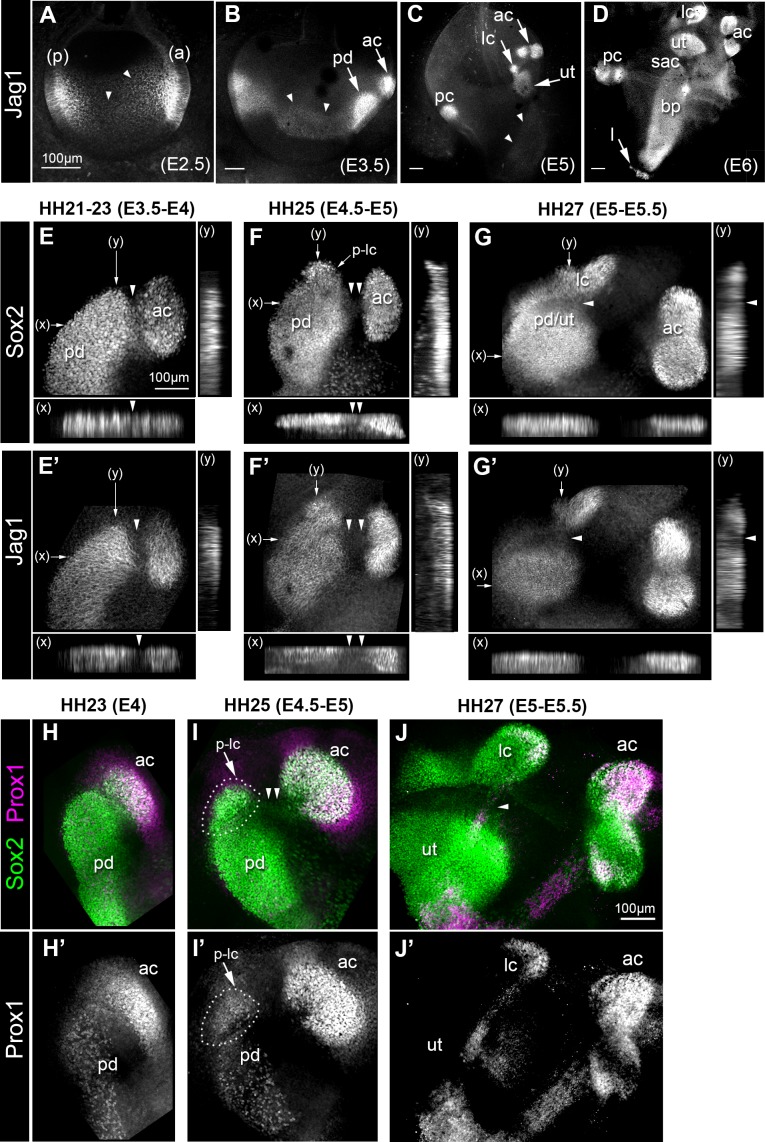
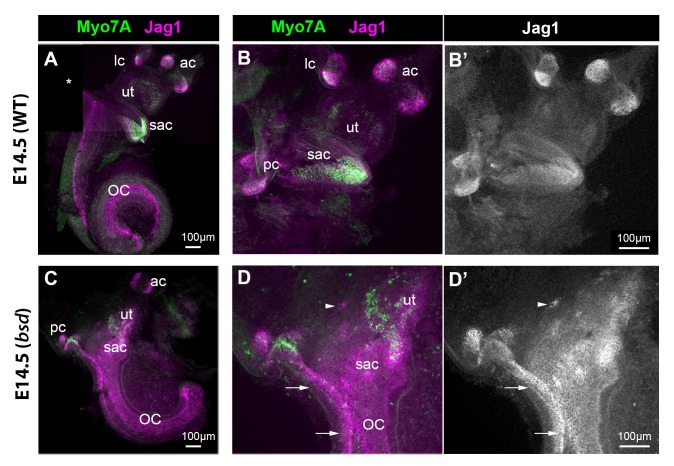
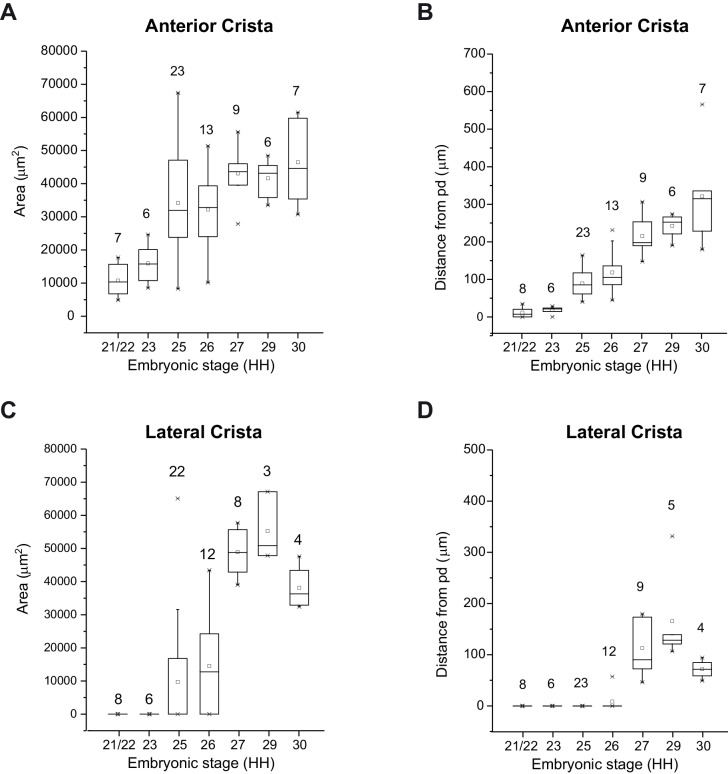
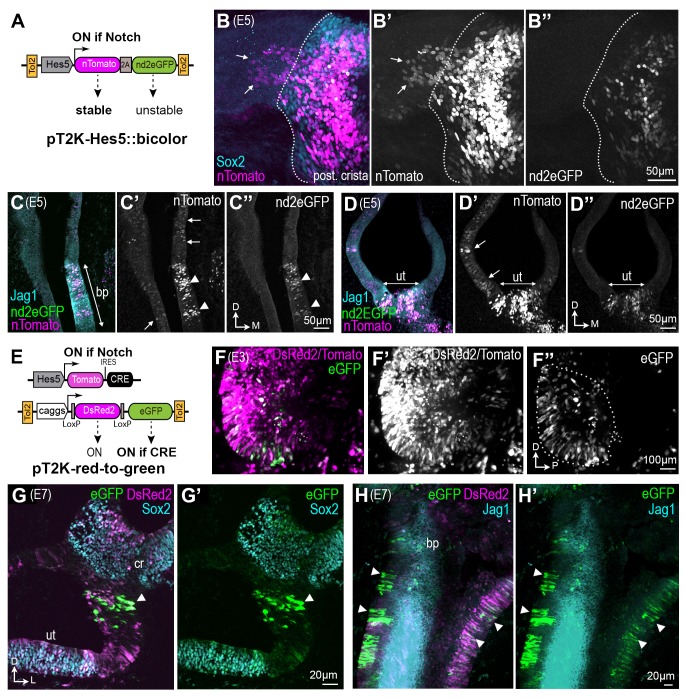
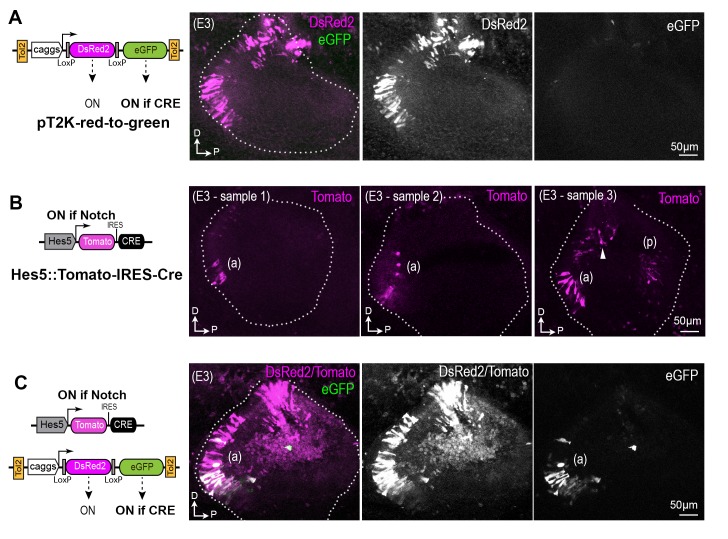
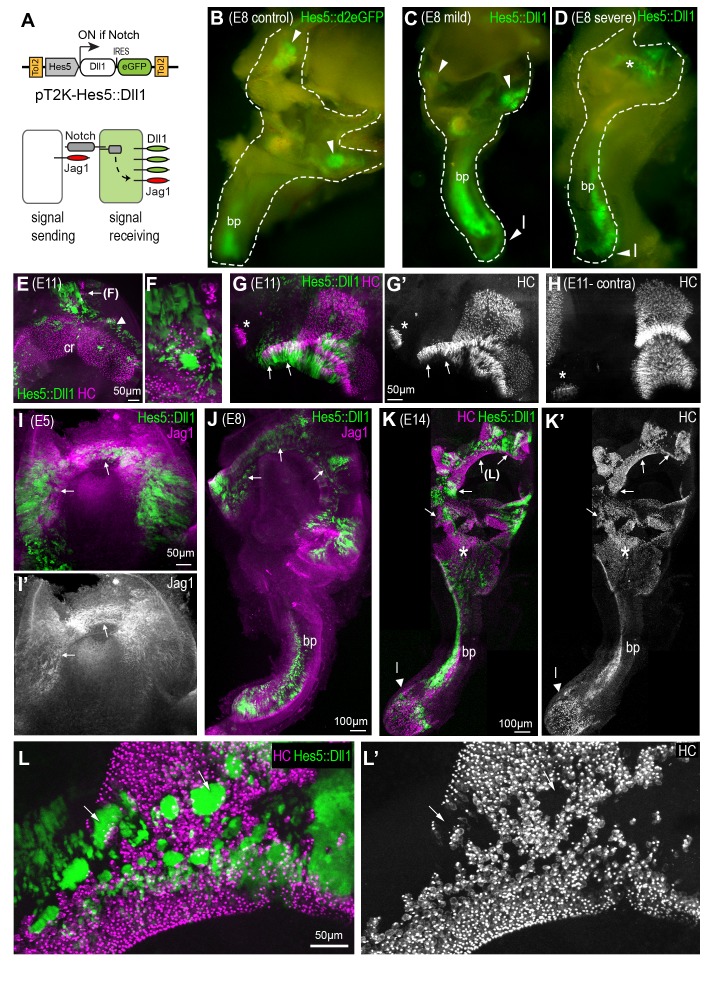
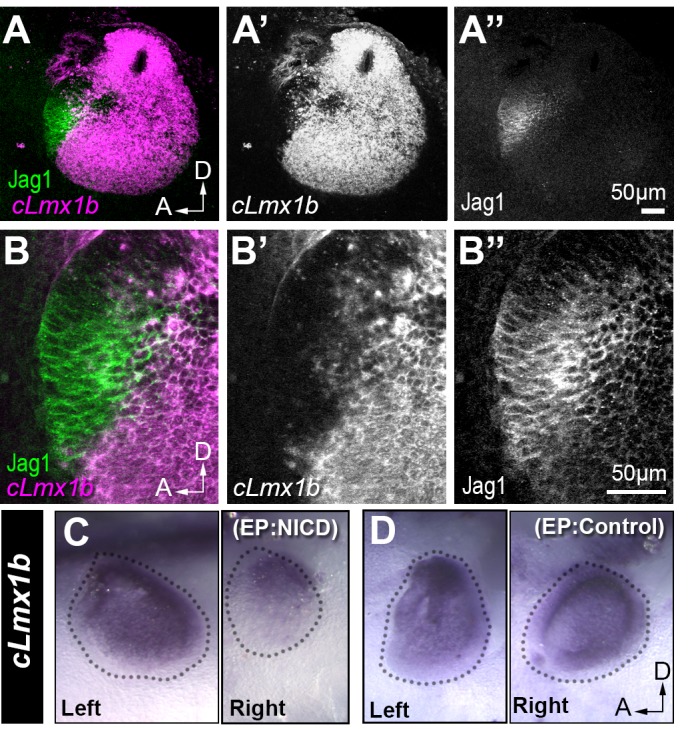
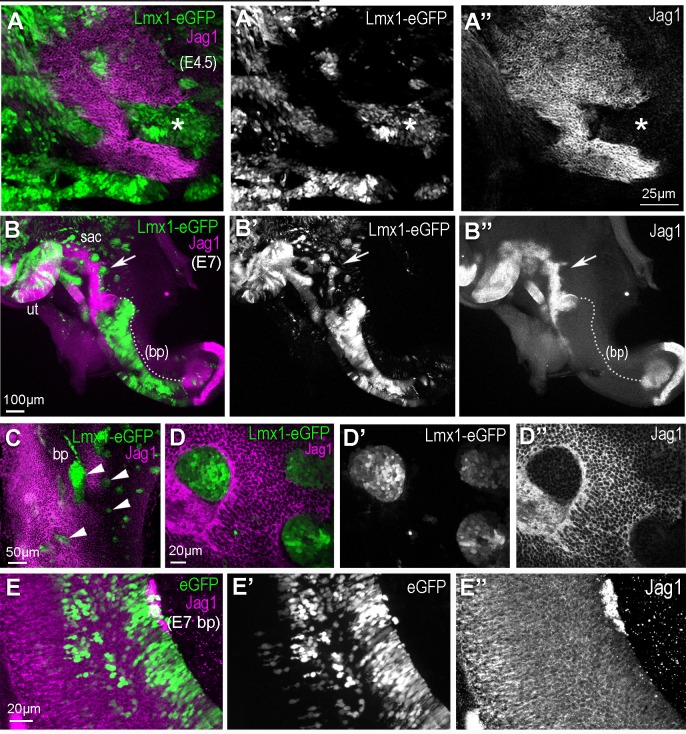
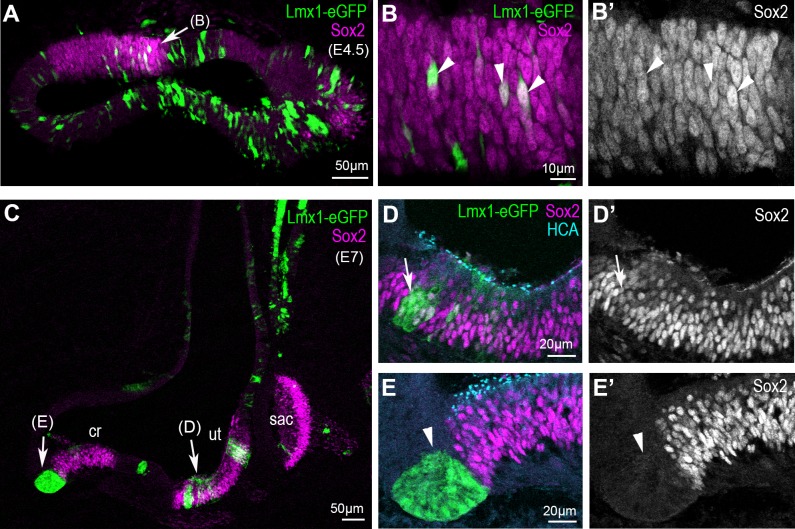
The mechanisms of formation of the distinct sensory organs of the inner ear and the non-sensory domains that separate them are still unclear. Here, we show that several sensory patches arise by progressive segregation from a common prosensory domain in the embryonic chicken and mouse otocyst. This process is regulated by mutually antagonistic signals: Notch signalling and Lmx1a. Notch-mediated lateral induction promotes prosensory fate. Some of the early Notch-active cells, however, are normally diverted from this fate and increasing lateral induction produces misshapen or fused sensory organs in the chick. Conversely Lmx1a (or cLmx1b in the chick) allows sensory organ segregation by antagonizing lateral induction and promoting commitment to the non-sensory fate. Our findings highlight the dynamic nature of sensory patch formation and the labile character of the sensory-competent progenitors, which could have facilitated the emergence of new inner ear organs and their functional diversification in the course of evolution.
内耳独特感觉器官和分隔它们的非感觉区域的形成机制尚不清楚。在这里,我们表明,几个感觉斑块是通过胚胎鸡和鼠耳蜗中共同的前感觉域的渐进性分离而产生的。这个过程受相互拮抗的信号调控:Notch 信号和 Lmx1a。Notch 介导的侧向诱导促进前感觉命运。然而,一些早期 Notch 活性细胞通常会偏离这种命运,并且增加侧向诱导会导致小鸡的感觉器官畸形或融合。相反,Lmx1a(或鸡中的 cLmx1b)通过拮抗侧向诱导和促进向非感觉命运的决定来允许感觉器官的分离。我们的发现强调了感觉斑块形成的动态性质和感觉能力祖细胞的不稳定特征,这可能有助于新的内耳器官的出现及其在进化过程中的功能多样化。