Department of Pharmaceutical Chemistry, University of California, San Francisco, San Francisco, California, USA.
Chemistry and Chemical Biology Graduate Program, University of California, San Francisco, San Francisco, California, USA.
Nat Chem Biol. 2018 Feb;14(2):112-117. doi: 10.1038/nchembio.2529. Epub 2017 Dec 4.
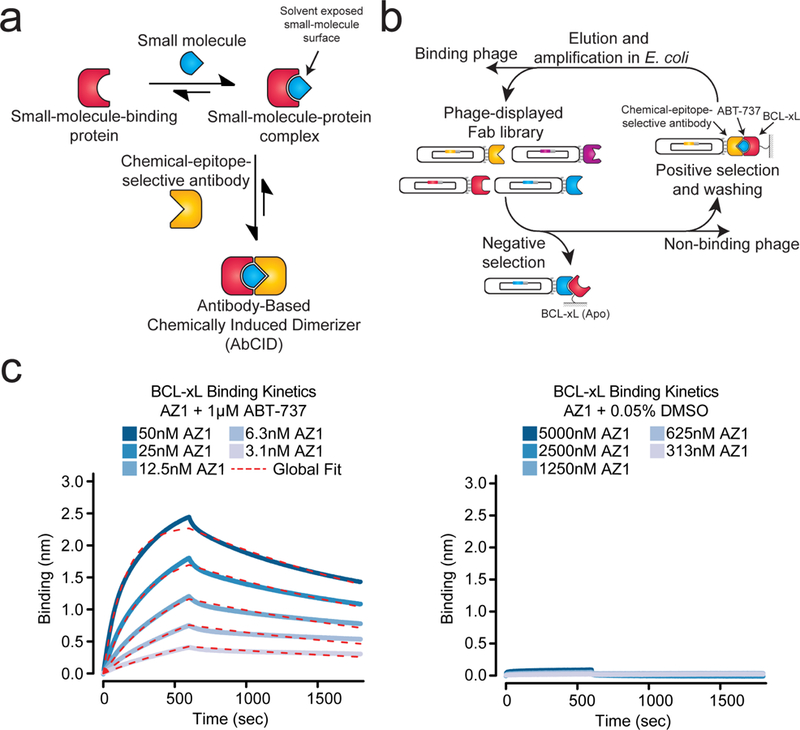
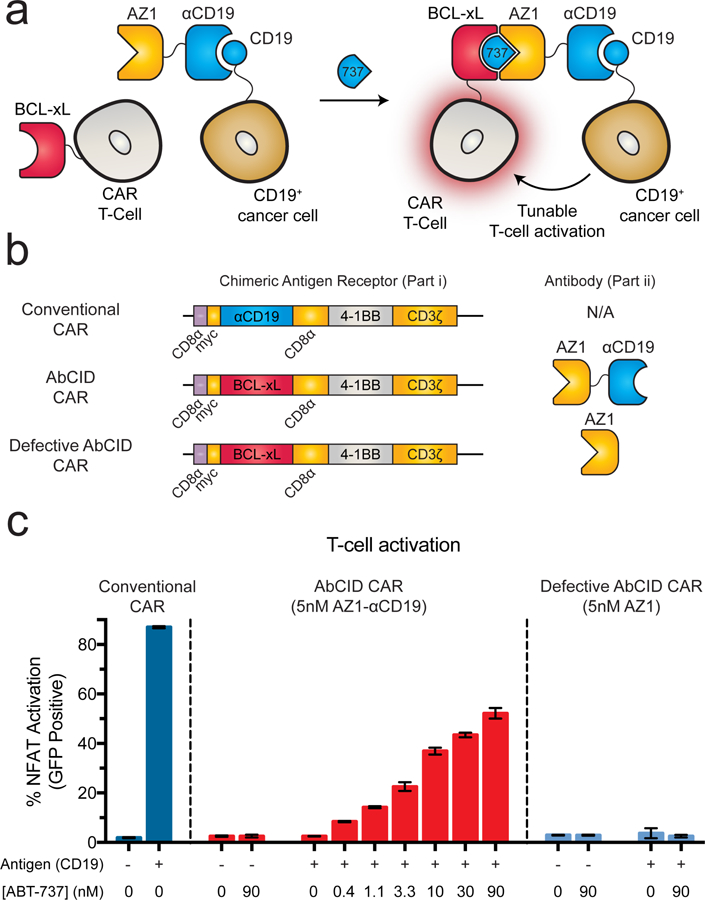
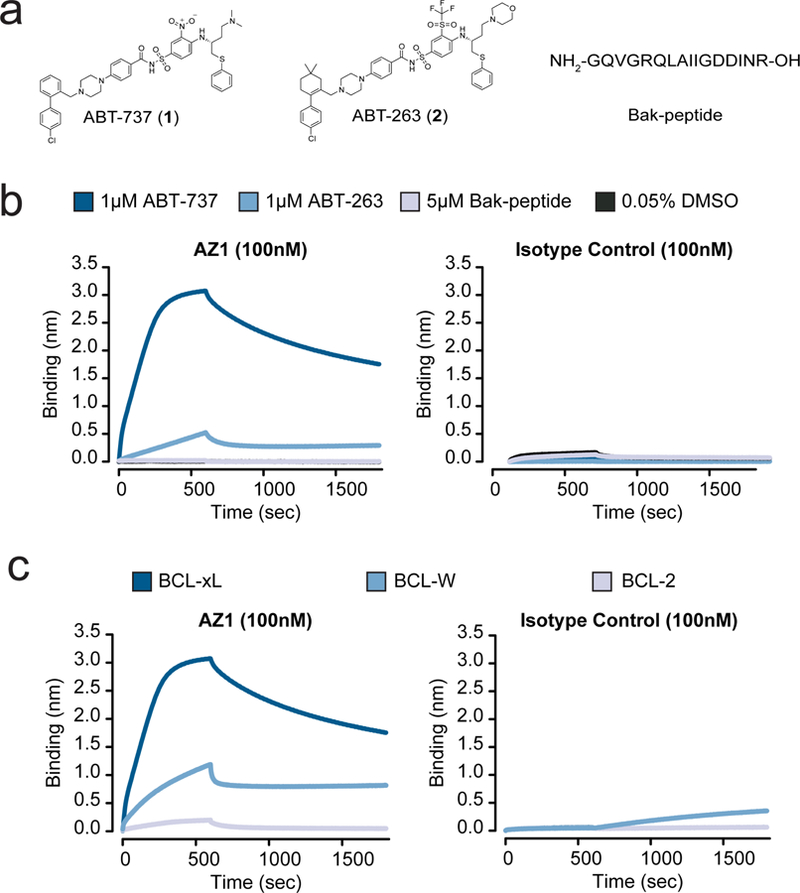
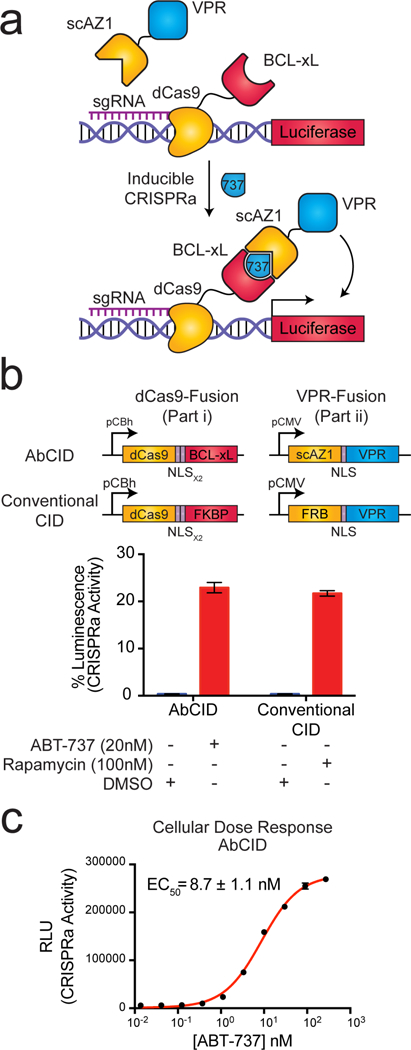
Chemically induced dimerizers (CIDs) have emerged as one of the most powerful tools for artificially regulating signaling pathways in cells; however, currently available CID systems lack the properties desired for use in regulating cellular therapies. Here, we report the development of human antibody-based chemically induced dimerizers (AbCIDs) from known small-molecule-protein complexes by selecting for synthetic antibodies that recognize the chemical epitope created by the bound small molecule. We demonstrate this concept by generating three antibodies that are highly selective for the BCL-xL-ABT-737 complex compared to BCL-xL alone. We show the potential of AbCIDs for application in regulating human cell therapies by using them to induce CRISPRa-mediated gene expression and to regulate CAR T-cell activation. We believe that the AbCIDs generated in this study will find application in regulating cell therapies and that the general method of AbCID development may lead to the creation of many new and orthogonal CIDs.
化学诱导二聚体(CIDs)已成为人工调节细胞信号通路的最有力工具之一;然而,目前可用的 CID 系统缺乏用于调节细胞疗法所需的特性。在这里,我们通过选择识别结合小分子产生的化学表位的合成抗体,从已知的小分子-蛋白复合物中开发出基于人抗体的化学诱导二聚体(AbCIDs)。我们通过生成三种与单独的 BCL-xL 相比,对 BCL-xL-ABT-737 复合物具有高度选择性的抗体来证明这一概念。我们通过使用它们来诱导 CRISPRa 介导的基因表达和调节 CAR T 细胞激活,展示了 AbCIDs 在调节人类细胞疗法中的应用潜力。我们相信,本研究中生成的 AbCIDs 将在调节细胞疗法中得到应用,并且 AbCID 开发的一般方法可能会导致许多新的和正交的 CIDs 的产生。