Cui Jianfeng, Chen Shouzhen, Bo Qiyu, Wang Shiyu, Zhang Ning, Yu Meng, Wang Wenfu, Han Jie, Zhu Yaofeng, Shi Benkang
Department of Urology.
Department of First Operating Room, Qilu Hospital of Shandong University.
Onco Targets Ther. 2017 Nov 21;10:5541-5550. doi: 10.2147/OTT.S146990. eCollection 2017.
Among the cancers of the urogenital system, bladder cancer is ranked second both in incidence and mortality, and hence, a more accurate estimate of the prognosis for individual patients with non-muscle-invasive bladder cancer (NMIBC) is urgently needed. Prognostic nutritional index (PNI) which is based on serum albumin levels and peripheral lymphocyte count has been confirmed to have prognostic value in various cancers. The aim of this study was to clarify the prognostic value of PNI in patients with NMIBC.
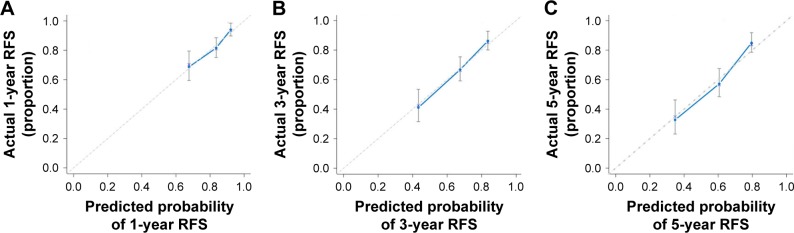
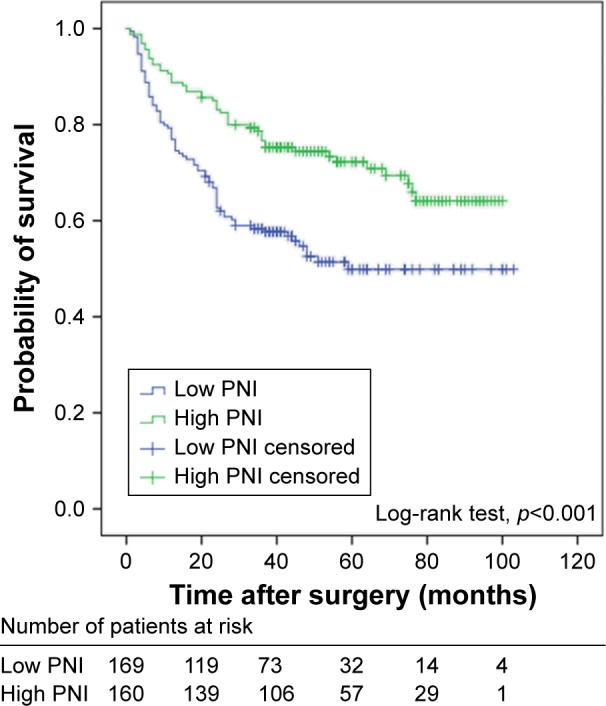
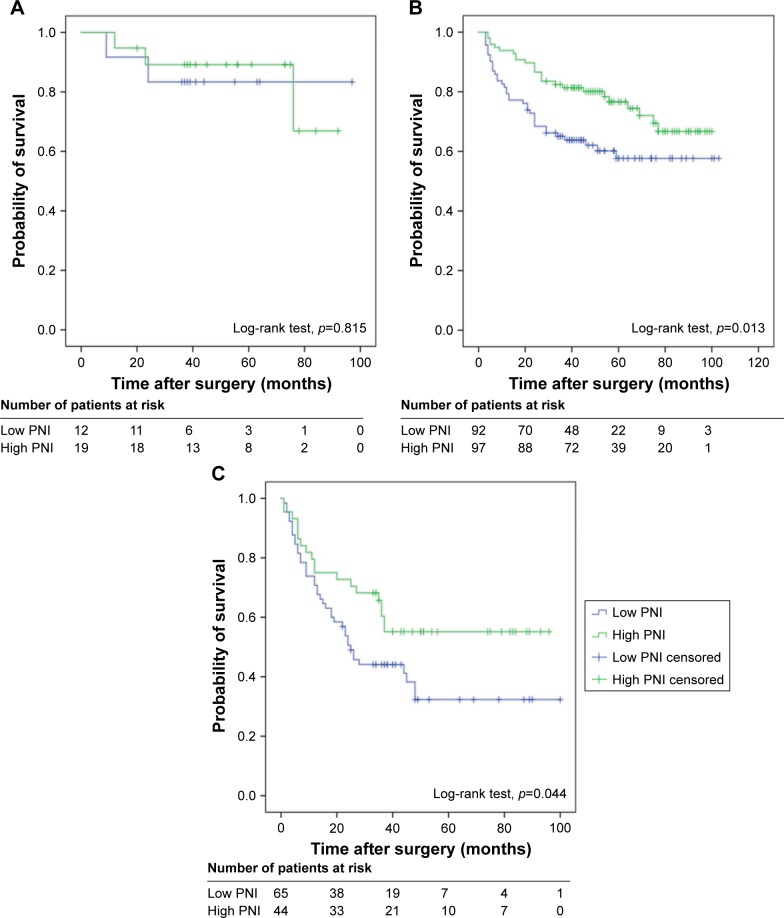
Data of 329 patients with NMIBC were evaluated retrospectively. Recurrence-free survival (RFS) was assessed using the Kaplan-Meier method, and the equivalences of survival curves were tested by log-rank tests. The univariate and multivariate analyses were performed using the Cox proportional hazards regression model. Discrimination of the nomogram was measured by the concordance index. A -value of <0.05 was considered statistically significant.
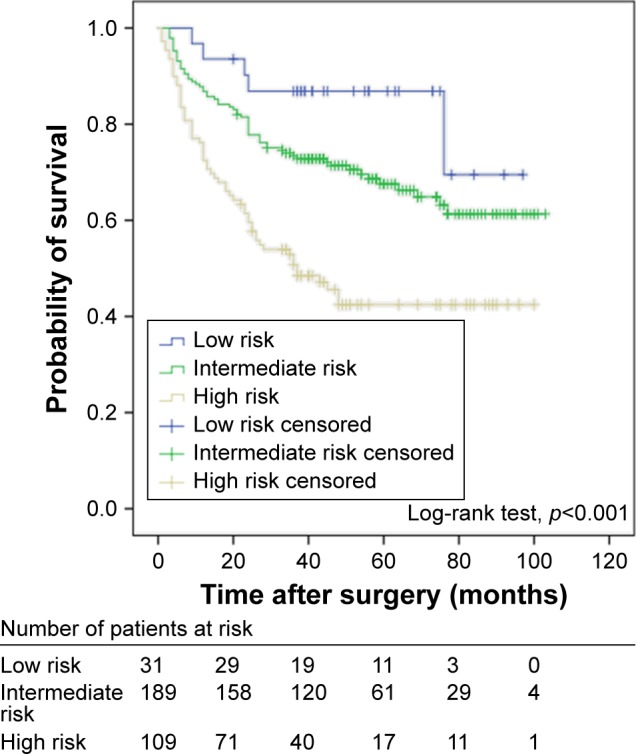
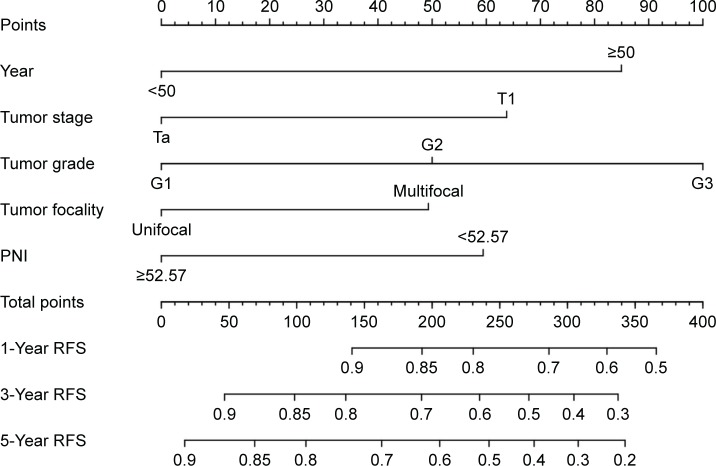
In univariate analysis, age, tumor focality, tumor size, tumor grade, pathological T stage and preoperative PNI were significantly associated with RFS. Multivariate analysis identified PNI as an independent predictor of RFS in patients with NMIBC. According to these independent predictors, a nomogram for the prediction of recurrence was developed.
PNI can be regarded as an independent prognostic factor for predicting RFS in NMIBC. The nomogram could be useful to improve personalized therapy for patients with NMIBC.
在泌尿生殖系统癌症中,膀胱癌的发病率和死亡率均位居第二,因此,迫切需要更准确地评估非肌层浸润性膀胱癌(NMIBC)个体患者的预后。基于血清白蛋白水平和外周淋巴细胞计数的预后营养指数(PNI)已被证实在多种癌症中具有预后价值。本研究的目的是阐明PNI在NMIBC患者中的预后价值。
回顾性评估329例NMIBC患者的数据。采用Kaplan-Meier法评估无复发生存期(RFS),并通过对数秩检验检验生存曲线的等效性。使用Cox比例风险回归模型进行单因素和多因素分析。通过一致性指数测量列线图的辨别力。P值<0.05被认为具有统计学意义。
单因素分析中,年龄、肿瘤灶性、肿瘤大小、肿瘤分级、病理T分期和术前PNI与RFS显著相关。多因素分析确定PNI是NMIBC患者RFS的独立预测因素。根据这些独立预测因素,绘制了预测复发的列线图。
PNI可被视为预测NMIBC患者RFS的独立预后因素。该列线图可能有助于改善NMIBC患者的个体化治疗。