Xu Jia, Verbrugghe Adronie, Lourenço Marta, Cools An, Liu Daisy J X, Van de Wiele Tom, Marzorati Massimo, Eeckhaut Venessa, Van Immerseel Filip, Vanhaecke Lynn, Campos Miguel, Hesta Myriam
Department of Nutrition, Genetics and Ethology, Faculty of Veterinary Medicine, Ghent University, Heidestraat 19, 9820, Merelbeke, Belgium.
Present Address: Department of Agriculture and Bioengineering, Jinhua Polytechnic, Wuzhou steet 1188, 321007, Jinhua, Zhejiang Province, People's Republic of China.
BMC Vet Res. 2017 Dec 4;13(1):374. doi: 10.1186/s12917-017-1276-0.
High protein diets shift the faecal microbiota into a more unfavourable composition in obese humans. In lean dogs, higher protein consumption is accompanied with increased production of putrefactive fermentation products, whereas obese dogs have a different gut microbiota compared to lean dogs. Still, the impact of high dietary protein on gut microbiota in obese dogs remains unclear. The aim of this study was to investigate faecal microbial changes in lean and obese dogs in response to two different levels of dietary protein. Six healthy lean and six obese Beagles were fed a high protein diet (HP) and a low protein diet (LP) for 28 days each in a crossover design. Denaturing gradient gel electrophoresis and quantitative PCR were performed on faecal samples for microbial profiling. Plasma acylcarnitine and fermentation metabolites were measured.
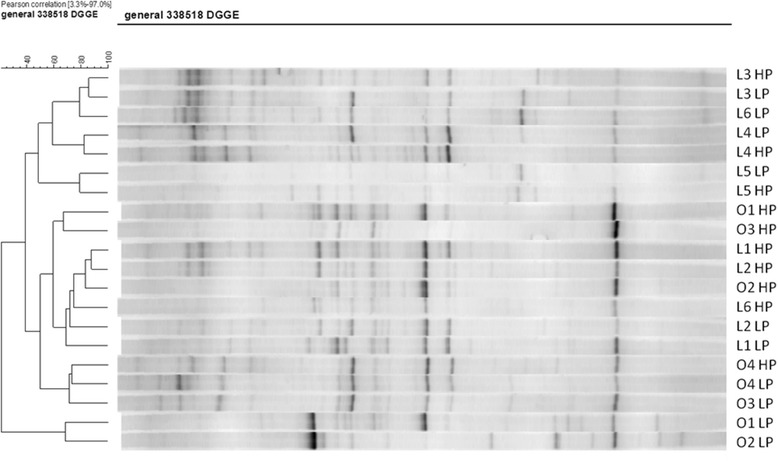
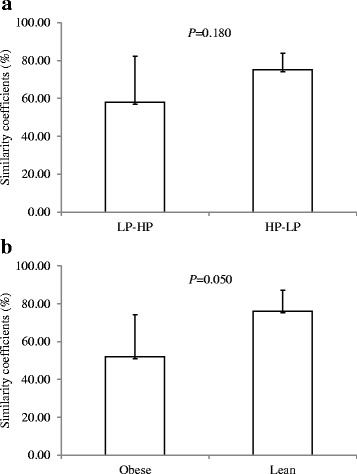
Dogs fed HP had higher concentrations of protein fermentation metabolites including faecal ammonia, isovalerate, isobutyrate, phenol, indole, serum indoxyl sulphate and plasma 3-OH isovalerylcarnitine compared to dogs fed LP, whereas no changes in faecal concentrations of acetate and butyrate were observed. The abundances of clostridial clusters IV and XIVa, covering the majority of butyrate-producing bacteria, and of the butyrate kinase gene, one of the terminal genes of the butyrate synthesis pathway were higher in dogs on HP compared to LP. Significant interactions between diet and body condition were found for the abundance of Firmicutes, Lactobacillus and clostridial cluster I. The similarity coefficient of faecal microbiota between the two diets was smaller in obese dogs than in lean dogs.
High protein diet increased the abundance and activity of butyrate-producing bacteria in Beagles independent of the body condition. In addition, increasing dietary protein content had a greater overall impact on faecal microbiota in obese compared to lean dogs.
高蛋白饮食会使肥胖人群的粪便微生物群组成变得更不利。在瘦狗中,较高的蛋白质摄入量伴随着腐败发酵产物产量的增加,而肥胖狗与瘦狗的肠道微生物群不同。尽管如此,高膳食蛋白质对肥胖狗肠道微生物群的影响仍不清楚。本研究的目的是调查瘦狗和肥胖狗在两种不同水平膳食蛋白质作用下粪便微生物的变化。采用交叉设计,给6只健康瘦比格犬和6只肥胖比格犬分别喂食高蛋白饮食(HP)和低蛋白饮食(LP),各持续28天。对粪便样本进行变性梯度凝胶电泳和定量PCR以进行微生物分析。测量血浆酰基肉碱和发酵代谢产物。
与喂食LP的狗相比,喂食HP的狗粪便中蛋白质发酵代谢产物浓度更高,包括粪便氨、异戊酸、异丁酸、苯酚、吲哚、血清硫酸吲哚酚和血浆3-羟基异戊酰肉碱,而粪便中乙酸盐和丁酸盐浓度未观察到变化。与LP组相比,HP组狗体内梭菌簇IV和XIVa(涵盖大多数产丁酸盐细菌)以及丁酸盐激酶基因(丁酸盐合成途径的终端基因之一)的丰度更高。在厚壁菌门、乳酸杆菌和梭菌簇I的丰度方面,发现饮食与身体状况之间存在显著相互作用。肥胖狗两种饮食之间粪便微生物群的相似系数小于瘦狗。
高蛋白饮食增加了比格犬中产丁酸盐细菌的丰度和活性,与身体状况无关。此外,与瘦狗相比,增加膳食蛋白质含量对肥胖狗粪便微生物群的总体影响更大。