Longhitano Lucia, Castracani Carlo Castruccio, Tibullo Daniele, Avola Roberto, Viola Maria, Russo Giuliano, Prezzavento Orazio, Marrazzo Agostino, Amata Emanuele, Reibaldi Michele, Longo Antonio, Russo Andrea, Parrinello Nunziatina Laura, Volti Giovanni Li
Department of Biomedical and Biotechnological Sciences, University of Catania, Catania, Italy.
Department of Drug Sciences, University of Catania, Catania, Italy.
Oncotarget. 2017 Jul 25;8(53):91099-91111. doi: 10.18632/oncotarget.19556. eCollection 2017 Oct 31.
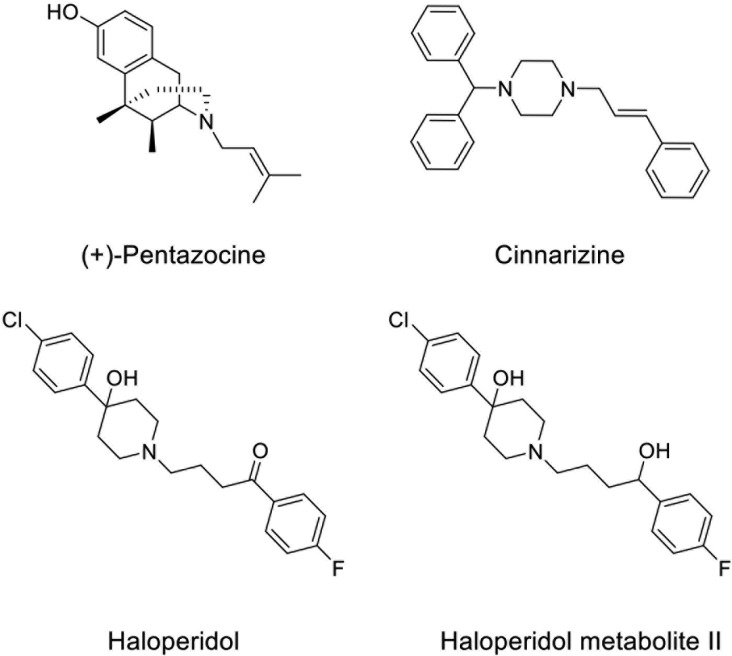
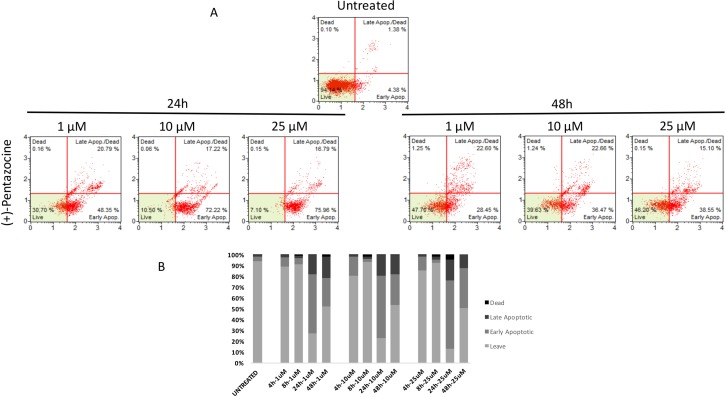
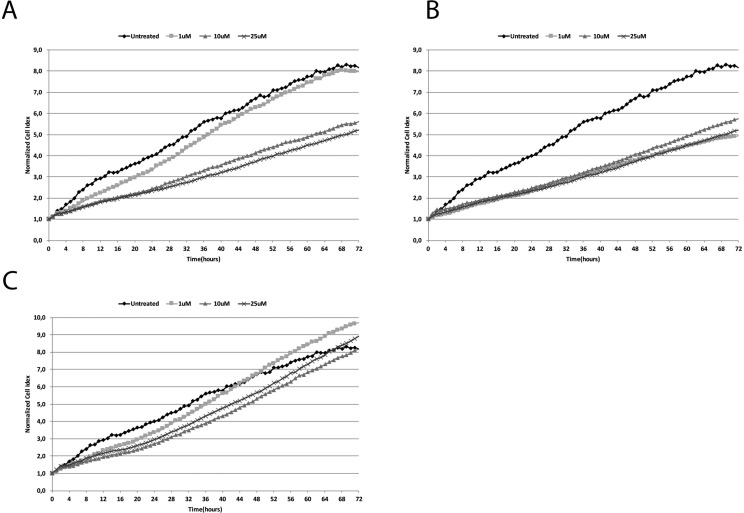
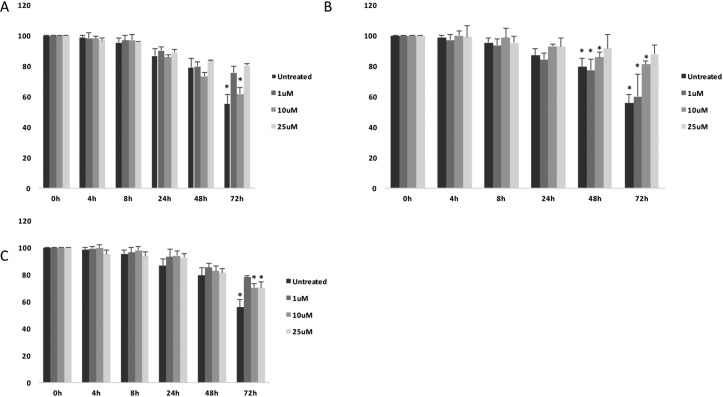
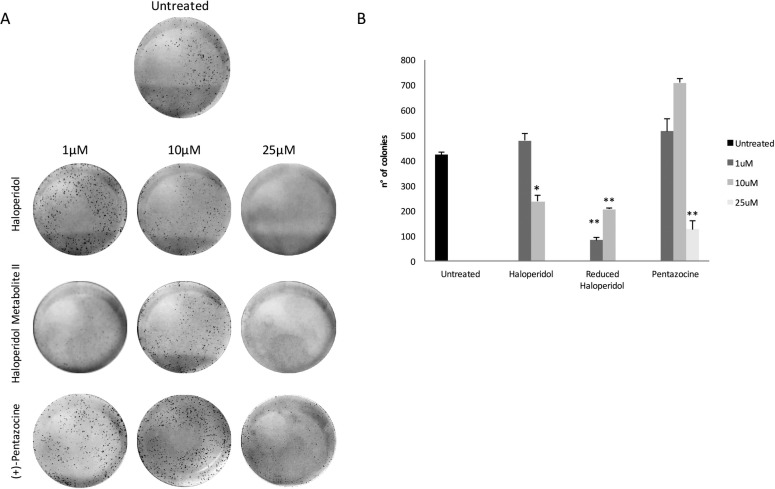
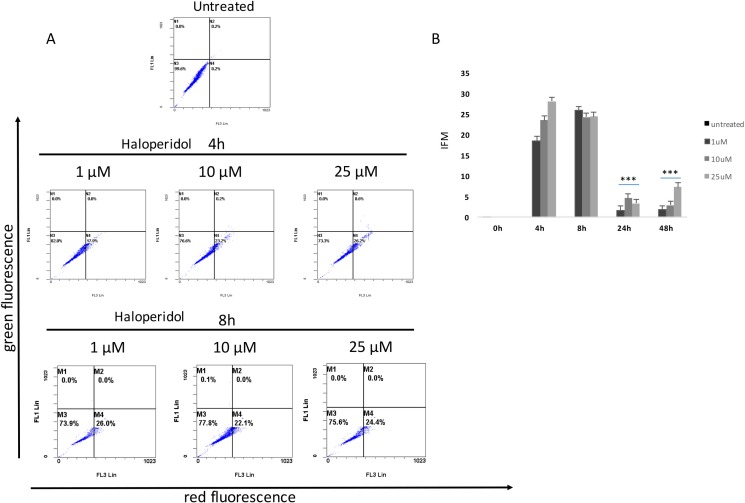
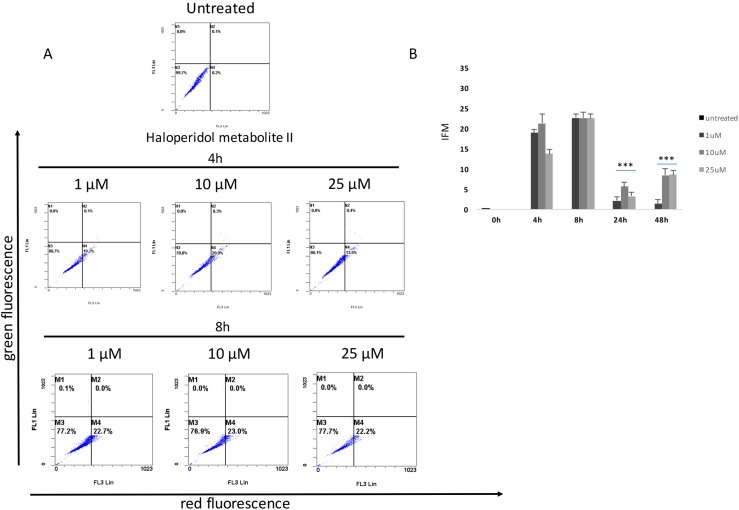
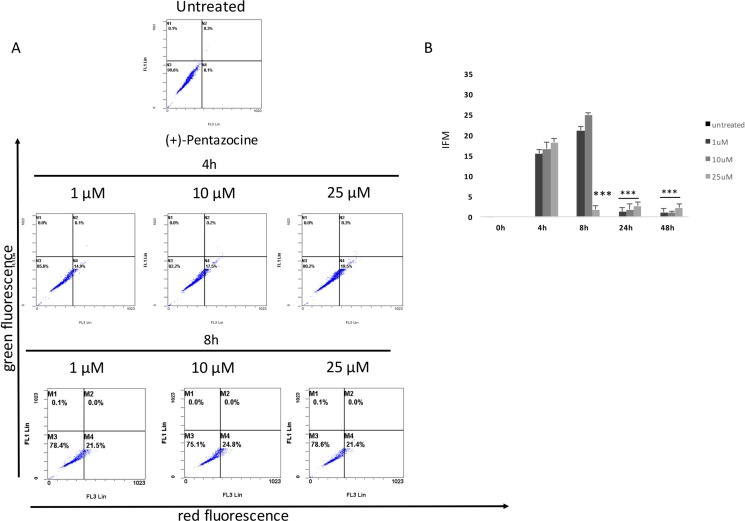
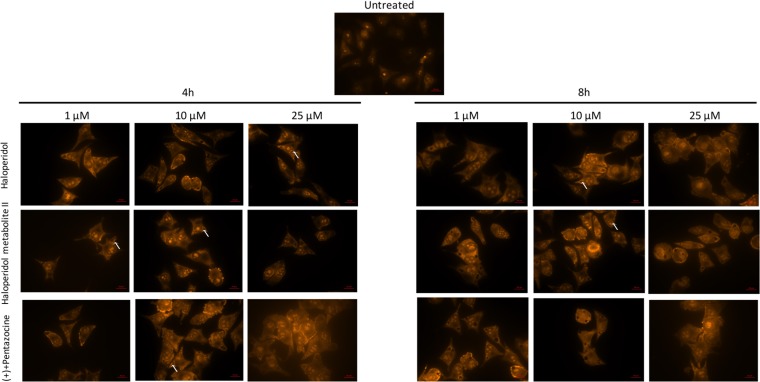
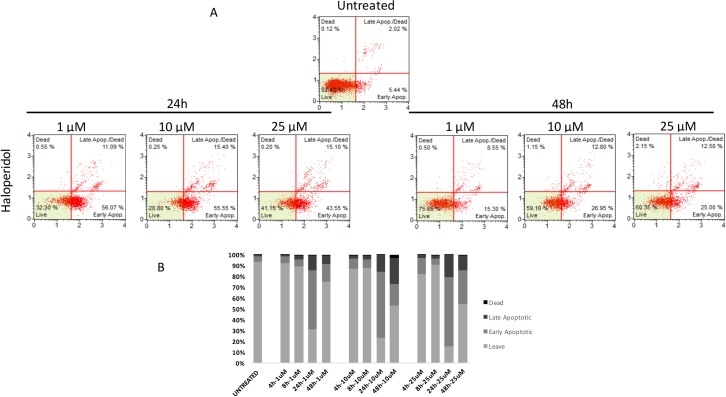
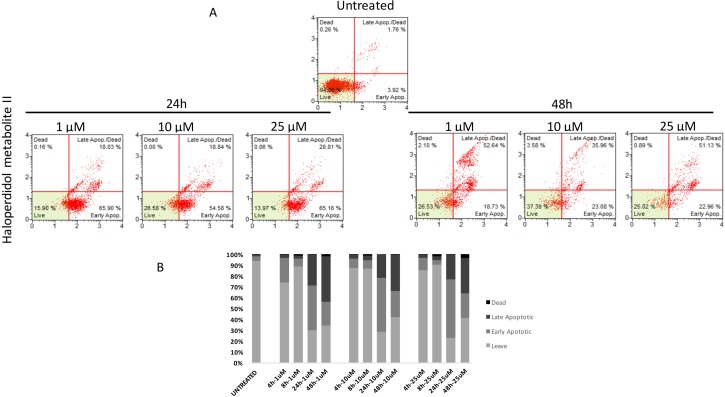
Uveal melanoma is the most common primary intraocular tumor in adults, with about 1200-1500 new cases occurring per year in the United States. Metastasis is a frequent occurrence in uveal melanoma, and outcomes are poor once distant spread occurs and no clinically significant chemotherapeutic protocol is so far available. The aim of the present study was to test the effect of various σ and σ receptor ligands as a possible pharmacological strategy for this rare tumor. Human uveal melanoma cells (92.1) were treated with various concentrations of different σ ligands (haloperidol and haloperidol metabolite II) and σ ligand ((+)-pentazocine) at various concentrations (1, 10 and 25 μM) and time points (0, 4 h, 8 h, 24 h and 48 h). Cell proliferation and migration were evaluated respectively by continuous cell monitoring by xCELLigence analysis, clonogenic assay and wound healing. Apoptosis and autophagy were also measured by cytofluorimetric and microscopy analysis. Our results showed that σ receptor ligands significantly reduced cell proliferation whereas (+)-pentazocine exhibited opposite results. All tested ligands showed significant decrease in cell migration. Interestingly, both σ and σ receptor ligands showed significant increase of autophagy and apoptosis at all concentrations. Taken all together these results suggest that sigma receptors mediates opposite biological effects but they also share common pharmacological effect on apoptosis and autophagy in uveal melanoma. In conclusion, these data provide the first evidence that sigma receptors may represent a "druggable" target to develop new chemotherapic agent for uveal melanoma.
葡萄膜黑色素瘤是成人中最常见的原发性眼内肿瘤,在美国每年约有1200 - 1500例新发病例。转移在葡萄膜黑色素瘤中很常见,一旦发生远处转移且目前尚无具有临床显著疗效的化疗方案,治疗结果就会很差。本研究的目的是测试各种σ和σ受体配体的作用,作为针对这种罕见肿瘤的一种可能的药理学策略。用人葡萄膜黑色素瘤细胞(92.1)分别用不同浓度(1、10和25 μM)的不同σ配体(氟哌啶醇和氟哌啶醇代谢物II)以及σ配体((+)-喷他佐辛)在不同时间点(0、4小时、8小时、24小时和48小时)进行处理。通过xCELLigence分析、克隆形成试验和伤口愈合试验分别对细胞增殖和迁移进行连续细胞监测评估。还通过细胞荧光分析和显微镜分析来检测细胞凋亡和自噬。我们的结果表明,σ受体配体显著降低细胞增殖,而(+)-喷他佐辛则呈现相反的结果。所有测试的配体均显示细胞迁移显著减少。有趣的是,σ和σ受体配体在所有浓度下均显示自噬和凋亡显著增加。综合所有这些结果表明,σ受体介导相反的生物学效应,但它们在葡萄膜黑色素瘤的凋亡和自噬方面也具有共同的药理学作用。总之,这些数据首次证明σ受体可能是开发用于葡萄膜黑色素瘤的新型化疗药物的“可成药”靶点。