Division of Respiratory Medicine, Peking Union Medical College Hospital, Chinese Academy of Medical Sciences & Peking Union Medical College, Beijing, China.
Department of Pathology, Peking Union Medical College Hospital, Chinese Academy of Medical Sciences & Peking Union Medical College, Beijing, China.
Sci Rep. 2017 Dec 5;7(1):16912. doi: 10.1038/s41598-017-17208-1.
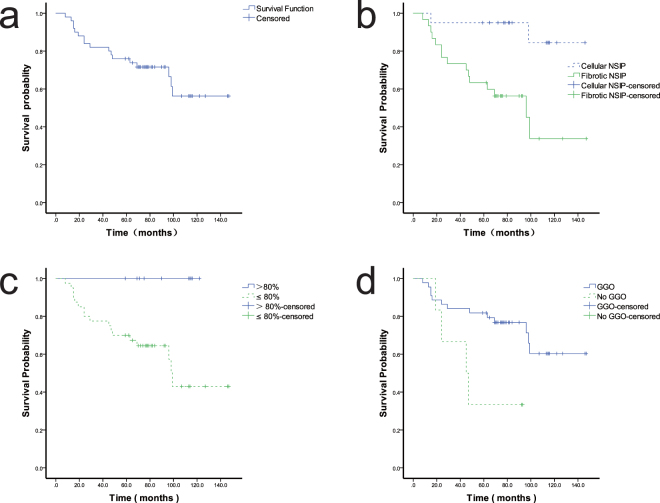
Nonspecific interstitial pneumonia (NSIP) is characterised by interstitial infiltration of lymphocytes and varying amounts of interstitial fibrosis. B cells have been suggested to contribute to the pathogenesis of NSIP. However, the relationship between B-lymphocyte and the clinical outcomes of NSIP was unclear. In this study, 50 patients with histopathologically confirmed NSIP from Peking Union Medical College Hospital between April 2003 to December 2012 were retrospectively analyzed. Using immunohistochemical analyses, CD20+ B cells were counted in the lymphoid follicles, perivascular, interstitial, and peribronchiolar regions of lung tissure. The CD20+ lymphocytes were mainly present in the lymphoid follicles. The number of follicular CD20+ lymphocytes was higher in the fibrosing than cellular NSIP pattern [255.08 (132.92-449.71) vs. 121.33 (63.54-282.88)/0.1 mm, p = 0.017]. After 1 year of therapy, the follicular CD20+ lymphocytes were significantly higher in patients whose forced vital capacity (FVC) worsened as compared to those who improved (p = 0.014). Additionally, follicular CD20+ lymphocytes were negatively correlated with the post-treatment percentage change in FVC (rho = -0.397, p = 0.004). However, follicular CD20+ lymphocytes were not correlated with survival. These results suggested that pulmonary follicular CD20+ lymphocytes were correlated with the fibrosing pattern of NSIP and predicted less clinical improvement after treatment.
特发性非特异性间质性肺炎(NSIP)的特征是淋巴细胞间质浸润和不同程度的间质纤维化。有研究提示 B 细胞可能参与 NSIP 的发病机制。然而,B 淋巴细胞与 NSIP 临床结局的关系尚不清楚。本研究回顾性分析了 2003 年 4 月至 2012 年 12 月期间北京协和医院经组织病理学证实的 50 例 NSIP 患者。采用免疫组化分析,在肺组织的淋巴滤泡、血管周围、间质和细支气管周围区域计数 CD20+B 细胞。CD20+淋巴细胞主要存在于淋巴滤泡中。纤维性 NSIP 模式中滤泡性 CD20+淋巴细胞数量高于细胞性 NSIP 模式[255.08(132.92-449.71)比 121.33(63.54-282.88)/0.1mm,p=0.017]。治疗 1 年后,与治疗后用力肺活量(FVC)改善的患者相比,FVC 恶化的患者滤泡性 CD20+淋巴细胞明显更高(p=0.014)。此外,滤泡性 CD20+淋巴细胞与治疗后 FVC 的百分比变化呈负相关(rho=-0.397,p=0.004)。然而,滤泡性 CD20+淋巴细胞与生存率无关。这些结果表明,肺滤泡性 CD20+淋巴细胞与 NSIP 的纤维性模式相关,并预测治疗后临床改善较小。