Lavania Surabhi, Anthwal Divya, Bhalla Manpreet, Singh Nagendra, Haldar Sagarika, Tyagi Jaya Sivaswami
Department of Biotechnology, All India Institute of Medical Sciences, Ansari Nagar, New Delhi, India.
School of Biotechnology, Gautam Buddha University, Yamuna Express way, Greater Noida, Uttar Pradesh, India.
PLoS One. 2017 Dec 7;12(12):e0189149. doi: 10.1371/journal.pone.0189149. eCollection 2017.
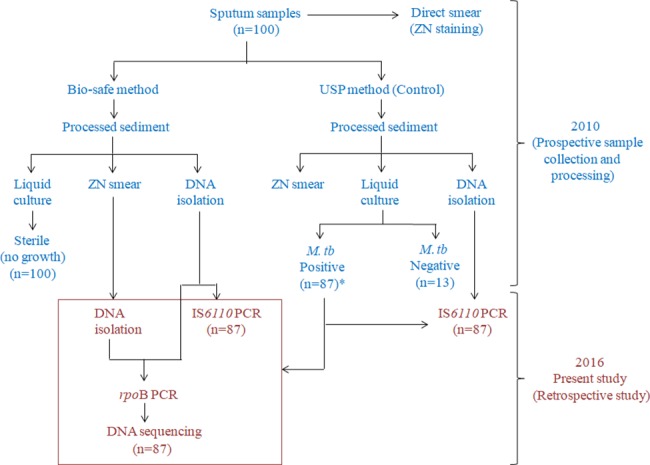
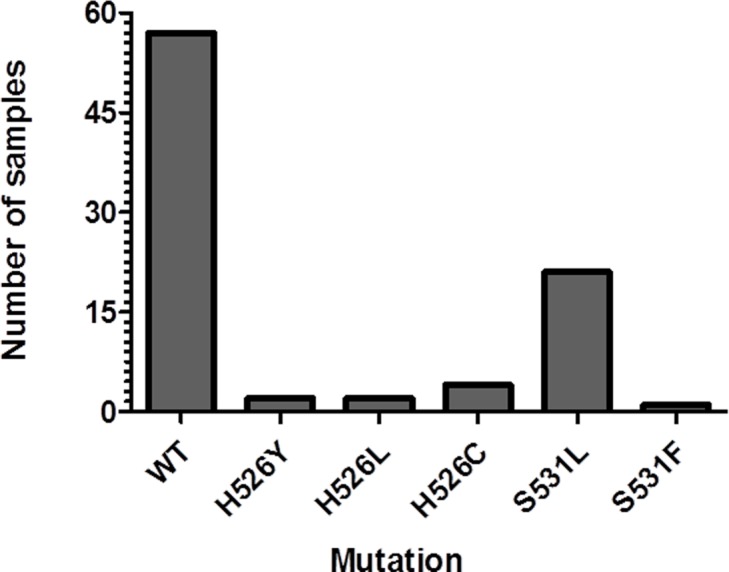
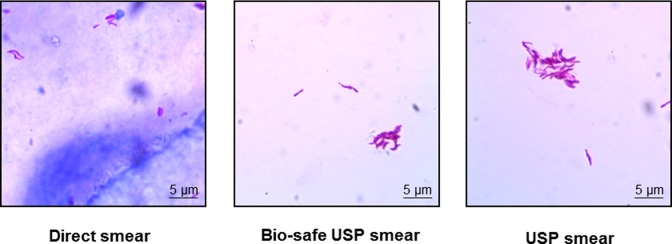
Direct smear microscopy of sputum forms the mainstay of TB diagnosis in resource-limited settings. Stained sputum smear slides can serve as a ready-made resource to transport sputum for molecular drug susceptibility testing. However, bio-safety is a major concern during transport of sputum/stained slides and for laboratory workers engaged in processing Mycobacterium tuberculosis infected sputum specimens. In this study, a bio-safe USP (Universal Sample Processing) concentration-based sputum processing method (Bio-safe method) was assessed on 87 M. tuberculosis culture positive sputum samples. Samples were processed for Ziehl-Neelsen (ZN) smear, liquid culture and DNA isolation. DNA isolated directly from sputum was subjected to an IS6110 PCR assay. Both sputum DNA and DNA extracted from bio-safe ZN concentrated smear slides were subjected to rpoB PCR and simultaneously assessed by DNA sequencing for determining rifampin (RIF) resistance. All sputum samples were rendered sterile by Bio-safe method. Bio-safe smears exhibited a 5% increment in positivity over direct smear with a 14% increment in smear grade status. All samples were positive for IS6110 and rpoB PCR. Thirty four percent samples were RIF resistant by rpoB PCR product sequencing. A 100% concordance (κ value = 1) was obtained between sequencing results derived from bio-safe smear slides and bio-safe sputum. This study demonstrates that Bio-safe method can address safety issues associated with sputum processing, provide an efficient alternative to sample transport in the form of bio-safe stained concentrated smear slides and can also provide information on drug (RIF) resistance by direct DNA sequencing.
在资源有限的环境中,痰涂片直接显微镜检查是结核病诊断的主要方法。染色后的痰涂片载玻片可作为用于分子药敏试验的现成痰标本运输资源。然而,在痰/染色玻片运输过程中以及从事结核分枝杆菌感染痰标本处理的实验室工作人员中,生物安全是一个主要问题。在本研究中,对87份结核分枝杆菌培养阳性的痰标本评估了一种基于生物安全通用样本处理(USP)浓缩法的痰处理方法(生物安全法)。对样本进行萋尼(ZN)染色涂片、液体培养和DNA提取。直接从痰中提取的DNA进行IS6110 PCR检测。对痰DNA和从生物安全的ZN浓缩涂片载玻片提取的DNA进行rpoB PCR,并同时通过DNA测序评估以确定利福平(RIF)耐药性。所有痰标本通过生物安全法处理后均无菌。生物安全涂片的阳性率比直接涂片提高了5%,涂片分级状态提高了14%。所有样本的IS6110和rpoB PCR均呈阳性。通过rpoB PCR产物测序,34%的样本对利福平耐药。从生物安全涂片载玻片和生物安全痰中获得的测序结果之间一致性达到100%(κ值 = 1)。本研究表明,生物安全法可以解决与痰处理相关的安全问题,以生物安全染色浓缩涂片载玻片的形式提供一种高效的样本运输替代方法,并且还可以通过直接DNA测序提供药物(利福平)耐药性信息。