Whiteley Sarah L, Holleley Clare E, Ruscoe Wendy A, Castelli Meghan, Whitehead Darryl L, Lei Juan, Georges Arthur, Weisbecker Vera
School of Biological Sciences, University of Queensland, Brisbane, QLD Australia.
Australian National Wildlife Collection, National Research Collections Australia, CSIRO, Canberra, ACT Australia.
Evodevo. 2017 Dec 4;8:25. doi: 10.1186/s13227-017-0087-5. eCollection 2017.
The development of male- or female-specific phenotypes in squamates is typically controlled by either temperature-dependent sex determination (TSD) or chromosome-based genetic sex determination (GSD). However, while sex determination is a major switch in individual phenotypic development, it is unknownhow evolutionary transitions between GSD and TSD might impact on the evolution of squamate phenotypes, particularly the fast-evolving and diverse genitalia. Here, we take the unique opportunity of studying the impact of both sex determination mechanisms on the embryological development of the central bearded dragon (). This is possible because of the transitional sex determination system of this species, in which genetically male individuals reverse sex at high incubation temperatures. This can trigger the evolutionary transition of GSD to TSD in a single generation, making an ideal model organism for comparing the effects of both sex determination processes in the same species.
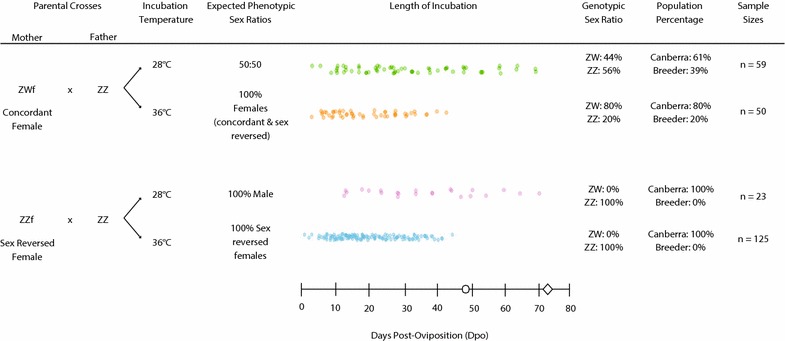
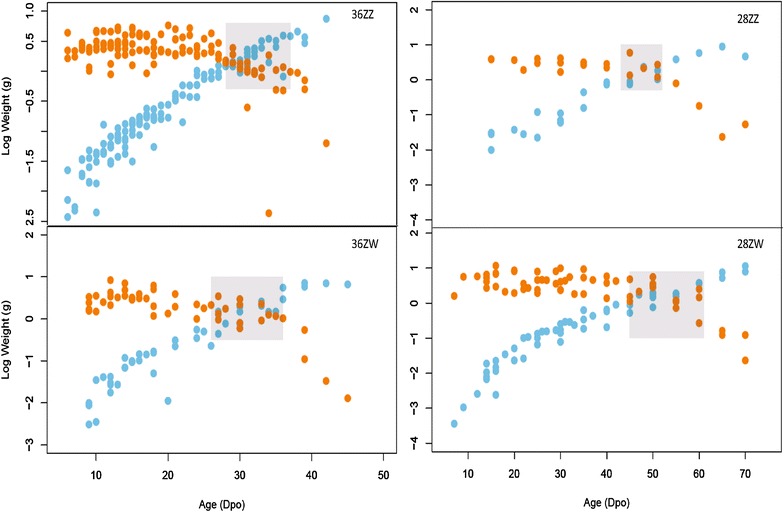
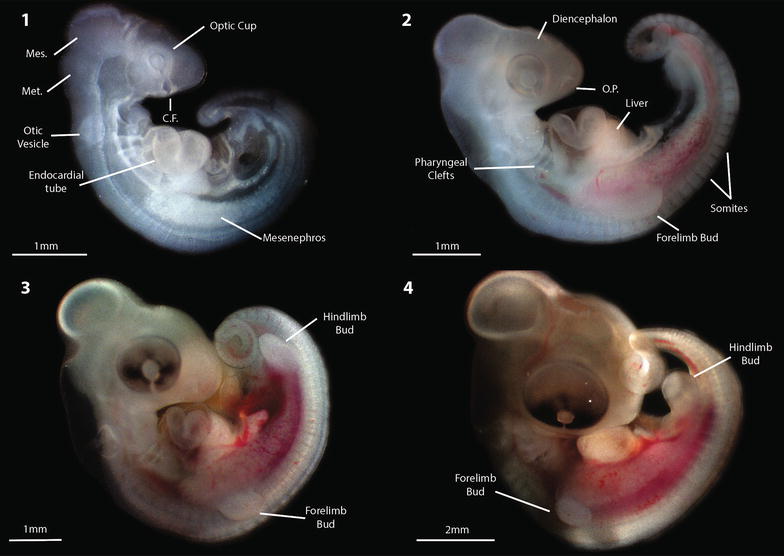
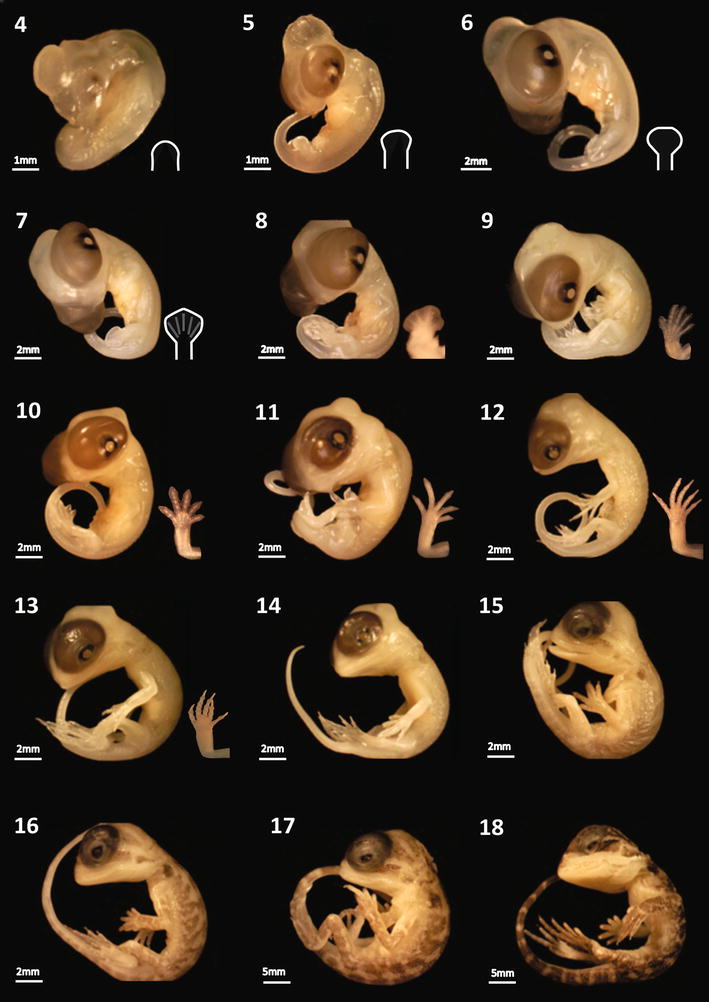
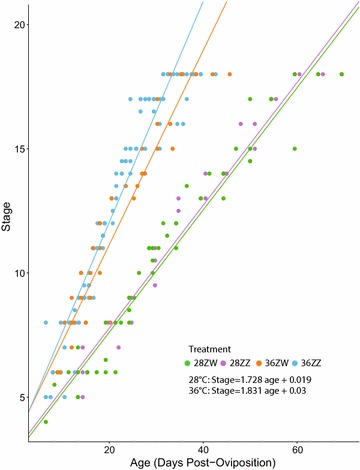
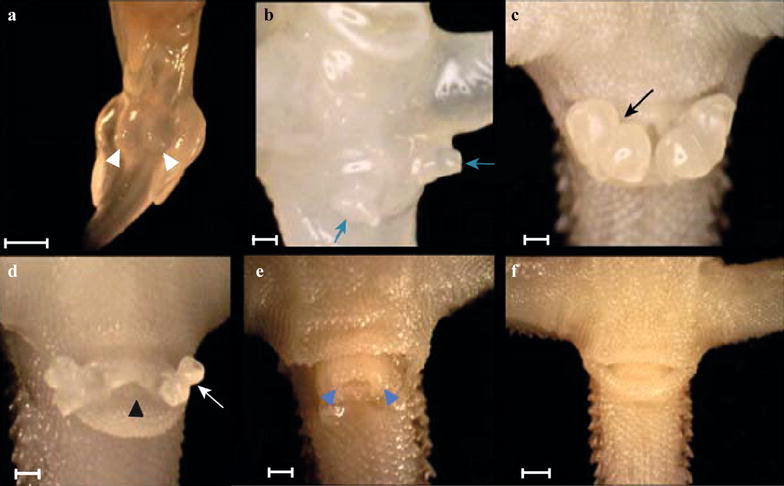
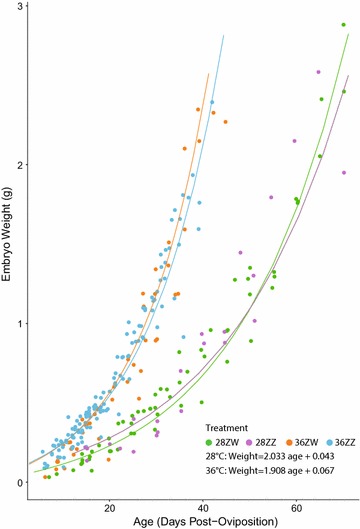
We conducted four incubation experiments on 265 eggs, covering two temperature regimes ("normal" at 28 °C and "sex reversing" at 36 °C) and the two maternal sexual genotypes (concordant ZW females or sex-reversed ZZ females). From this, we provide the first detailed staging system for the species, with a focus on genital and limb development. This was augmented by a new sex chromosome identification methodology for that is non-destructive to the embryo. We found a strong correlation between embryo age and embryo stage. Aside from faster growth in 36 °C treatments, body and external genital development was entirely unperturbed by temperature, sex reversal or maternal sexual genotype. Unexpectedly, all females developed hemipenes (the genital phenotype of adult male ), which regress close to hatching.
The tight correlation between embryo age and embryo stage allows the precise targeting of specific developmental periods in the emerging field of molecular research on . The stability of genital development in all treatments suggests that the two sex-determining mechanisms have little impact on genital evolution, despite their known role in triggering genital development. Hemipenis retention in developing female , together with frequent occurrences of hemipenis-like structures during development in other squamate species, raises the possibility of a bias towards hemipenis formation in the ancestral developmental programme for squamate genitalia.
有鳞目动物中雄性或雌性特定表型的发育通常由温度依赖型性别决定(TSD)或基于染色体的遗传性别决定(GSD)控制。然而,虽然性别决定是个体表型发育中的一个主要开关,但尚不清楚GSD和TSD之间的进化转变如何影响有鳞目动物表型的进化,特别是快速进化且多样的生殖器。在这里,我们利用独特的机会研究这两种性别决定机制对中部鬃狮蜥胚胎发育的影响。这之所以可行,是因为该物种的过渡性性别决定系统,即遗传上的雄性个体在高孵化温度下会发生性别逆转。这可以在一代中引发从GSD到TSD的进化转变,使中部鬃狮蜥成为比较同一物种中两种性别决定过程影响的理想模式生物。
我们对265枚中部鬃狮蜥卵进行了四项孵化实验,涵盖两种温度条件(28°C的“正常”温度和36°C的“性别逆转”温度)以及两种母体性基因型(一致的ZW雌性或性别逆转的ZZ雌性)。据此,我们为该物种提供了首个详细的分期系统,重点关注生殖器和肢体发育。这通过一种对胚胎无损的中部鬃狮蜥新性染色体鉴定方法得到了补充。我们发现胚胎年龄与胚胎阶段之间存在很强的相关性。除了在36°C处理下生长更快外,身体和外部生殖器的发育完全不受温度、性别逆转或母体性基因型的影响。出乎意料的是,所有雌性都发育出了半阴茎(成年雄性的生殖器表型),且在接近孵化时退化。
胚胎年龄与胚胎阶段之间的紧密相关性使得在中部鬃狮蜥分子研究的新兴领域中能够精确靶向特定的发育时期。所有处理中生殖器发育的稳定性表明,尽管这两种性别决定机制在引发生殖器发育方面具有已知作用,但它们对生殖器进化的影响很小。发育中的雌性中部鬃狮蜥保留半阴茎,以及在其他有鳞目物种发育过程中频繁出现类似半阴茎的结构,增加了有鳞目动物生殖器祖先发育程序中存在偏向半阴茎形成的可能性。