Choi Sung Kyung, Pandiyan Kurinji, Eun Jung Woo, Yang Xiaojing, Hong Seong Hwi, Nam Suk Woo, Jones Peter A, Liang Gangning, You Jueng Soo
Department of Biochemistry, School of Medicine, Konkuk University, Seoul, Korea.
Departments of Urology, Keck School of Medicine, University of Southern California, Los Angeles, CA, USA.
Oncotarget. 2017 Oct 9;8(58):98322-98335. doi: 10.18632/oncotarget.21681. eCollection 2017 Nov 17.
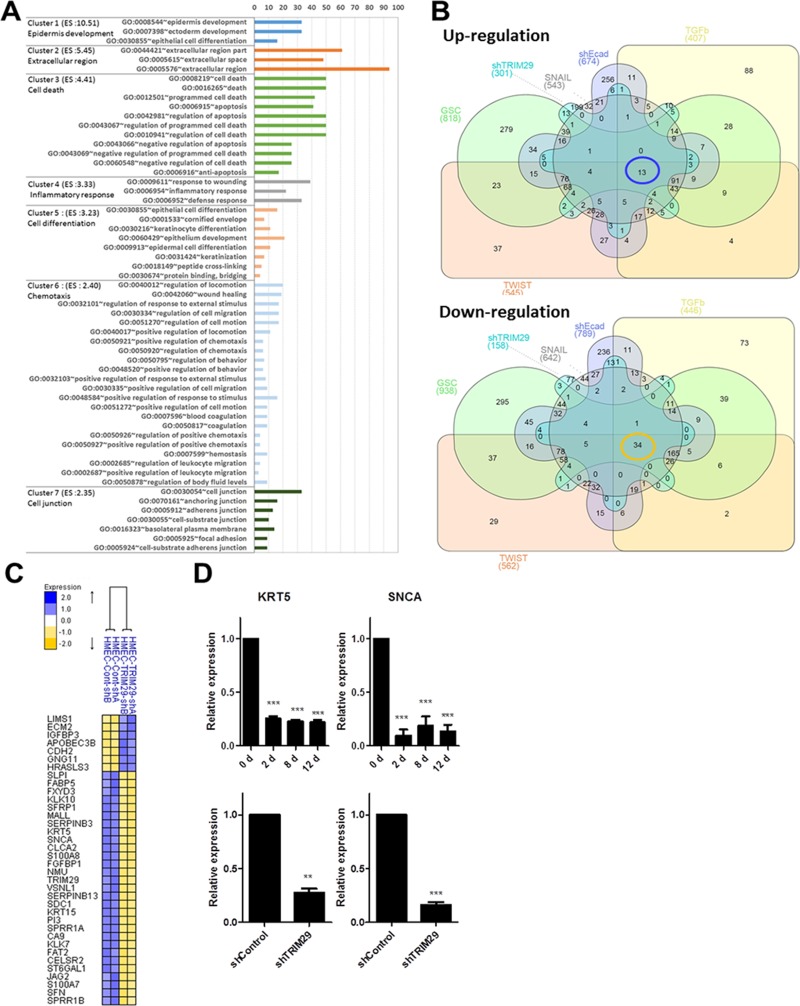
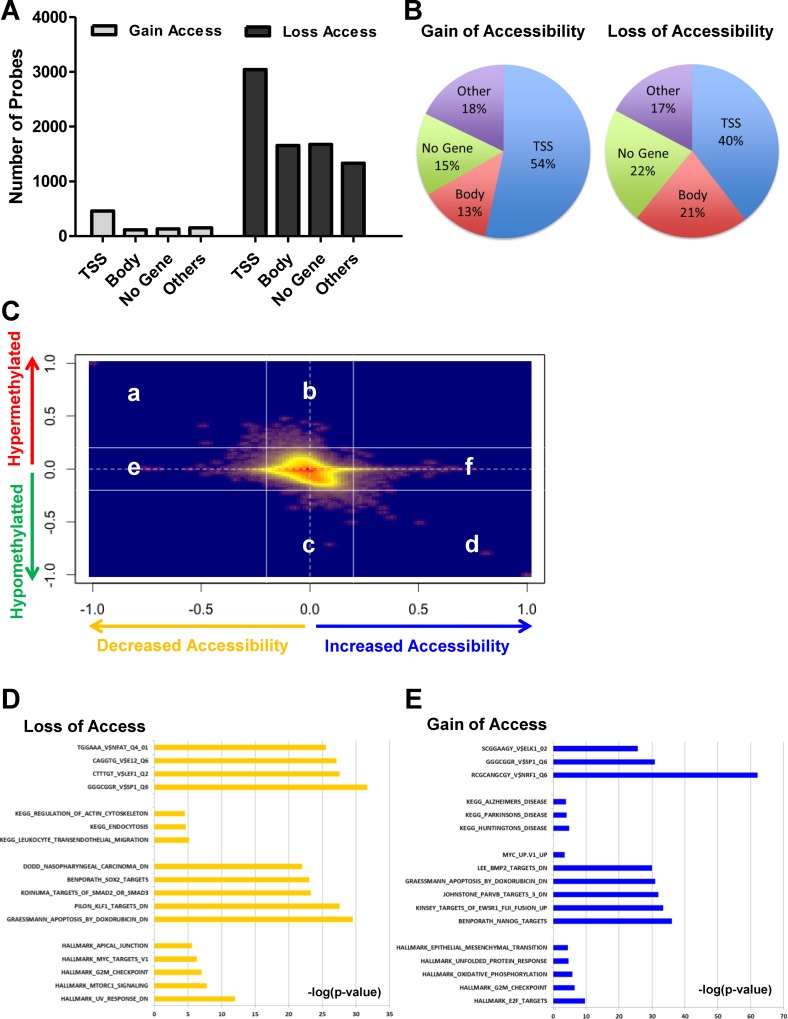
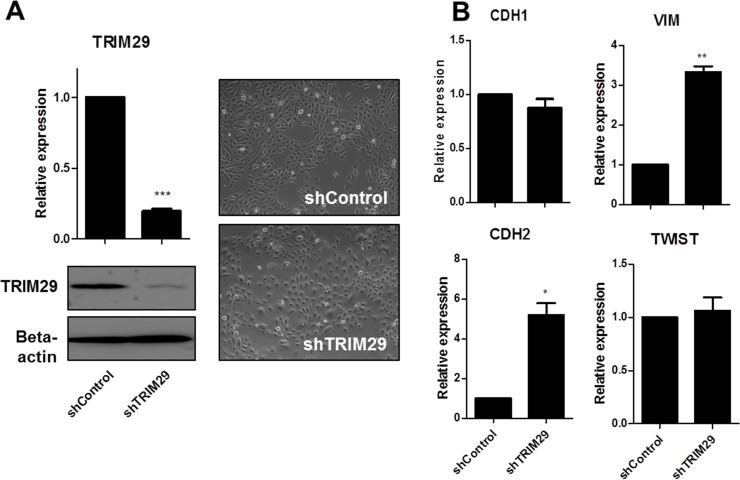
Epithelial to mesenchymal transition (EMT) is a key trans-differentiation process, which plays a critical role in physiology and pathology. Although gene expression changes in EMT have been scrutinized, study of epigenome is in its infancy. To understand epigenetic changes during TWIST-driven EMT, we used the AcceSssIble assay to study DNA methylation and chromatin accessibility in human mammary epithelial cells (HMECs). The DNA methylation changes were found to have functional significance in EMT - i.e. methylated genes were enriched for E-box motifs that can be recognized by TWIST, at the promoters suggesting a potential targeting phenomenon, whereas the demethylated regions were enriched for pro-metastatic genes, supporting the role of EMT in metastasis. TWIST-induced EMT triggers alterations in chromatin accessibility both independent of and dependent on DNA methylation changes, primarily resulting in closed chromatin conformation. By overlapping the genes, whose chromatin structure is changed during early EMT and a known "core EMT signature", we identified 18 driver candidate genes during EMT, 14 upregulated and 4 downregulated genes with corresponding chromatin structure changes. Among 18 genes, we focused on TRIM29 as a novel marker of EMT. Although loss of TRIM29 is insufficient to suppress CDH, it is enough to induce CDH2 and VIM. Gene functional annotation analysis shows the involvement of TRIM29 in epidermal development, cell differentiation and cell migration. Taken together, our results provide a robust snapshot of chromatin state during human EMT and identify TRIM29 as a core mediator of EMT.
上皮-间质转化(EMT)是一个关键的转分化过程,在生理和病理过程中发挥着至关重要的作用。尽管EMT过程中的基因表达变化已受到仔细研究,但表观基因组的研究仍处于起步阶段。为了了解TWIST驱动的EMT过程中的表观遗传变化,我们使用了可及性分析来研究人乳腺上皮细胞(HMECs)中的DNA甲基化和染色质可及性。研究发现,DNA甲基化变化在EMT中具有功能意义,即在启动子处,甲基化基因富含可被TWIST识别的E-box基序,提示存在潜在的靶向现象,而去甲基化区域富含促转移基因,支持EMT在转移中的作用。TWIST诱导的EMT触发了与DNA甲基化变化无关和相关的染色质可及性改变,主要导致染色质构象封闭。通过重叠在早期EMT过程中染色质结构发生变化的基因和已知的“核心EMT特征”,我们鉴定出18个EMT过程中的驱动候选基因,其中14个上调基因和4个下调基因伴有相应的染色质结构变化。在这18个基因中,我们将TRIM29作为EMT的一个新标志物进行了重点研究。虽然TRIM29的缺失不足以抑制CDH,但足以诱导CDH2和VIM。基因功能注释分析表明TRIM29参与表皮发育、细胞分化和细胞迁移。综上所述,我们的结果提供了人类EMT过程中染色质状态的详细概况,并将TRIM29鉴定为EMT的核心调节因子。