Department of Pharmacology and Therapeutics, Roswell Park Cancer Institute, Buffalo, NY, 14263, USA.
Department of Urology, Roswell Park Cancer Institute, Buffalo, NY, 14263, USA.
Nat Commun. 2017 Dec 12;8(1):2052. doi: 10.1038/s41467-017-02097-9.
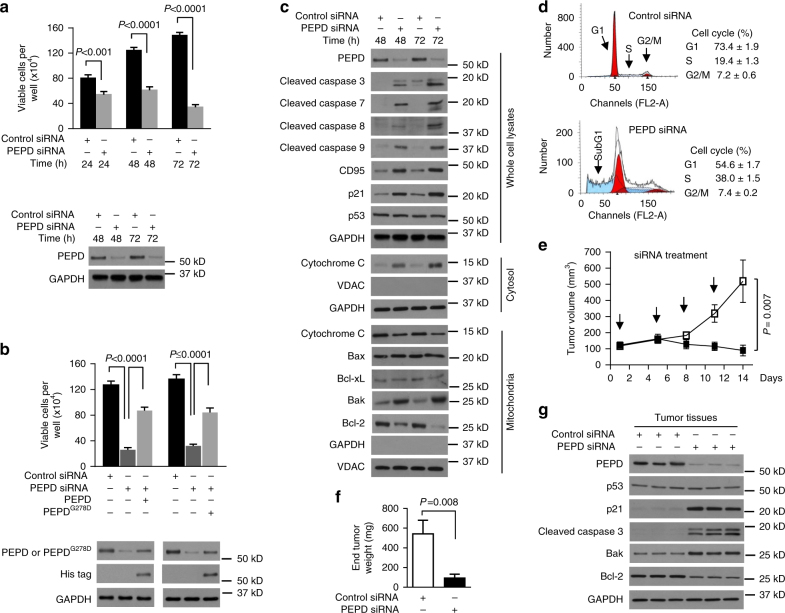
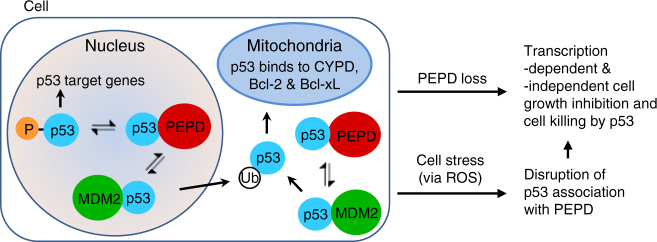
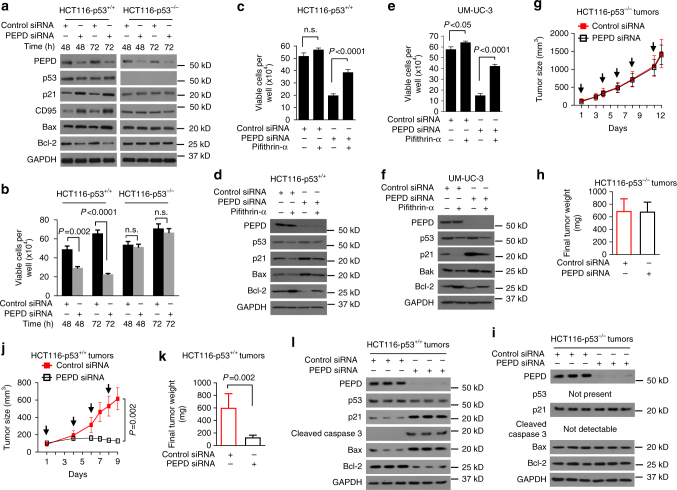
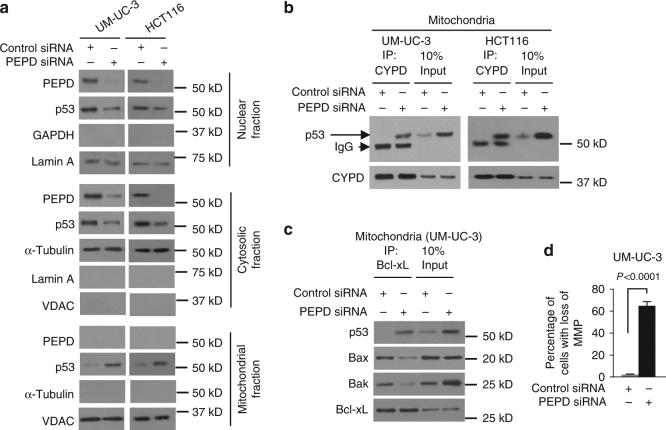
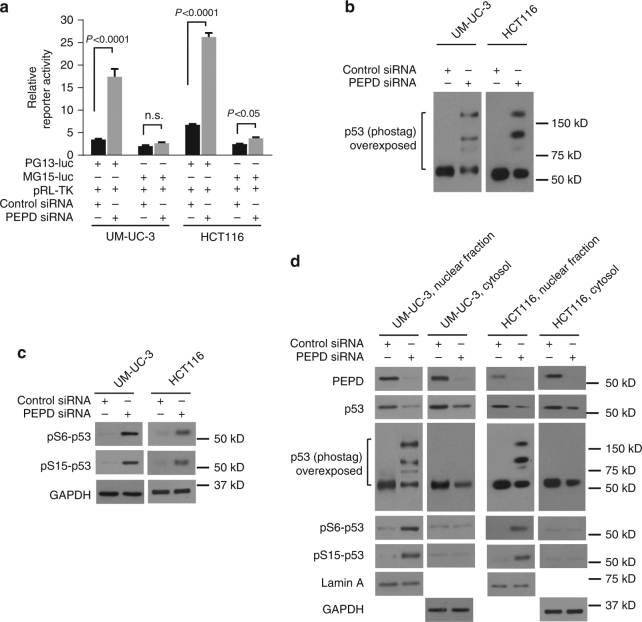
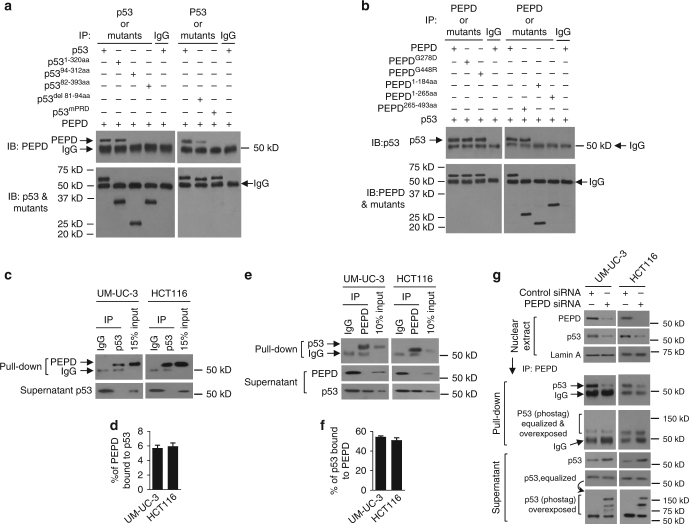
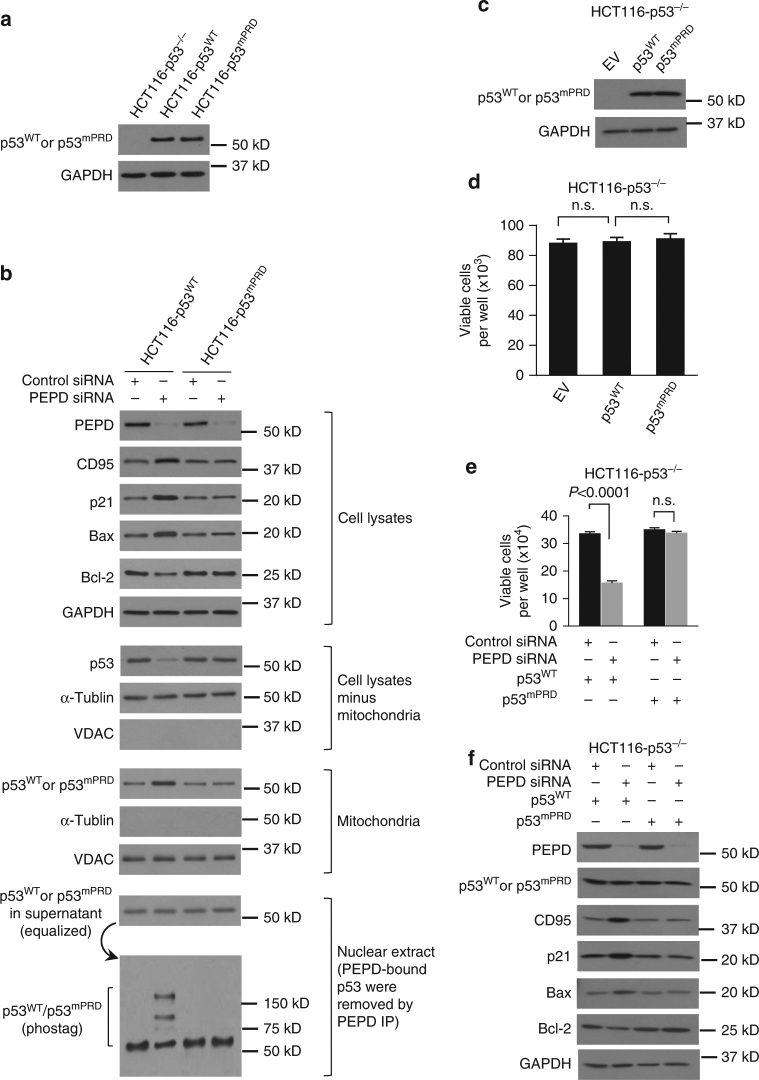
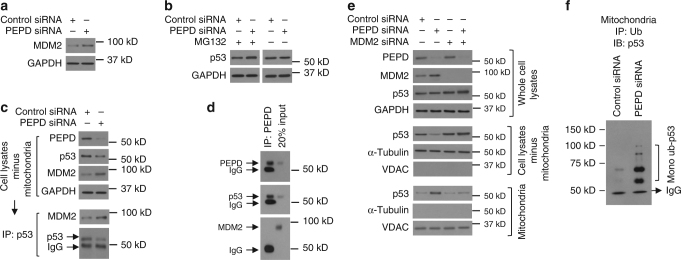
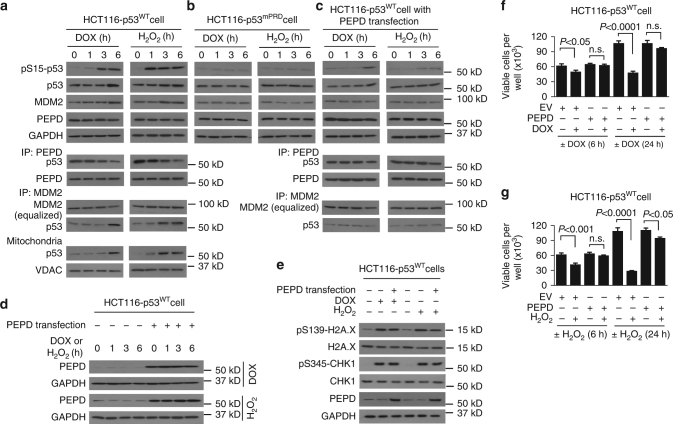
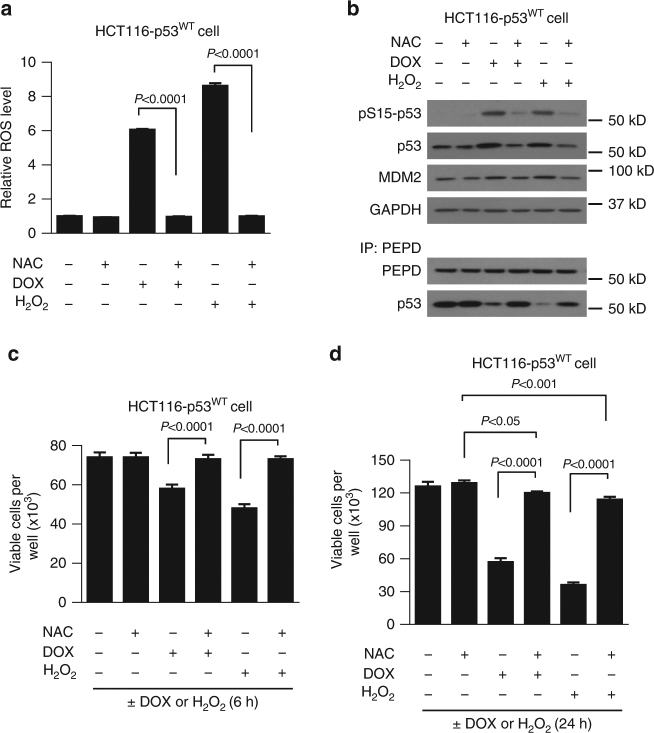
p53 tumor suppressor responds to various cellular stresses and regulates cell fate. Here, we show that peptidase D (PEPD) binds and suppresses over half of nuclear and cytoplasmic p53 under normal conditions, independent of its enzymatic activity. Eliminating PEPD causes cell death and tumor regression due to p53 activation. PEPD binds to the proline-rich domain in p53, which inhibits phosphorylation of nuclear p53 and MDM2-mediated mitochondrial translocation of nuclear and cytoplasmic p53. However, the PEPD-p53 complex is critical for p53 response to stress, as stress signals doxorubicin and HO each must free p53 from PEPD in order to achieve robust p53 activation, which is mediated by reactive oxygen species. Thus, PEPD stores p53 for the stress response, but this also renders cells dependent on PEPD for survival, as it suppresses p53. This finding provides further understanding of p53 regulation and may have significant implications for the treatment of cancer and other diseases.
p53 肿瘤抑制因子响应各种细胞应激,并调节细胞命运。在这里,我们表明肽酶 D(PEPD)在正常条件下结合并抑制超过一半的核内和细胞质 p53,而不依赖其酶活性。消除 PEPD 会导致细胞死亡和肿瘤消退,这是由于 p53 的激活。PEPD 与 p53 的脯氨酸丰富结构域结合,抑制核 p53 的磷酸化以及 MDM2 介导的核内和细胞质 p53 的线粒体易位。然而,PEPD-p53 复合物对于 p53 对应激的反应至关重要,因为应激信号阿霉素和 HO 都必须使 p53 从 PEPD 中释放出来,才能实现强大的 p53 激活,这是由活性氧介导的。因此,PEPD 为应激反应储存 p53,但这也使细胞依赖于 PEPD 来生存,因为它抑制了 p53。这一发现进一步了解了 p53 的调节,可能对癌症和其他疾病的治疗具有重要意义。