Shen Y, Zhang H, Zhang L, Li H, Mao H, Pei Y, Jing Z, Lu Q
Department of Vascular Surgery, Changhai Hospital, Shanghai, China.
Herz. 2018 Dec;43(8):746-751. doi: 10.1007/s00059-017-4622-x. Epub 2017 Dec 13.
Transcatheter aortic valve replacement (TAVR) is widely applied for the treatment of severe aortic stenosis (AS) in developed countries; however, in China, it is still in the early stage of utilization. On the basis of previous studies, this work explored the feasibility of TAVR in patients with severe AS in China and analyzed the cause of death in four cases.
This retrospective study included 20 patients who had severe AS and underwent TAVR with a balloon-expandable system (Edwards SAPIEN XT) in our hospital from January 2011 to June 2016. The valve and heart functions of 16 survivors before and after the TAVR procedure were compared. TAVR endpoints, device success, and adverse events were assessed according to the definitions of the Valve Academic Research Consortium-2 (VARC-2).
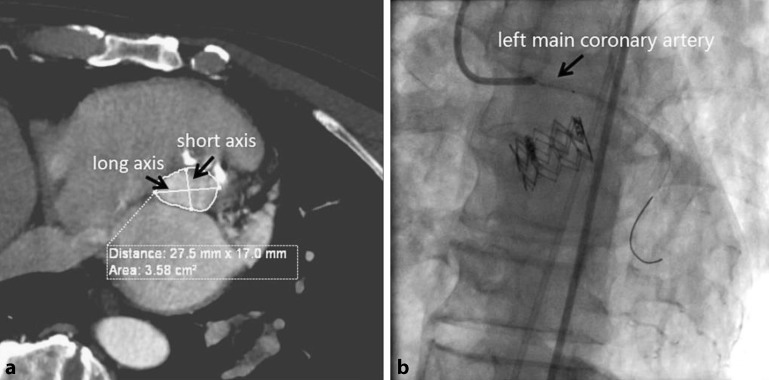
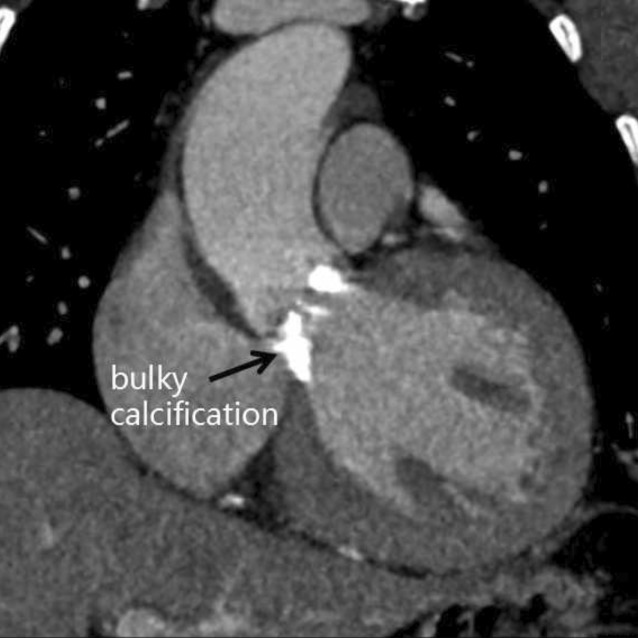
There were 13 male and seven female patients aged 65-81 years (average, 73.15) who underwent TAVR. The TAVR approach was transfemoral in 19 patients and transapical in one patient. Four patients died (two of coronary artery occlusion and two of aortic annulus rupture) during the TAVR procedure or shortly after; six patients had mild paravalvular leakage, and the rest of the patients showed a significant improvement in cardiac function. During the follow-up period (2-62 months), one patient died of lung cancer 13 months after the TAVR procedure.
TAVR with a balloon-expandable system is safe and effective and can be used for patients with severe AS in China. It requires careful patient selection and preoperative assessment so as to reduce the 30-day postoperative mortality rate.
经导管主动脉瓣置换术(TAVR)在发达国家已广泛应用于治疗重度主动脉瓣狭窄(AS);然而,在中国,该技术仍处于应用初期。基于既往研究,本研究探讨了TAVR在中国重度AS患者中的可行性,并分析了4例死亡病例的死因。
本回顾性研究纳入了20例重度AS患者,这些患者于2011年1月至2016年6月在我院接受了球囊扩张系统(爱德华SAPIEN XT)的TAVR治疗。比较了16例幸存者在TAVR手术前后的瓣膜及心功能情况。根据瓣膜学术研究联盟-2(VARC-2)的定义评估TAVR终点、手术成功情况及不良事件。
接受TAVR治疗的患者共20例,其中男性13例,女性7例,年龄65 - 81岁(平均73.15岁)。TAVR手术途径为经股动脉19例,经心尖1例。4例患者在TAVR手术期间或术后不久死亡(2例死于冠状动脉阻塞,2例死于主动脉瓣环破裂);6例患者有轻度瓣周漏,其余患者心功能有显著改善。在随访期(2 - 62个月)内,1例患者在TAVR术后13个月死于肺癌。
使用球囊扩张系统的TAVR安全有效,可用于中国的重度AS患者。需要仔细筛选患者并进行术前评估,以降低术后30天死亡率。