Graham Brendan A, Heath Daniel D, Mennill Daniel J
Department of Biological Sciences University of Windsor Windsor ON Canada.
Great Lakes Institute of Environmental Research University of Windsor Windsor ON Canada.
Ecol Evol. 2017 Oct 24;7(23):10089-10102. doi: 10.1002/ece3.3456. eCollection 2017 Dec.
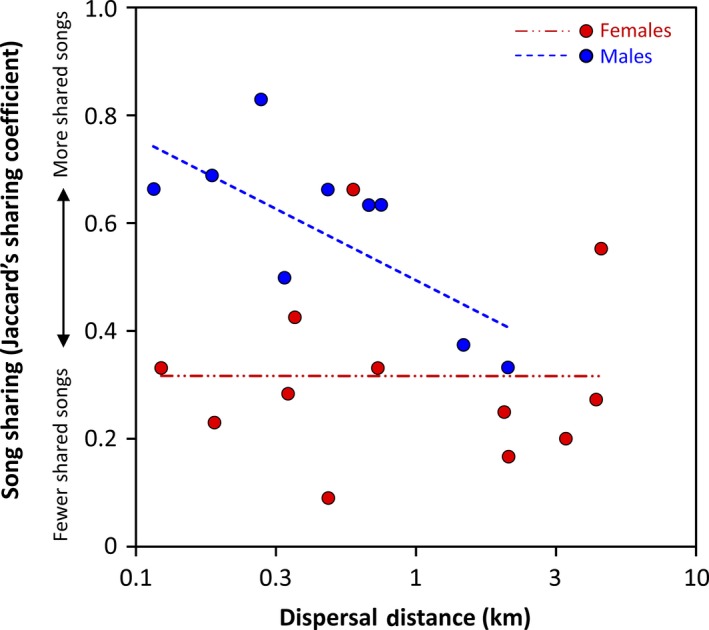
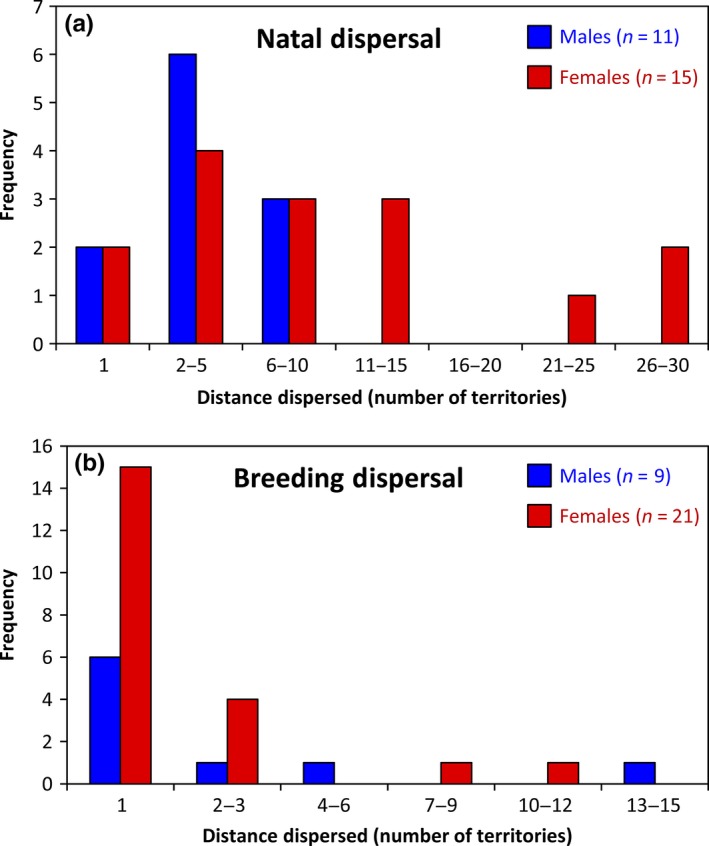
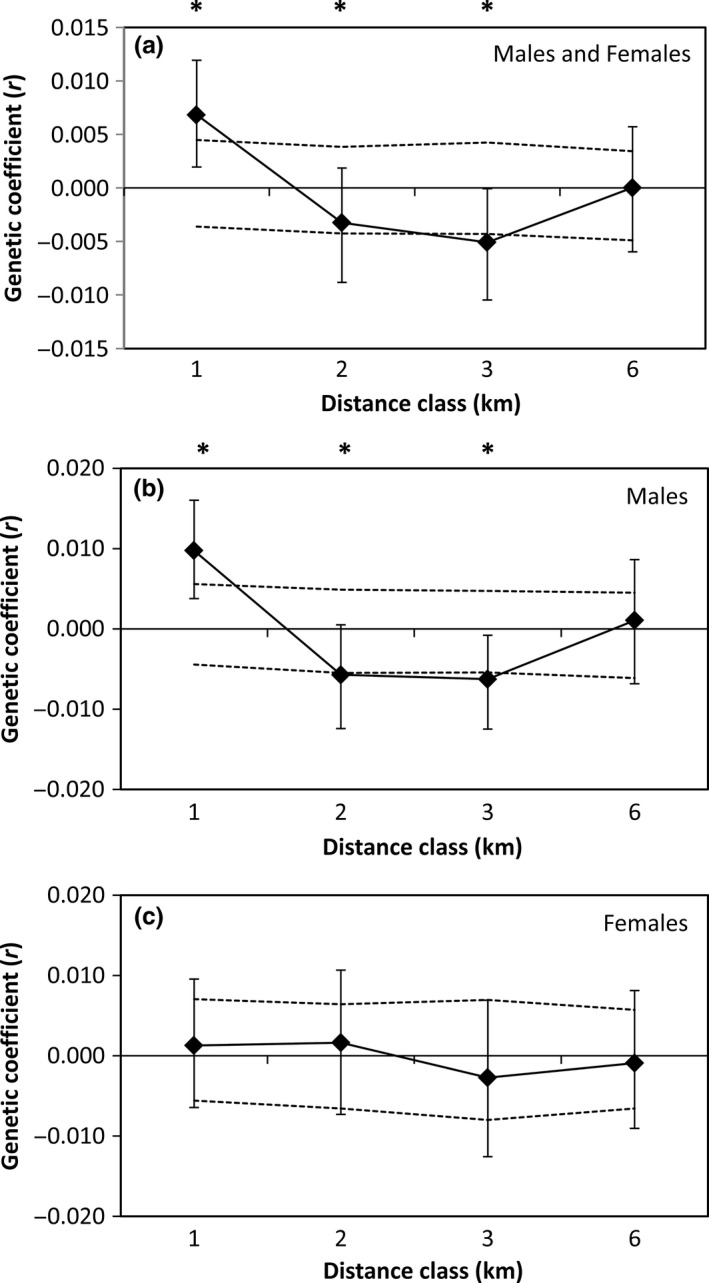
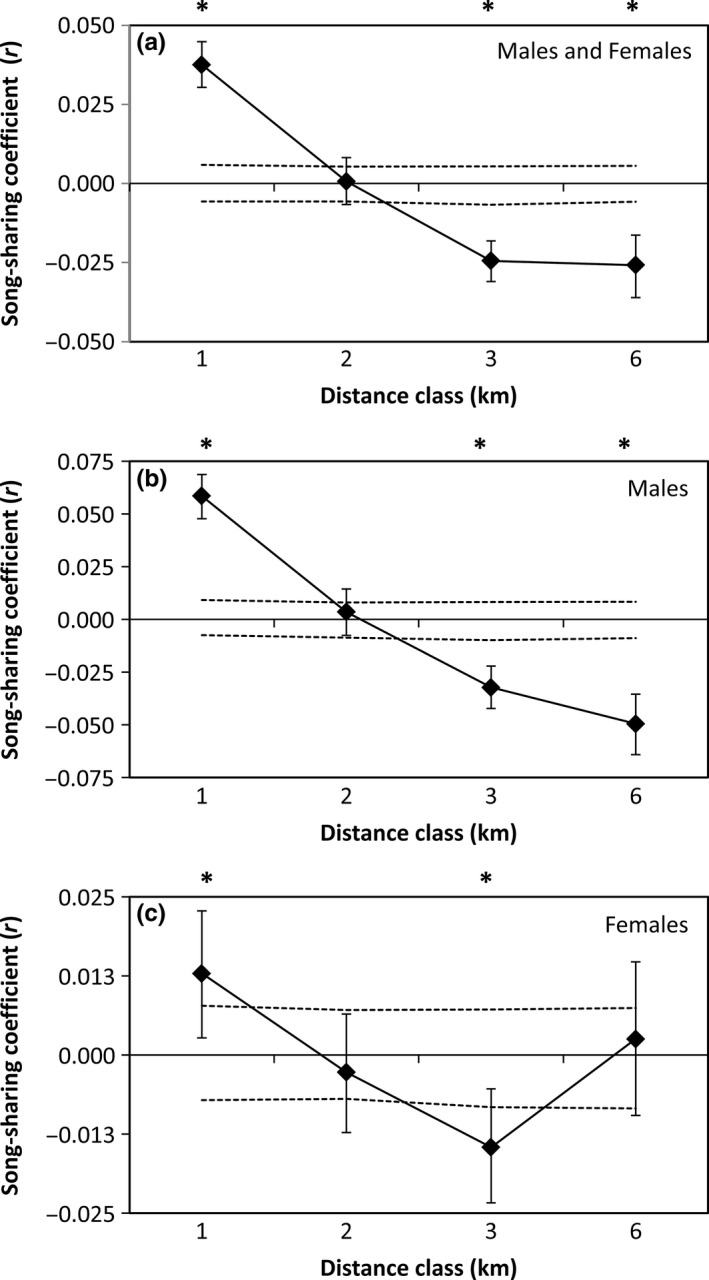
Animals exhibit diverse dispersal strategies, including sex-biased dispersal, a phenomenon common in vertebrates. Dispersal influences the genetic structure of populations as well as geographic variation in phenotypic traits. Patterns of spatial genetic structure and geographic variation may vary between the sexes whenever males and females exhibit different dispersal behaviors. Here, we examine dispersal, spatial genetic structure, and spatial acoustic structure in Rufous-and-white Wrens, a year-round resident tropical bird. Both sexes sing in this species, allowing us to compare acoustic variation between males and females and examine the relationship between dispersal and song sharing for both sexes. Using a long-term dataset collected over an 11-year period, we used banding data and molecular genetic analyses to quantify natal and breeding dispersal distance in Rufous-and-white Wrens. We quantified song sharing and examined whether sharing varied with dispersal distance, for both males and females. Observational data and molecular genetic analyses indicate that dispersal is female-biased. Females dispersed farther from natal territories than males, and more often between breeding territories than males. Furthermore, females showed no significant spatial genetic structure, consistent with expectations, whereas males showed significant spatial genetic structure. Overall, natal dispersal appears to have more influence than breeding dispersal on spatial genetic structure and spatial acoustic structure, given that the majority of breeding dispersal events resulted in individuals moving only short distances. Song sharing between pairs of same-sex animals decreases with the distance between their territories for both males and females, although males exhibited significantly greater song sharing than females. Lastly, we measured the relationship between natal dispersal distance and song sharing. We found that sons shared fewer songs with their fathers the farther they dispersed from their natal territories, but that song sharing between daughters and mothers was not significantly correlated with natal dispersal distance. Our results reveal cultural differences between the sexes, suggesting a relationship between culture and sex-biased dispersal.
动物表现出多样的扩散策略,包括性偏向扩散,这是脊椎动物中常见的现象。扩散影响种群的遗传结构以及表型性状的地理变异。当雄性和雌性表现出不同的扩散行为时,空间遗传结构和地理变异模式可能在性别之间有所不同。在这里,我们研究了棕白鹪鹩的扩散、空间遗传结构和空间声学结构,棕白鹪鹩是一种全年栖息在热带的鸟类。该物种的两性都会鸣叫,这使我们能够比较雄性和雌性之间的声学变异,并研究两性扩散与鸣声共享之间的关系。利用在11年期间收集的长期数据集,我们使用环志数据和分子遗传分析来量化棕白鹪鹩的出生扩散距离和繁殖扩散距离。我们量化了鸣声共享,并研究了共享是否随扩散距离而变化,包括雄性和雌性。观察数据和分子遗传分析表明扩散存在雌性偏向。雌性比雄性离出生领地更远,并且在繁殖领地之间移动的频率也比雄性更高。此外,雌性没有表现出显著的空间遗传结构,这与预期一致,而雄性表现出显著的空间遗传结构。总体而言,出生扩散似乎比繁殖扩散对空间遗传结构和空间声学结构的影响更大,因为大多数繁殖扩散事件导致个体只移动了很短的距离。同性动物对之间的鸣声共享随着它们领地之间的距离而减少,包括雄性和雌性,但雄性表现出比雌性显著更大的鸣声共享。最后我们测量了出生扩散距离和鸣声共享之间的关系。我们发现,儿子与父亲共享的鸣声随着它们离出生领地的距离越远而越少,但女儿与母亲之间鸣声共享与出生扩散距离没有显著相关性。我们的结果揭示了两性之间的文化差异,表明文化与性偏向扩散之间存在关系。