Jiménez-Valverde Alberto, Sendra Alberto, Garay Policarp, Reboleira Ana Sofia P S
Grupo de Investigación de Biología del Suelo y de los Ecosistemas Subterráneos Departamento de Ciencias de la Vida Facultad de Biología Ciencias Ambientales y Química Universidad de Alcalá Alcalá de Henares Madrid Spain.
Servei de Patrimoni Historic Ajuntament de València Spain.
Ecol Evol. 2017 Oct 24;7(23):10207-10215. doi: 10.1002/ece3.3558. eCollection 2017 Dec.
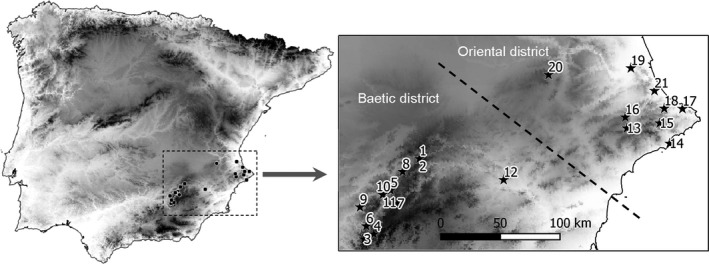
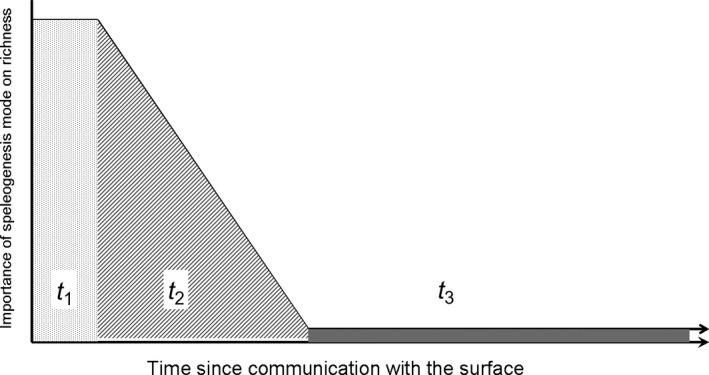
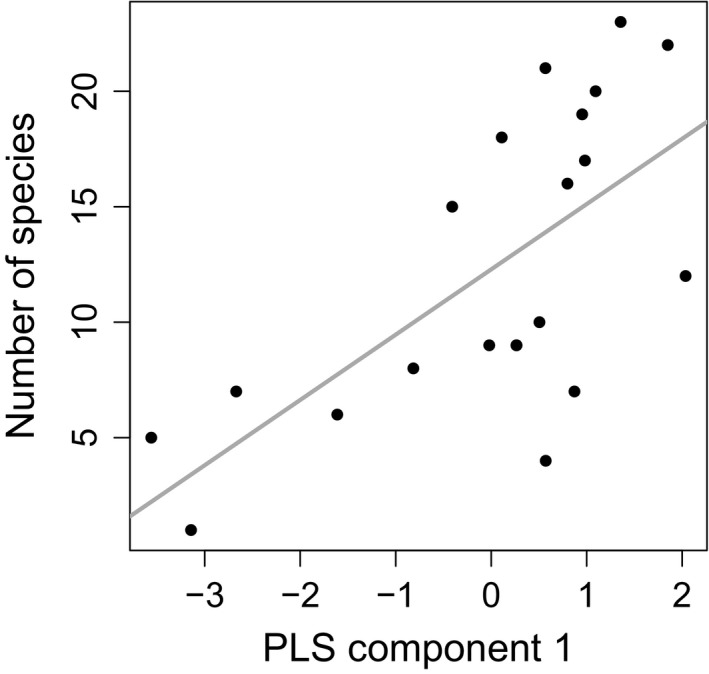
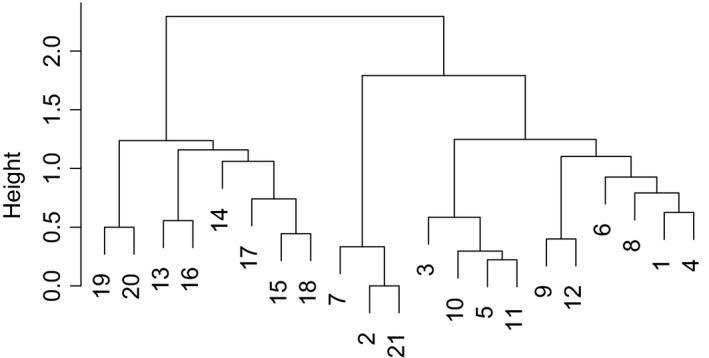
The aim of this study was to unravel the relative role played by speleogenesis (i.e., the process in which a cave is formed), landscape-scale variables, and geophysical factors in the determination of species richness in caves. Biological inventories from 21 caves located in the southeastern Iberian Peninsula along with partial least square (PLS) regression analysis were used to assess the relative importance of the different explanatory variables. The caves were grouped according to the similarity in their species composition; the effect that spatial distance could have on similarity was also studied using correlation between matrices. The energy and speleogenesis of caves accounted for 44.3% of the variation in species richness. The trophic level of each cave was the most significant factor in PLS regression analysis, and epigenic caves (i.e., those formed by the action of percolating water) had significantly more species than hypogenic ones (i.e., those formed by the action of upward flows in confined aquifers). Dissimilarity among the caves was very high (multiple-site β = 0.92). Two main groups of caves were revealed through the cluster analysis, one formed by the western caves and the other by the eastern ones. The significant-but low-correlation found between faunistic dissimilarity and geographical distance (=.16) disappeared once the caves were split into the two groups. The extreme beta-diversity suggests a very low connection among the caves and/or a very low dispersal capacity of the species. In the region under study, two main factors are intimately related to the richness of terrestrial subterranean species in caves: the amount of organic material (trophic level) and the formation process (genesis). This is the first time that the history of a cave genesis has been quantitatively considered to assess its importance in explaining richness patterns in comparison with other factors more widely recognized.
本研究的目的是揭示洞穴形成过程(即洞穴形成的过程)、景观尺度变量和地球物理因素在决定洞穴物种丰富度方面所起的相对作用。利用伊比利亚半岛东南部21个洞穴的生物清单以及偏最小二乘(PLS)回归分析来评估不同解释变量的相对重要性。根据洞穴物种组成的相似性对洞穴进行分组;还使用矩阵间的相关性研究了空间距离对相似性可能产生的影响。洞穴的能量和洞穴形成过程占物种丰富度变化的44.3%。在PLS回归分析中,每个洞穴的营养级是最显著的因素,后生洞穴(即由渗透水作用形成的洞穴)的物种比原生洞穴(即由承压含水层中向上水流作用形成的洞穴)显著更多。洞穴之间的差异非常大(多位点β = 0.92)。通过聚类分析揭示了两组主要的洞穴,一组由西部洞穴组成,另一组由东部洞穴组成。一旦将洞穴分为两组,在动物区系差异与地理距离之间发现的显著但低相关性(= 0.16)就消失了。极高的β多样性表明洞穴之间的联系非常低和/或物种的扩散能力非常低。在研究区域,有两个主要因素与洞穴中陆地地下物种的丰富度密切相关:有机物质的数量(营养级)和形成过程(成因)。这是首次定量考虑洞穴形成的历史,以评估其与其他更广泛认可的因素相比在解释丰富度模式方面的重要性。