Department of Neurosurgery, Children's Hospital of Pittsburgh, Pittsburgh, Pennsylvania.
University of Pittsburgh School of Medicine, Pittsburgh, Pennsylvania.
Mol Carcinog. 2018 Apr;57(4):469-482. doi: 10.1002/mc.22771. Epub 2017 Dec 30.
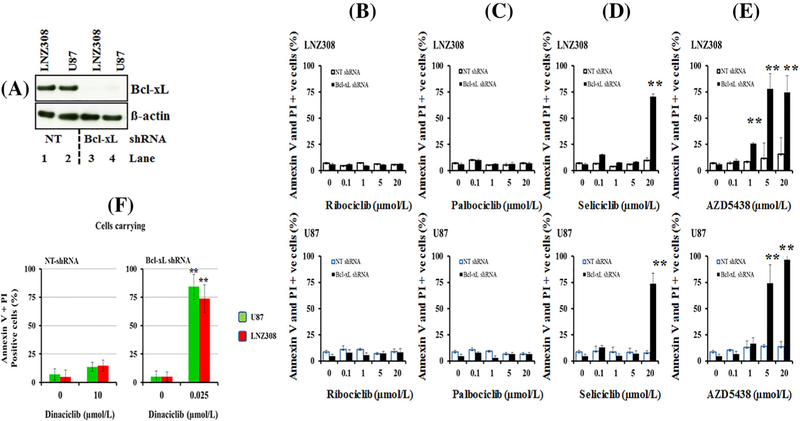
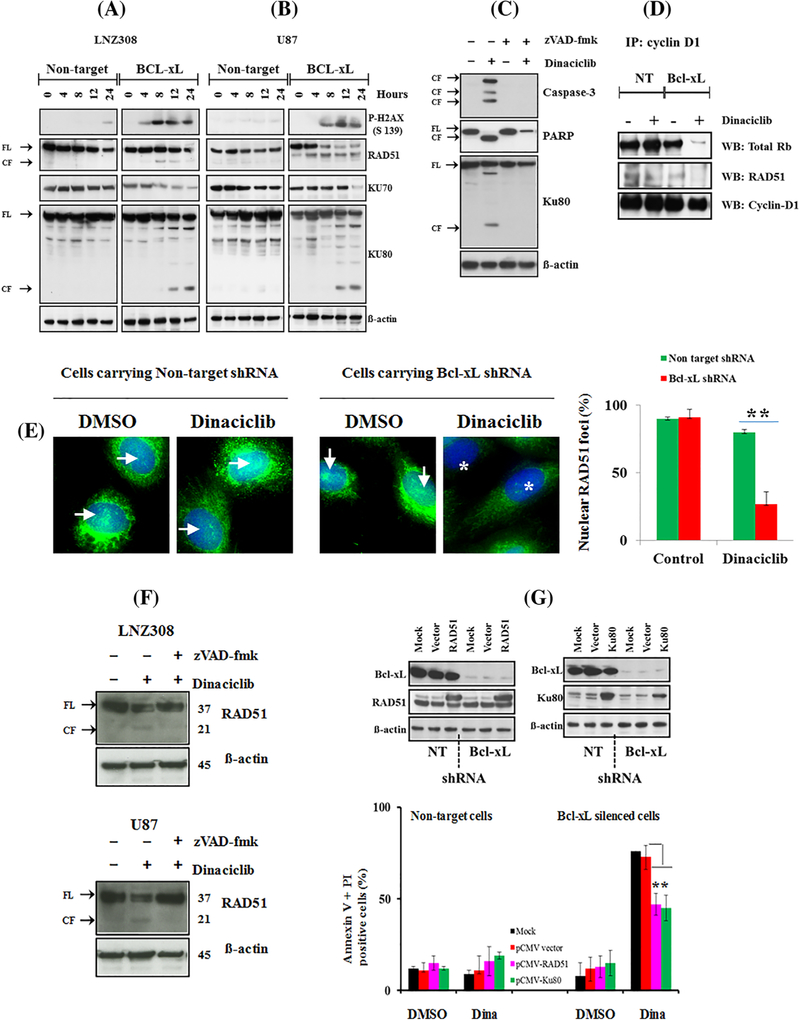
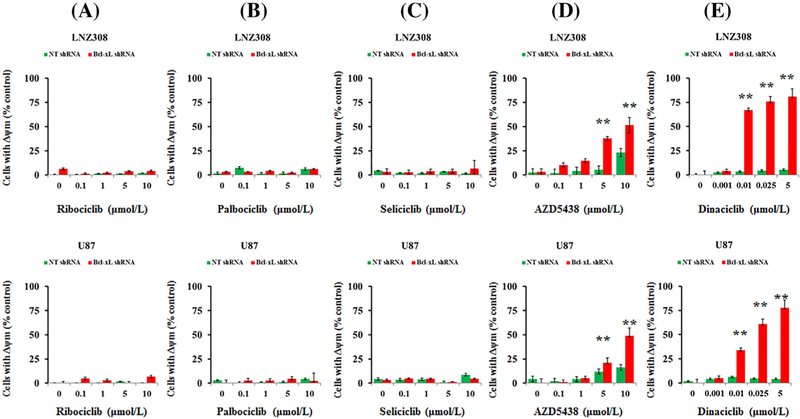
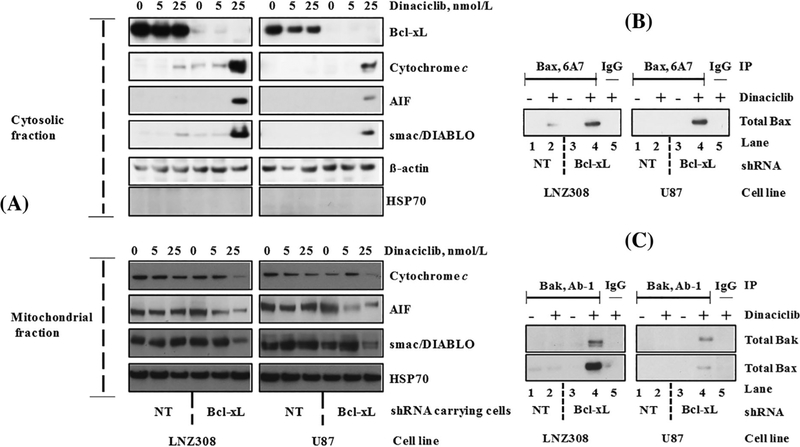
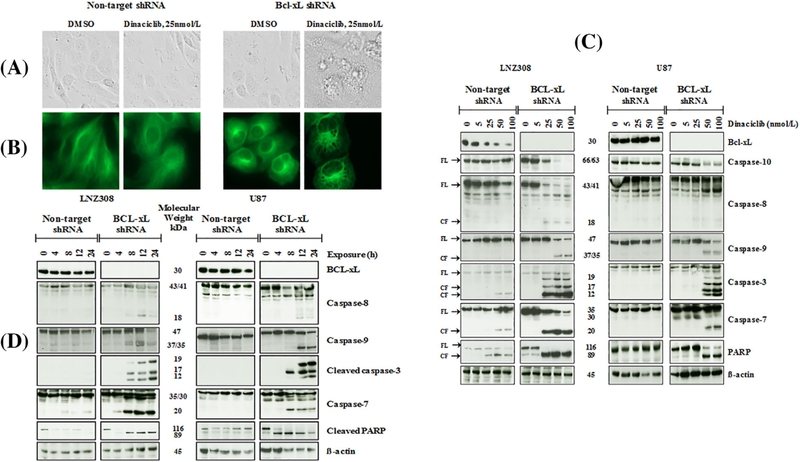
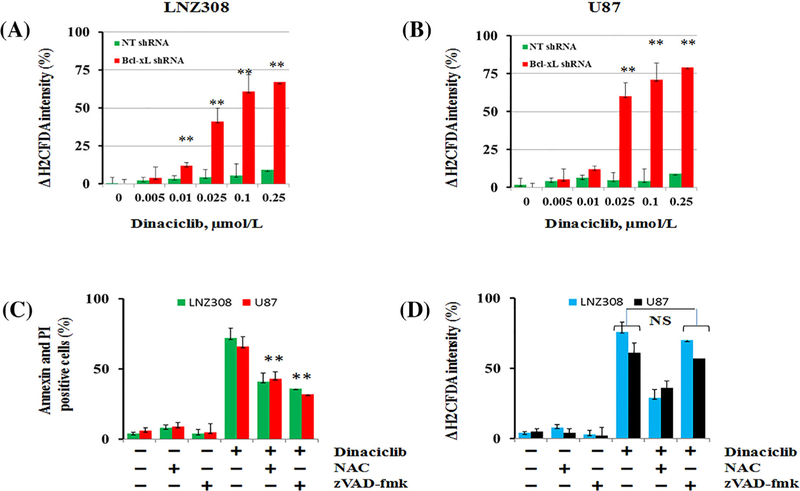
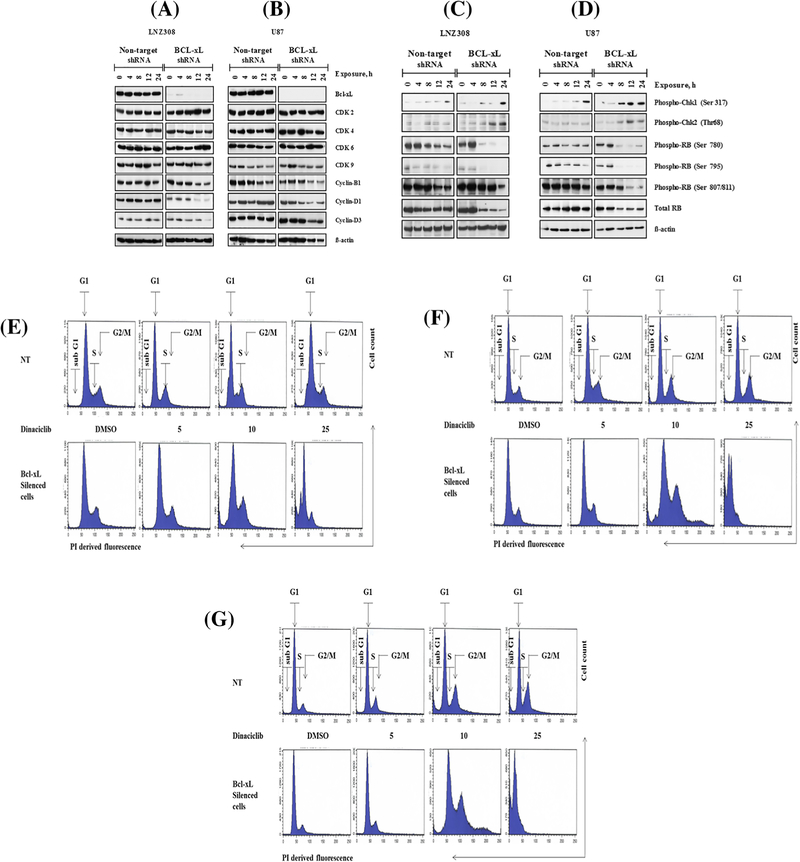
In the present study, we investigated the effect of CDK inhibitors (ribociclib, palbociclib, seliciclib, AZD5438, and dinaciclib) on malignant human glioma cells for cell viability, apoptosis, oxidative stress, and mitochondrial function using various assays. None of the CDK inhibitors induced cell death at a clinically relevant concentration. However, low nanomolar concentrations of dinaciclib showed higher cytotoxic activity against Bcl-xL silenced cells in a time- and concentration-dependent manner. This effect was not seen with other CDK inhibitors. The apoptosis-inducing capability of dinaciclib in Bcl-xL silenced cells was evidenced by cell shrinkage, mitochondrial dysfunction, DNA damage, and increased phosphatidylserine externalization. Dinaciclib was found to disrupt mitochondrial membrane potential, resulting in the release of cytochrome c, AIF, and smac/DIABLO into the cytoplasm. This was accompanied by the downregulation of cyclin-D1, D3, and total Rb. Dinaciclib caused cell cycle arrest in a time- and concentration-dependent manner and with accumulation of cells in the sub-G1 phase. Our results also revealed that dinaciclib, but not ribociclib or palbociclib or seliciclib or AZD5438 induced intrinsic apoptosis via upregulation of the levels of pro-apoptotic proteins (Bax and Bak), resulting in the activation of caspases and cleavage of PARP. We also found an additional mechanism for the dinaciclib-induced augmentation of apoptosis due to abrogation RAD51-cyclin D1 interaction, specifically proteolysis of the DNA repair proteins RAD51 and Ku80. Our results suggest that successfully interfering with Bcl-xL function may restore sensitivity to dinaciclib and could hold the promise for an effective combination therapeutic strategy.
在本研究中,我们使用各种测定法研究了 CDK 抑制剂(瑞博西利、哌柏西利、塞利昔布、AZD5438 和达沙替尼)对恶性人神经胶质瘤细胞的细胞活力、细胞凋亡、氧化应激和线粒体功能的影响。在临床相关浓度下,没有一种 CDK 抑制剂能诱导细胞死亡。然而,低纳摩尔浓度的达沙替尼以时间和浓度依赖的方式对 Bcl-xL 沉默的细胞表现出更高的细胞毒性活性。其他 CDK 抑制剂则没有这种作用。达沙替尼在 Bcl-xL 沉默的细胞中诱导细胞凋亡的能力表现在细胞皱缩、线粒体功能障碍、DNA 损伤和磷脂酰丝氨酸外翻增加。达沙替尼被发现破坏线粒体膜电位,导致细胞色素 c、AIF 和 smac/DIABLO 释放到细胞质中。这伴随着细胞周期蛋白 D1、D3 和总 Rb 的下调。达沙替尼以时间和浓度依赖的方式引起细胞周期停滞,并伴有细胞在 sub-G1 期的积累。我们的结果还表明,达沙替尼而不是瑞博西利或哌柏西利或塞利昔布或 AZD5438 通过上调促凋亡蛋白(Bax 和 Bak)的水平诱导内在凋亡,从而激活半胱天冬酶和 PARP 的切割。我们还发现了达沙替尼诱导的凋亡增强的另一种机制,即 RAD51-细胞周期蛋白 D1 相互作用的中断,导致 DNA 修复蛋白 RAD51 和 Ku80 的蛋白水解。我们的结果表明,成功干扰 Bcl-xL 功能可能恢复对达沙替尼的敏感性,并为有效的联合治疗策略提供希望。