Department of Bioengineering, 443 Via Ortega, MC 4245, Stanford University, Stanford, CA 94305, USA.
Department of Chemical and Biomolecular Engineering, 420 Westwood Plaza, Boelter Hall 5531, University of California-Los Angeles, Los Angeles, CA 90095, USA.
Nucleic Acids Res. 2018 Feb 16;46(3):1541-1552. doi: 10.1093/nar/gkx1228.
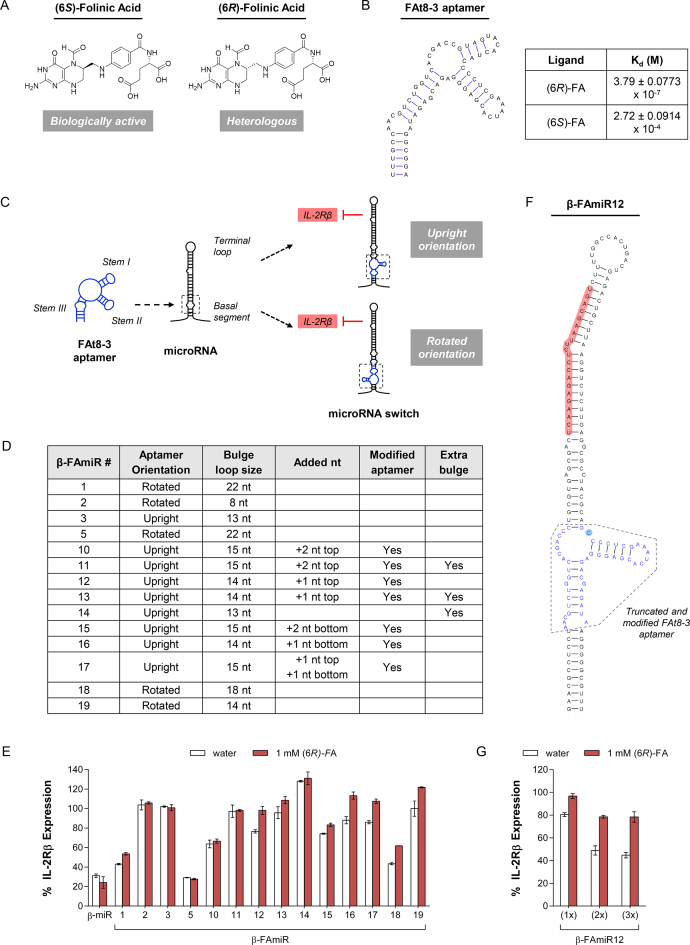
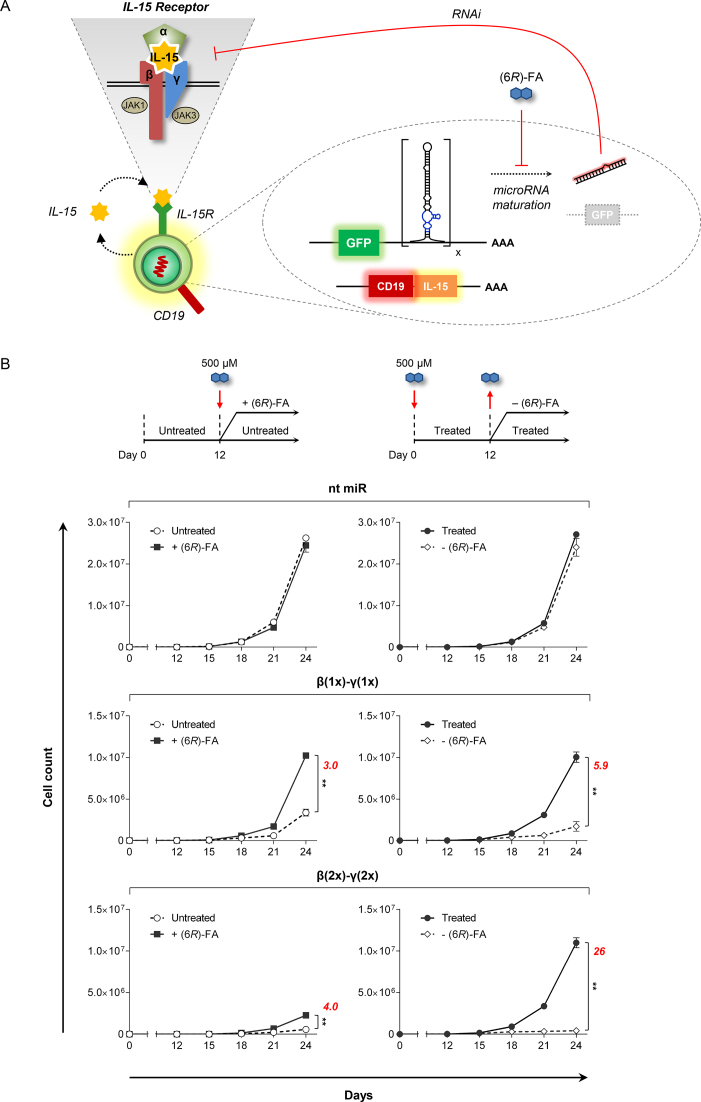
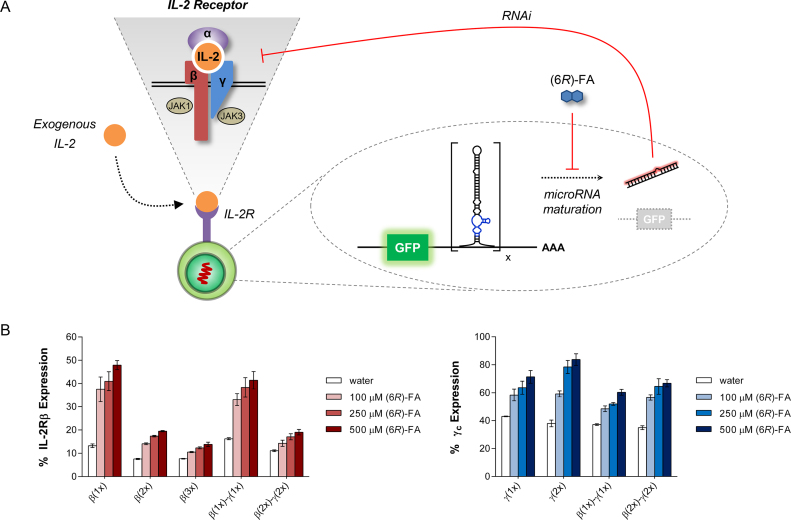
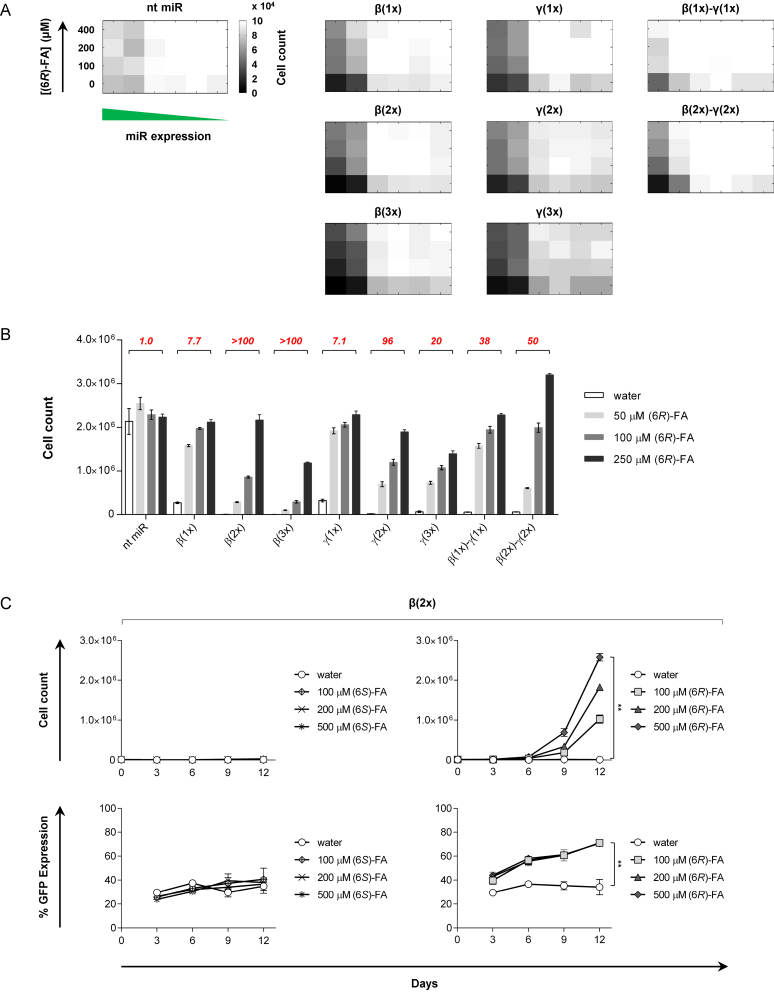
As molecular and cellular therapies advance in the clinic, the role of genetic regulation is becoming increasingly important for controlling therapeutic potency and safety. The emerging field of mammalian synthetic biology provides promising tools for the construction of regulatory platforms that can intervene with endogenous pathways and control cell behavior. Recent work has highlighted the development of synthetic biological systems that integrate sensing of molecular signals to regulated therapeutic function in various disease settings. However, the toxicity and limited dosing of currently available molecular inducers have largely inhibited translation to clinical settings. In this work, we developed synthetic microRNA-based genetic systems that are controlled by the pharmaceutical drug leucovorin, which is readily available and safe for prolonged administration in clinical settings. We designed microRNA switches to target endogenous cytokine receptor subunits (IL-2Rβ and γc) that mediate various signaling pathways in T cells. We demonstrate the function of these control systems by effectively regulating T cell proliferation with the drug input. Each control system produced unique functional responses, and combinatorial targeting of multiple receptor subunits exhibited greater repression of cell growth. This work highlights the potential use of drug-responsive genetic control systems to improve the management and safety of cellular therapeutics.
随着分子和细胞疗法在临床上的进展,遗传调控在控制治疗效力和安全性方面的作用变得越来越重要。哺乳动物合成生物学这一新兴领域为构建可以干预内源性途径和控制细胞行为的调控平台提供了有前途的工具。最近的工作强调了开发合成生物学系统的重要性,这些系统可以整合对分子信号的感应,以在各种疾病环境中调节治疗功能。然而,目前可用的分子诱导物的毒性和有限的剂量在很大程度上抑制了它们向临床环境的转化。在这项工作中,我们开发了基于合成 microRNA 的遗传系统,该系统受药物左亚叶酸(leucovorin)的控制,左亚叶酸在临床环境中可长期安全使用。我们设计了 microRNA 开关来靶向内源性细胞因子受体亚基(IL-2Rβ 和 γc),这些亚基介导 T 细胞中的各种信号通路。我们通过用药物输入有效地调节 T 细胞增殖来证明这些控制系统的功能。每个控制系统都产生了独特的功能反应,并且对多个受体亚基的组合靶向表现出更强的细胞生长抑制作用。这项工作强调了药物响应遗传控制系统在改善细胞治疗的管理和安全性方面的潜在用途。