Turker Sabrina, Reiterer Susanne M, Seither-Preisler Annemarie, Schneider Peter
Centre for Systematic Musicology, University of Graz, Graz, Austria.
Department of Linguistics, University of Vienna, Vienna, Austria.
Front Psychol. 2017 Dec 1;8:2096. doi: 10.3389/fpsyg.2017.02096. eCollection 2017.
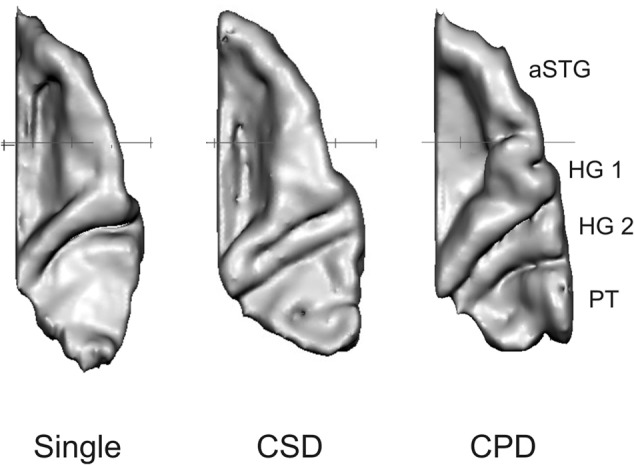
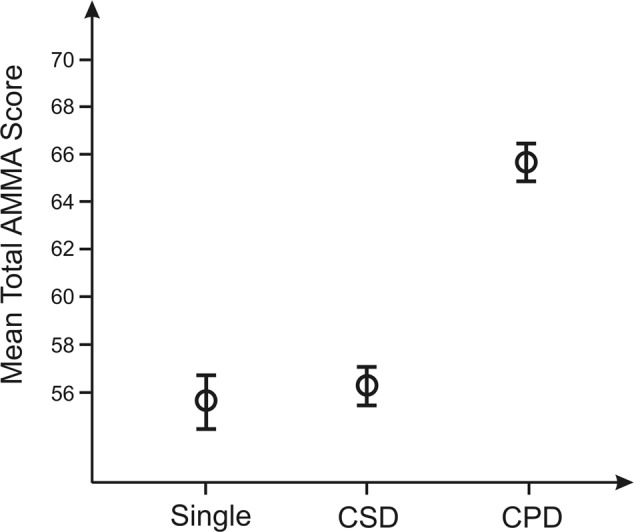
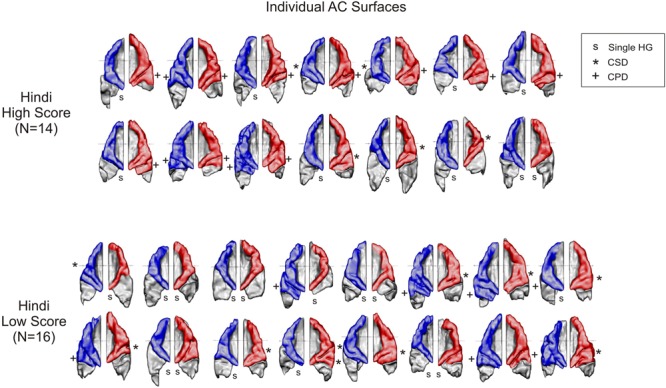
Recent research has shown that the morphology of certain brain regions may indeed correlate with a number of cognitive skills such as musicality or language ability. The main aim of the present study was to explore the extent to which foreign language aptitude, in particular phonetic coding ability, is influenced by the morphology of Heschl's gyrus (HG; auditory cortex), working memory capacity, and musical ability. In this study, the auditory cortices of German-speaking individuals ( = 30; 13 males/17 females; aged 20-40 years) with high and low scores in a number of language aptitude tests were compared. The subjects' language aptitude was measured by three different tests, namely a Hindi speech imitation task (phonetic coding ability), an English pronunciation assessment, and the Modern Language Aptitude Test (MLAT). Furthermore, working memory capacity and musical ability were assessed to reveal their relationship with foreign language aptitude. On the behavioral level, significant correlations were found between phonetic coding ability, English pronunciation skills, musical experience, and language aptitude as measured by the MLAT. Parts of all three tests measuring language aptitude correlated positively and significantly with each other, supporting their validity for measuring components of language aptitude. Remarkably, the number of instruments played by subjects showed significant correlations with all language aptitude measures and musicality, whereas, the number of foreign languages did not show any correlations. With regard to the neuroanatomy of auditory cortex, adults with very high scores in the Hindi testing and the musicality test (AMMA) demonstrated a clear predominance of complete posterior HG duplications in the right hemisphere. This may reignite the discussion of the importance of the right hemisphere for language processing, especially when linked or common resources are involved, such as the inter-dependency between phonetic and musical aptitude.
最近的研究表明,某些脑区的形态确实可能与一些认知技能相关,如音乐能力或语言能力。本研究的主要目的是探讨外语能力,特别是语音编码能力,在多大程度上受到颞横回(HG;听觉皮层)形态、工作记忆容量和音乐能力的影响。在这项研究中,比较了在多项语言能力测试中得分高和低的德语使用者(n = 30;13名男性/17名女性;年龄20 - 40岁)的听觉皮层。通过三种不同的测试来测量受试者的语言能力,即印地语语音模仿任务(语音编码能力)、英语发音评估和现代语言能力测试(MLAT)。此外,还评估了工作记忆容量和音乐能力,以揭示它们与外语能力的关系。在行为层面上,发现语音编码能力、英语发音技能、音乐经验与MLAT测量的语言能力之间存在显著相关性。测量语言能力的所有三项测试的部分内容彼此之间呈显著正相关,支持了它们在测量语言能力组成部分方面的有效性。值得注意的是,受试者演奏的乐器数量与所有语言能力测量指标和音乐能力都显示出显著相关性,而外语数量则没有显示出任何相关性。关于听觉皮层的神经解剖结构,在印地语测试和音乐能力测试(AMMA)中得分非常高的成年人在右半球表现出明显的完全后HG重复优势。这可能会重新引发关于右半球在语言处理中的重要性的讨论,特别是当涉及到相关或共同资源时,如语音和音乐能力之间的相互依存关系。