• 文献检索
  • 文档翻译
  • 深度研究
  • 学术资讯
  • Suppr Zotero 插件Zotero 插件
  • 邀请有礼
  • 套餐&价格
  • 历史记录
应用&插件
Suppr Zotero 插件Zotero 插件浏览器插件Mac 客户端Windows 客户端微信小程序
定价
高级版会员购买积分包购买API积分包
服务
文献检索文档翻译深度研究API 文档MCP 服务
关于我们
关于 Suppr公司介绍联系我们用户协议隐私条款
关注我们

Suppr 超能文献

核心技术专利:CN118964589B侵权必究
粤ICP备2023148730 号-1Suppr @ 2026

文献检索

告别复杂PubMed语法,用中文像聊天一样搜索,搜遍4000万医学文献。AI智能推荐,让科研检索更轻松。

立即免费搜索

文件翻译

保留排版,准确专业,支持PDF/Word/PPT等文件格式,支持 12+语言互译。

免费翻译文档

深度研究

AI帮你快速写综述,25分钟生成高质量综述,智能提取关键信息,辅助科研写作。

立即免费体验

CRISPR/Cas9 靶向雄激素受体抑制 LNCaP 人前列腺癌细胞的生长。

CRISPR/Cas9 targeting of the androgen receptor suppresses the growth of LNCaP human prostate cancer cells.

机构信息

Department of Radiology, The Second Affiliated Hospital of Soochow University, Suzhou, Jiangsu 215004, P.R. China.

Department of Pharmacy, The Affiliated Children's Hospital of Soochow University, Suzhou, Jiangsu 215004, P.R. China.

出版信息

Mol Med Rep. 2018 Feb;17(2):2901-2906. doi: 10.3892/mmr.2017.8257. Epub 2017 Dec 12.

DOI:10.3892/mmr.2017.8257
PMID:29257308
原文链接:https://pmc.ncbi.nlm.nih.gov/articles/PMC5783506/
Abstract

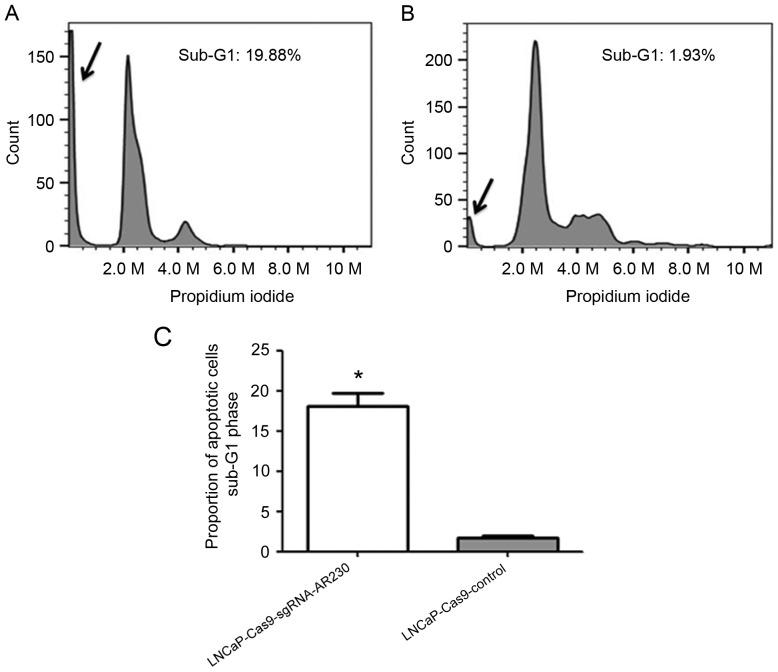
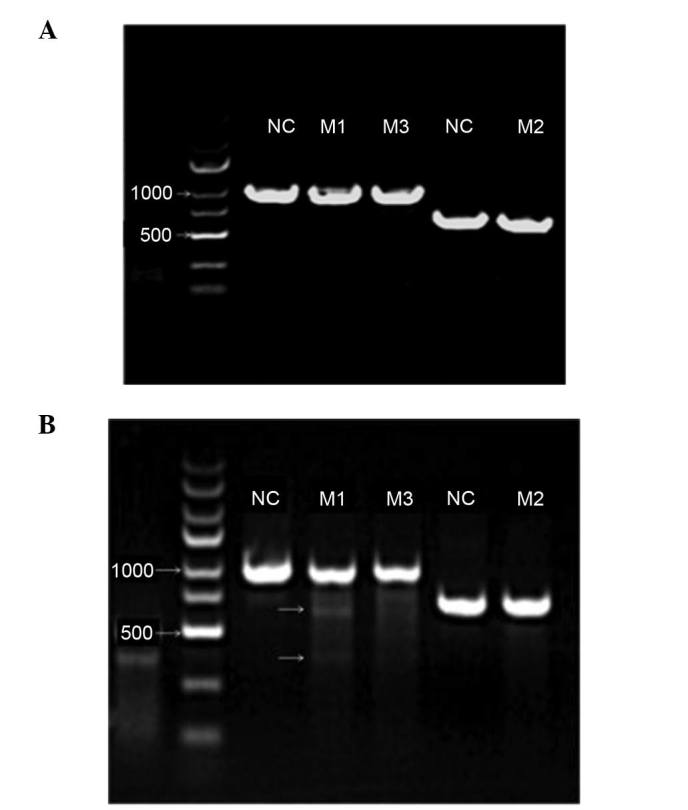
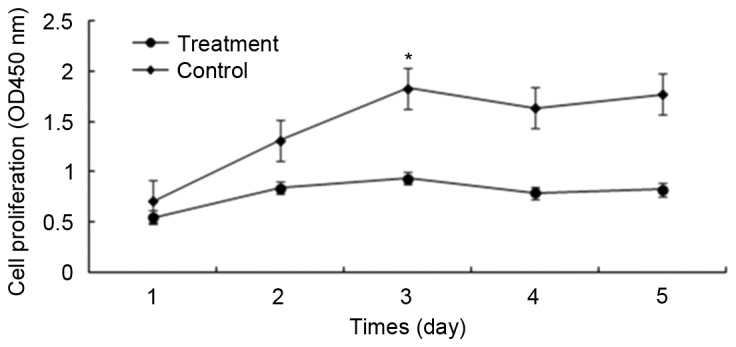
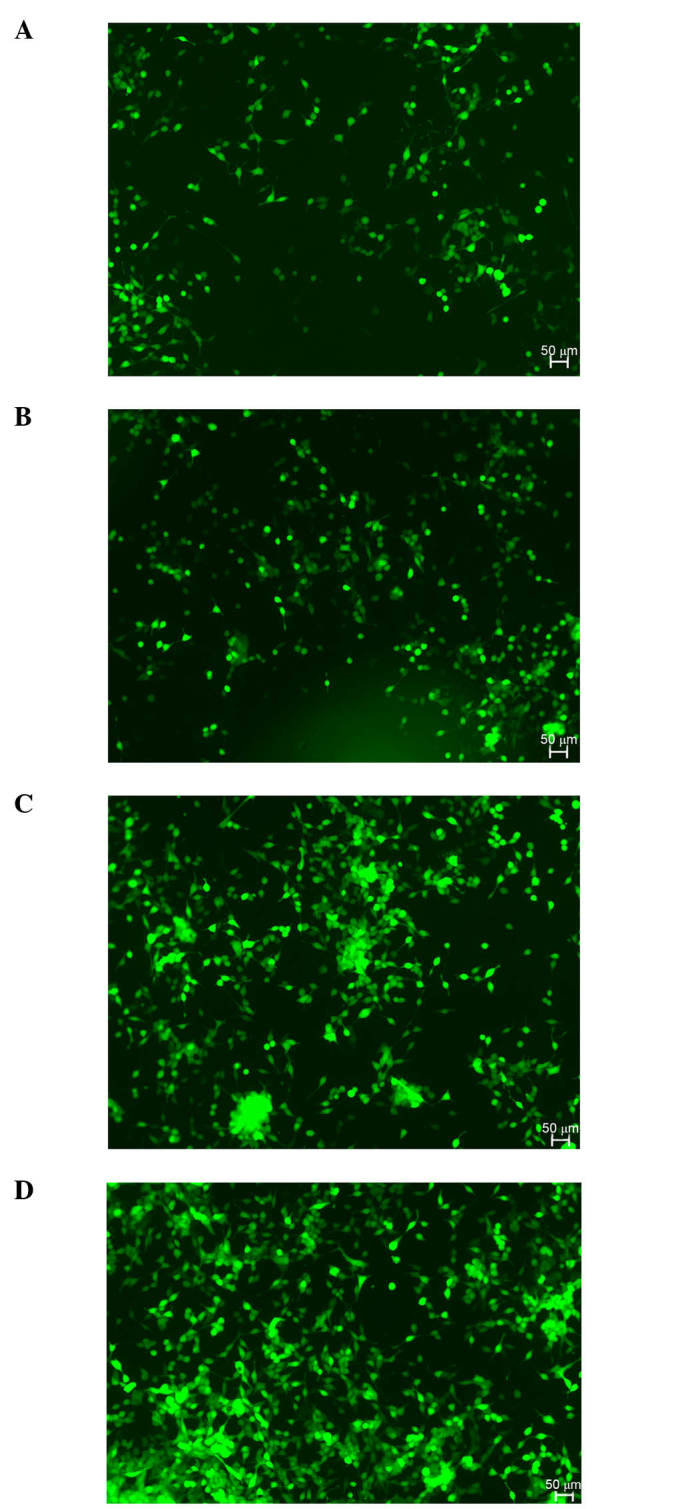
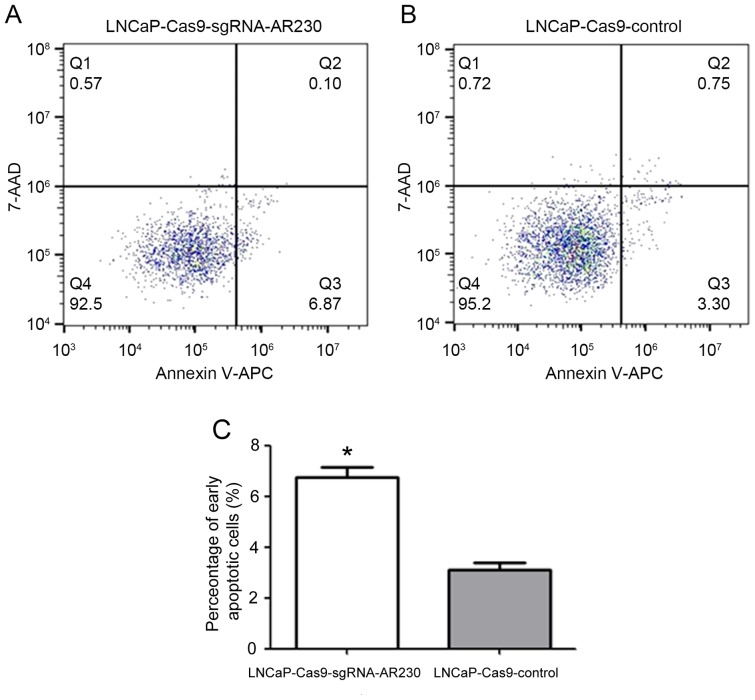
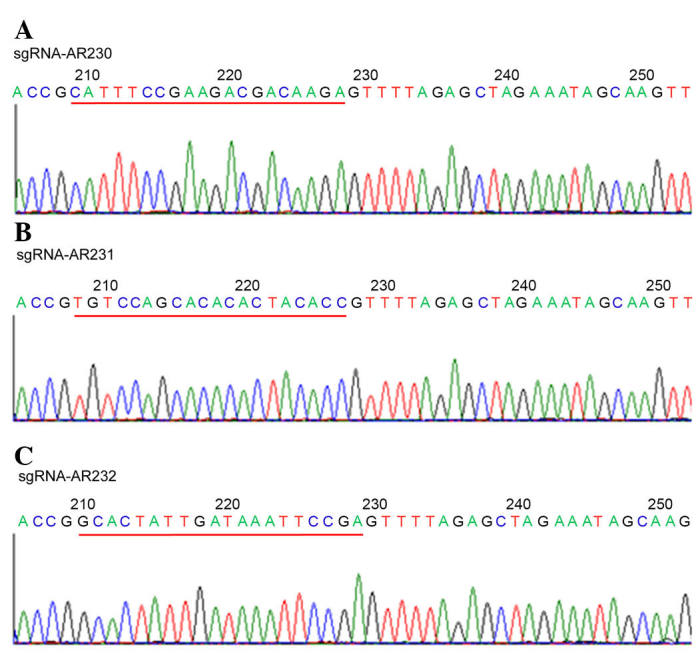
Androgens have been recognized to be primary causative agents of prostate cancer. Following binding to the androgen receptor (AR), androgens serve important roles in the carcinogenesis of prostate cancers. ARs serve an important role during all stages of prostate cancer, and inhibiting their function may help to slow prostate cancer growth. In the present study, the AR gene was targeted in androgen‑positive prostate cancer cells using the clustered regularly interspaced short palindromic repeats‑associated protein (CRISPR/Cas) system. A total of three different single‑guide RNAs (sgRNAs) were designed according to the three different target sites in the AR gene. The optimal sgRNA with a specific target effect was effectively screened to cleave the AR gene in androgen‑positive prostate cancer cell lines, and to suppress the growth of androgen‑sensitive prostate cancer in vitro. The AR‑sgRNA‑guided CRISPR/Cas system was able to disrupt the AR at specific sites and inhibit the growth of androgen‑sensitive prostate cancer cells; further studies demonstrated that the decreased cell proliferation was due to cellular apoptosis. The results of the present study suggested that the CRISPR/Cas system may be a useful therapeutic strategy for the treatment of prostate cancer.

摘要

雄激素已被确认为前列腺癌的主要致病因素。雄激素与雄激素受体(AR)结合后,在前列腺癌的发生过程中发挥重要作用。AR 在前列腺癌的所有阶段都发挥着重要作用,抑制其功能可能有助于减缓前列腺癌的生长。在本研究中,使用簇状规律间隔短回文重复相关蛋白(CRISPR/Cas)系统靶向雄激素阳性前列腺癌细胞中的 AR 基因。根据 AR 基因中的三个不同靶位点设计了总共三种不同的单链向导 RNA(sgRNA)。有效筛选出具有特定靶向作用的最佳 sgRNA,以切割雄激素阳性前列腺癌细胞系中的 AR 基因,并抑制体外雄激素敏感型前列腺癌的生长。AR-sgRNA 指导的 CRISPR/Cas 系统能够在特定部位破坏 AR 并抑制雄激素敏感型前列腺癌细胞的生长;进一步的研究表明,细胞增殖减少是由于细胞凋亡所致。本研究结果表明,CRISPR/Cas 系统可能是治疗前列腺癌的一种有用的治疗策略。
https://cdn.ncbi.nlm.nih.gov/pmc/blobs/e6af/5783506/79c0f225e071/MMR-17-02-2901-g05.jpg
https://cdn.ncbi.nlm.nih.gov/pmc/blobs/e6af/5783506/2b145d5afb74/MMR-17-02-2901-g00.jpg
https://cdn.ncbi.nlm.nih.gov/pmc/blobs/e6af/5783506/ff63d2a5df7c/MMR-17-02-2901-g01.jpg
https://cdn.ncbi.nlm.nih.gov/pmc/blobs/e6af/5783506/64a2609c703e/MMR-17-02-2901-g02.jpg
https://cdn.ncbi.nlm.nih.gov/pmc/blobs/e6af/5783506/f7ec18f729e4/MMR-17-02-2901-g03.jpg
https://cdn.ncbi.nlm.nih.gov/pmc/blobs/e6af/5783506/9cfe6475500c/MMR-17-02-2901-g04.jpg
https://cdn.ncbi.nlm.nih.gov/pmc/blobs/e6af/5783506/79c0f225e071/MMR-17-02-2901-g05.jpg
https://cdn.ncbi.nlm.nih.gov/pmc/blobs/e6af/5783506/2b145d5afb74/MMR-17-02-2901-g00.jpg
https://cdn.ncbi.nlm.nih.gov/pmc/blobs/e6af/5783506/ff63d2a5df7c/MMR-17-02-2901-g01.jpg
https://cdn.ncbi.nlm.nih.gov/pmc/blobs/e6af/5783506/64a2609c703e/MMR-17-02-2901-g02.jpg
https://cdn.ncbi.nlm.nih.gov/pmc/blobs/e6af/5783506/f7ec18f729e4/MMR-17-02-2901-g03.jpg
https://cdn.ncbi.nlm.nih.gov/pmc/blobs/e6af/5783506/9cfe6475500c/MMR-17-02-2901-g04.jpg
https://cdn.ncbi.nlm.nih.gov/pmc/blobs/e6af/5783506/79c0f225e071/MMR-17-02-2901-g05.jpg

相似文献

1
CRISPR/Cas9 targeting of the androgen receptor suppresses the growth of LNCaP human prostate cancer cells.CRISPR/Cas9 靶向雄激素受体抑制 LNCaP 人前列腺癌细胞的生长。
Mol Med Rep. 2018 Feb;17(2):2901-2906. doi: 10.3892/mmr.2017.8257. Epub 2017 Dec 12.
2
The immunophilin ligands cyclosporin A and FK506 suppress prostate cancer cell growth by androgen receptor-dependent and -independent mechanisms.免疫亲和素配体环孢菌素A和FK506通过雄激素受体依赖和非依赖机制抑制前列腺癌细胞生长。
Endocrinology. 2007 Oct;148(10):4716-26. doi: 10.1210/en.2007-0145. Epub 2007 Jul 5.
3
Monomethylated selenium inhibits growth of LNCaP human prostate cancer xenograft accompanied by a decrease in the expression of androgen receptor and prostate-specific antigen (PSA).单甲基化硒抑制LNCaP人前列腺癌异种移植物的生长,同时雄激素受体和前列腺特异性抗原(PSA)的表达降低。
Prostate. 2006 Jul 1;66(10):1070-5. doi: 10.1002/pros.20329.
4
Pharmacological targeting of constitutively active truncated androgen receptor by nigericin and suppression of hormone-refractory prostate cancer cell growth. Nigericin 通过靶向持续激活的截断雄激素受体和抑制激素难治性前列腺癌细胞生长的药理学作用。
Mol Pharmacol. 2010 Nov;78(5):846-54. doi: 10.1124/mol.110.064790. Epub 2010 Aug 13.
5
The prostate cancer-up-regulated long noncoding RNA PlncRNA-1 modulates apoptosis and proliferation through reciprocal regulation of androgen receptor.前列腺癌上调的长非编码 RNA PlncRNA-1 通过雄激素受体的相互调节调节细胞凋亡和增殖。
Urol Oncol. 2013 Oct;31(7):1117-23. doi: 10.1016/j.urolonc.2011.11.030. Epub 2012 Jan 20.
6
Expression of a hyperactive androgen receptor leads to androgen-independent growth of prostate cancer cells.雄激素受体过度激活会导致前列腺癌细胞的雄激素非依赖性生长。
J Mol Endocrinol. 2008 Jul;41(1):13-23. doi: 10.1677/JME-07-0158. Epub 2008 May 9.
7
Androgen receptor signaling and vitamin D receptor action in prostate cancer cells.前列腺癌细胞中的雄激素受体信号传导与维生素D受体作用
Prostate. 2005 Sep 1;64(4):362-72. doi: 10.1002/pros.20251.
8
Metformin represses androgen-dependent and androgen-independent prostate cancers by targeting androgen receptor.二甲双胍通过靶向雄激素受体抑制雄激素依赖性和非雄激素依赖性前列腺癌。
Prostate. 2015 Aug 1;75(11):1187-96. doi: 10.1002/pros.23000. Epub 2015 Apr 20.
9
CRISPR/Cas9-mediated gene knockout of NANOG and NANOGP8 decreases the malignant potential of prostate cancer cells.CRISPR/Cas9介导的NANOG和NANOGP8基因敲除降低了前列腺癌细胞的恶性潜能。
Oncotarget. 2015 Sep 8;6(26):22361-74. doi: 10.18632/oncotarget.4293.
10
Androgen ablation elicits PP1-dependence for AR stabilization and transactivation in prostate cancer.雄激素去除引发前列腺癌中AR稳定和反式激活对PP1的依赖性。
Prostate. 2016 May;76(7):649-61. doi: 10.1002/pros.23157. Epub 2016 Feb 5.

引用本文的文献

1
Applications of CRISPR-Cas9 in mitigating cellular senescence and age-related disease progression.CRISPR-Cas9在减轻细胞衰老和与年龄相关疾病进展方面的应用。
Clin Exp Med. 2025 Jul 8;25(1):237. doi: 10.1007/s10238-025-01771-3.
2
Targeting mRNA-coding genes in prostate cancer using CRISPR/Cas9 technology with a special focus on androgen receptor signaling.使用 CRISPR/Cas9 技术靶向前列腺癌中的 mRNA 编码基因,特别关注雄激素受体信号。
Cell Commun Signal. 2024 Oct 17;22(1):504. doi: 10.1186/s12964-024-01833-1.
3
Let's make it personal: CRISPR tools in manipulating cell death pathways for cancer treatment.

本文引用的文献

1
Cancer statistics for African Americans, 2016: Progress and opportunities in reducing racial disparities.2016 年非裔美国人癌症统计数据:减少种族差异方面的进展和机会。
CA Cancer J Clin. 2016 Jul;66(4):290-308. doi: 10.3322/caac.21340. Epub 2016 Feb 22.
2
CRISPR-Cas9 Can Inhibit HIV-1 Replication but NHEJ Repair Facilitates Virus Escape.CRISPR-Cas9可抑制HIV-1复制,但非同源末端连接修复促进病毒逃逸。
Mol Ther. 2016 Mar;24(3):522-6. doi: 10.1038/mt.2016.24. Epub 2016 Jan 22.
3
CRISPR/Cas-mediated genome editing to treat EGFR-mutant lung cancer: a personalized molecular surgical therapy.
让我们个体化治疗:CRISPR 工具在操控细胞死亡通路以治疗癌症中的应用。
Cell Biol Toxicol. 2024 Jul 29;40(1):61. doi: 10.1007/s10565-024-09907-z.
4
Applications of Clustered Regularly Interspaced Short Palindromic Repeats (CRISPR) as a Genetic Scalpel for the Treatment of Cancer: A Translational Narrative Review.成簇规律间隔短回文重复序列(CRISPR)作为治疗癌症的基因手术刀的应用:一项转化性叙述性综述
Cureus. 2023 Dec 6;15(12):e50031. doi: 10.7759/cureus.50031. eCollection 2023 Dec.
5
The Effect of Gene Editing by CRISPR-Cas9 of miR-21 and the Indirect Target MMP9 in Metastatic Prostate Cancer.CRISPR-Cas9 基因编辑对转移性前列腺癌中 miR-21 及其间接靶标 MMP9 的影响。
Int J Mol Sci. 2023 Oct 3;24(19):14847. doi: 10.3390/ijms241914847.
6
Long-range gene regulation in hormone-dependent cancer.激素依赖性癌症的长程基因调控。
Nat Rev Cancer. 2023 Oct;23(10):657-672. doi: 10.1038/s41568-023-00603-4. Epub 2023 Aug 3.
7
Current updates of CRISPR/Cas9-mediated genome editing and targeting within tumor cells: an innovative strategy of cancer management.CRISPR/Cas9 介导的基因组编辑和肿瘤细胞内靶向的最新进展:癌症管理的创新策略。
Cancer Commun (Lond). 2022 Dec;42(12):1257-1287. doi: 10.1002/cac2.12366. Epub 2022 Oct 9.
8
CRISPR Technology in Cancer Diagnosis and Treatment: Opportunities and Challenges.CRISPR 技术在癌症诊断与治疗中的应用:机遇与挑战。
Biochem Genet. 2022 Oct;60(5):1446-1470. doi: 10.1007/s10528-022-10193-9. Epub 2022 Jan 29.
9
Visualization Analysis of CRISPR Gene-editing Knowledge Map based on Citespace.基于Citespace的CRISPR基因编辑知识图谱可视化分析
Biol Bull Russ Acad Sci. 2021;48(6):705-720. doi: 10.1134/S1062359021060108. Epub 2021 Dec 17.
10
Considering the potential for gene-based therapy in prostate cancer.考虑在前列腺癌中应用基于基因的治疗方法。
Nat Rev Urol. 2021 Mar;18(3):170-184. doi: 10.1038/s41585-021-00431-x. Epub 2021 Feb 26.
CRISPR/Cas 介导的基因组编辑治疗 EGFR 突变型肺癌:一种个性化的分子手术治疗。
EMBO Mol Med. 2016 Feb 1;8(2):83-5. doi: 10.15252/emmm.201506006.
4
CRISPR/Cas9-mediated gene knockout of NANOG and NANOGP8 decreases the malignant potential of prostate cancer cells.CRISPR/Cas9介导的NANOG和NANOGP8基因敲除降低了前列腺癌细胞的恶性潜能。
Oncotarget. 2015 Sep 8;6(26):22361-74. doi: 10.18632/oncotarget.4293.
5
Utilization of TALEN and CRISPR/Cas9 technologies for gene targeting and modification.利用转录激活样效应因子核酸酶(TALEN)和规律成簇间隔短回文重复序列/CRISPR相关蛋白9(CRISPR/Cas9)技术进行基因靶向和修饰。
Exp Biol Med (Maywood). 2015 Aug;240(8):1065-70. doi: 10.1177/1535370215584932. Epub 2015 May 7.
6
Modeling cancer processes with CRISPR-Cas9.利用 CRISPR-Cas9 进行癌症过程建模。
Trends Biotechnol. 2015 Jun;33(6):317-9. doi: 10.1016/j.tibtech.2015.03.007. Epub 2015 Apr 20.
7
Management of early-stage prostate cancer.早期前列腺癌的管理
Am J Manag Care. 2014 Dec;20(12 Suppl):S260-72.
8
Modeling colorectal cancer using CRISPR-Cas9-mediated engineering of human intestinal organoids.使用 CRISPR-Cas9 介导的人类肠道类器官工程技术构建结直肠癌模型。
Nat Med. 2015 Mar;21(3):256-62. doi: 10.1038/nm.3802. Epub 2015 Feb 23.
9
Disruption of human papillomavirus 16 E6 gene by clustered regularly interspaced short palindromic repeat/Cas system in human cervical cancer cells.在人宫颈癌细胞中利用成簇规律间隔短回文重复序列/ Cas系统破坏人乳头瘤病毒16 E6基因
Onco Targets Ther. 2014 Dec 22;8:37-44. doi: 10.2147/OTT.S64092. eCollection 2015.
10
Targeting Hepatitis B Virus With CRISPR/Cas9.利用CRISPR/Cas9靶向乙型肝炎病毒
Mol Ther Nucleic Acids. 2014 Dec 16;3(12):e216. doi: 10.1038/mtna.2014.68.