Geter Phillip A, Ernlund Amanda W, Bakogianni Sofia, Alard Amandine, Arju Rezina, Giashuddin Shah, Gadi Abhilash, Bromberg Jacqueline, Schneider Robert J
Department of Microbiology, Alexandria Center for Life Science, New York University School of Medicine, New York, New York 10016, USA.
New York Presbyterian-Brooklyn Methodist Hospital, Brooklyn, New York 11215, USA.
Genes Dev. 2017 Nov 15;31(22):2235-2249. doi: 10.1101/gad.305631.117. Epub 2017 Dec 21.
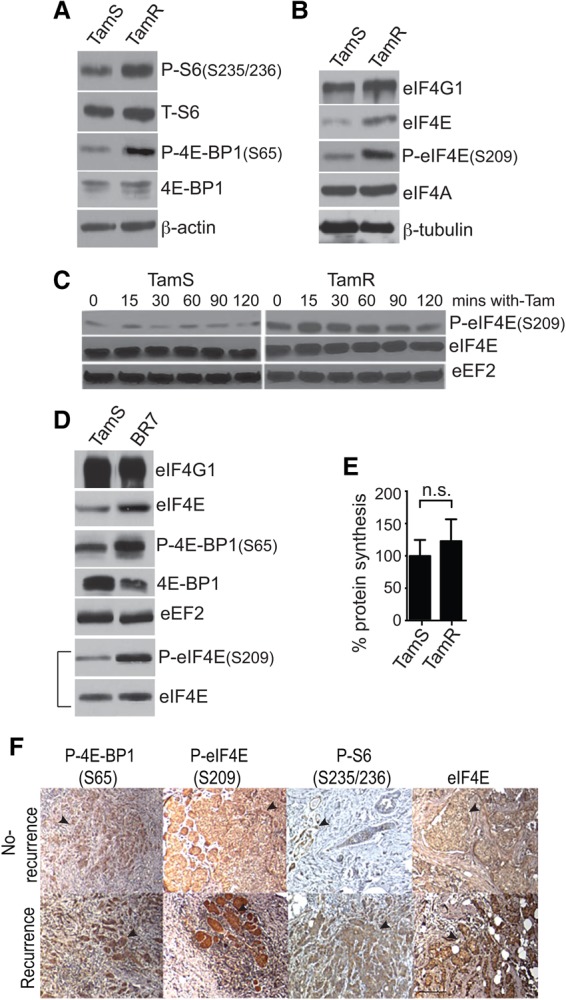
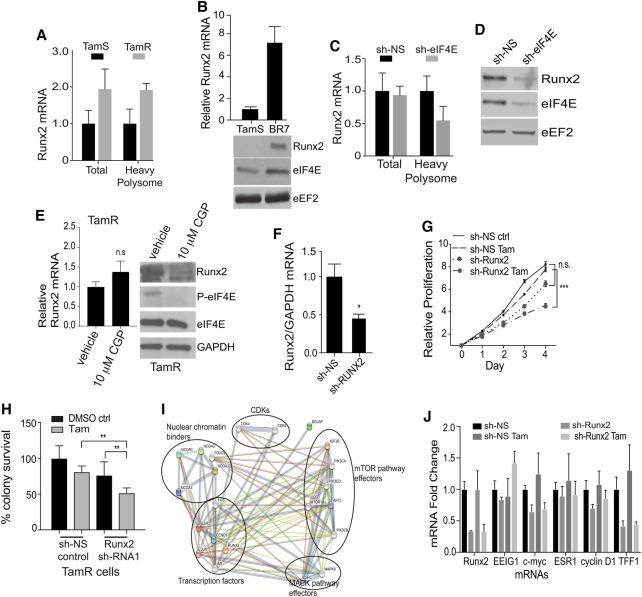
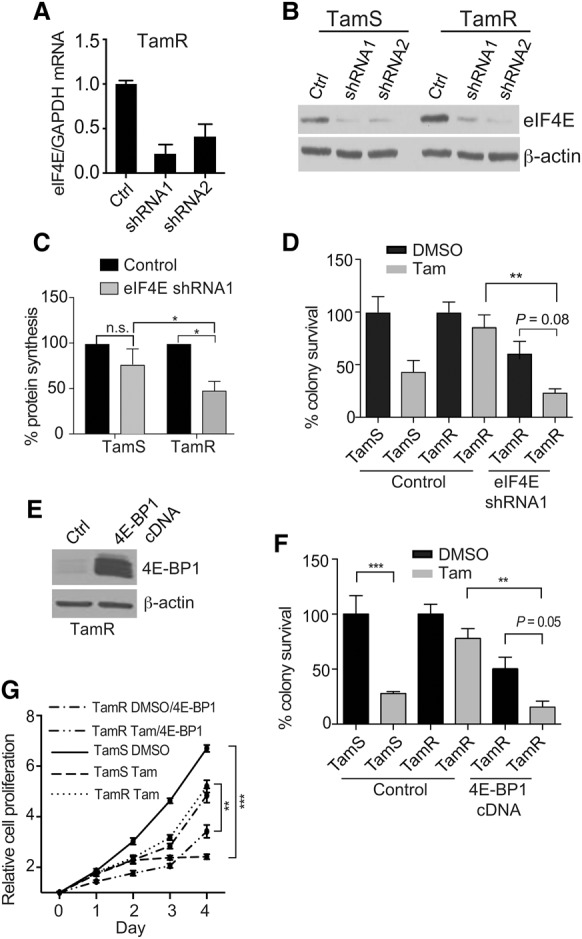
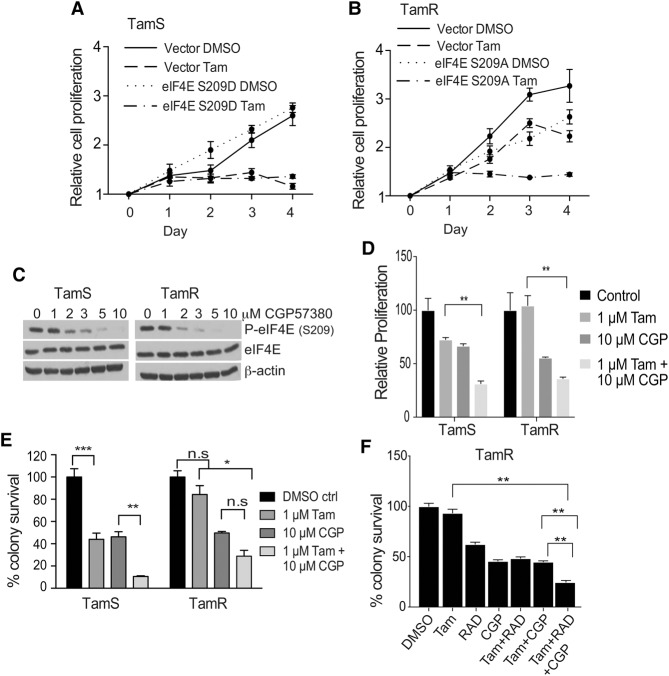
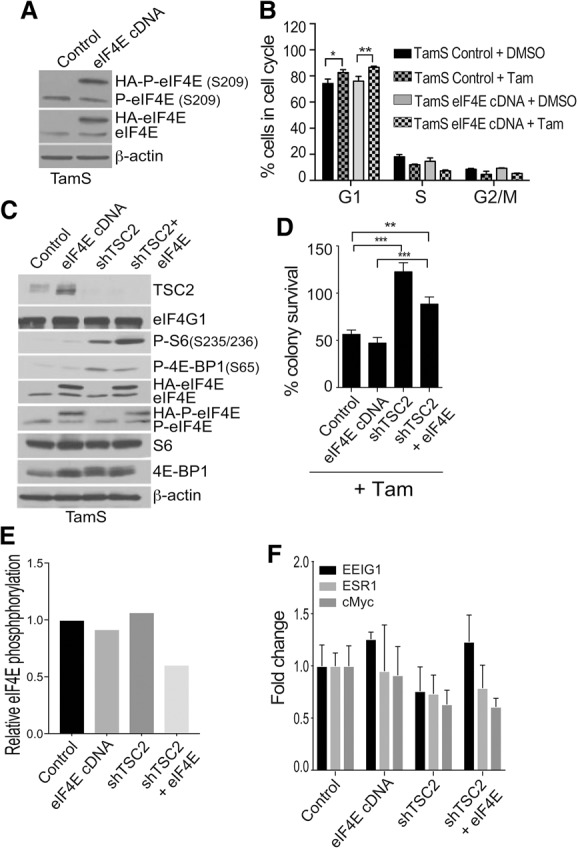
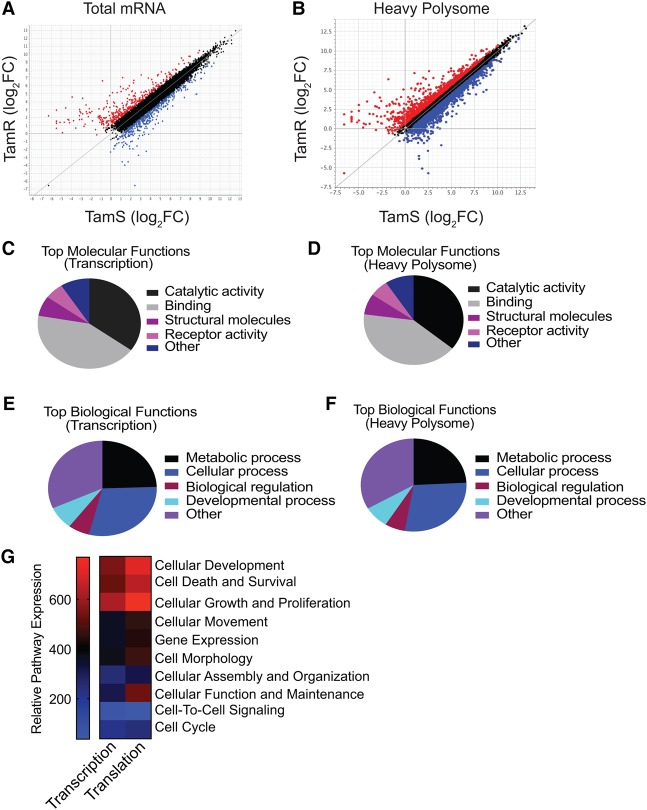
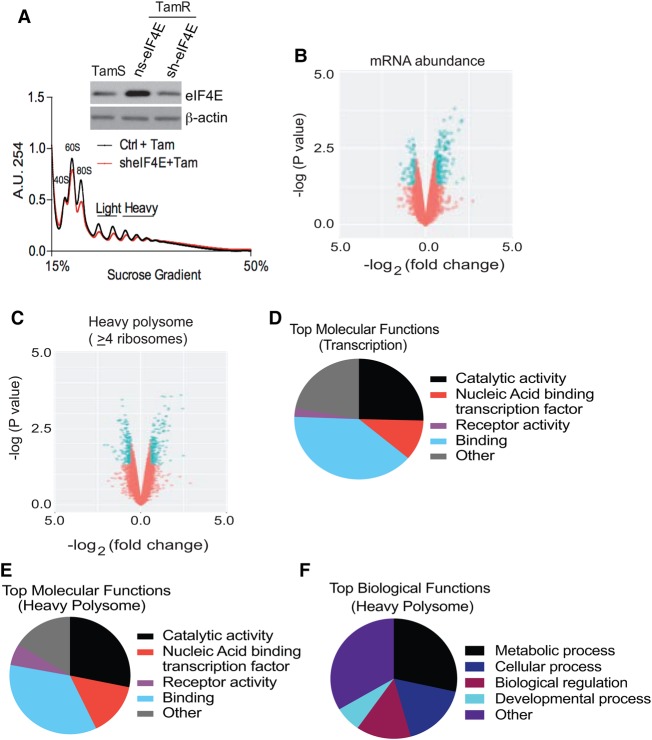
The majority of breast cancers expresses the estrogen receptor (ER) and is treated with anti-estrogen therapies, particularly tamoxifen in premenopausal women. However, tamoxifen resistance is responsible for a large proportion of breast cancer deaths. Using small molecule inhibitors, phospho-mimetic proteins, tamoxifen-sensitive and tamoxifen-resistant breast cancer cells, a tamoxifen-resistant patient-derived xenograft model, patient tumor tissues, and genome-wide transcription and translation studies, we show that tamoxifen resistance involves selective mRNA translational reprogramming to an anti-estrogen state by and other mRNAs. Tamoxifen-resistant translational reprogramming is shown to be mediated by increased expression of eIF4E and its increased availability by hyperactive mTOR and to require phosphorylation of eIF4E at Ser209 by increased MNK activity. Resensitization to tamoxifen is restored only by reducing eIF4E expression or mTOR activity and also blocking MNK1 phosphorylation of eIF4E. mRNAs specifically translationally up-regulated with tamoxifen resistance include , which inhibits ER signaling and estrogen responses and promotes breast cancer metastasis. Silencing significantly restores tamoxifen sensitivity. Tamoxifen-resistant but not tamoxifen-sensitive patient ER breast cancer specimens also demonstrate strongly increased MNK phosphorylation of eIF4E. eIF4E levels, availability, and phosphorylation therefore promote tamoxifen resistance in ER breast cancer through selective mRNA translational reprogramming.
大多数乳腺癌表达雌激素受体(ER),并采用抗雌激素疗法进行治疗,尤其是绝经前女性使用他莫昔芬。然而,他莫昔芬耐药导致了很大一部分乳腺癌死亡病例。利用小分子抑制剂、磷酸模拟蛋白、对他莫昔芬敏感和耐药的乳腺癌细胞、一个源自患者的他莫昔芬耐药异种移植模型、患者肿瘤组织以及全基因组转录和翻译研究,我们发现他莫昔芬耐药涉及通过 和其他mRNA将选择性mRNA翻译重编程为抗雌激素状态。他莫昔芬耐药性的翻译重编程显示是由eIF4E表达增加及其通过过度活跃的mTOR增加可用性介导的,并且需要通过增加的MNK活性使eIF4E在Ser209处磷酸化。只有通过降低eIF4E表达或mTOR活性以及阻断eIF4E的MNK1磷酸化才能恢复对他莫昔芬的敏感性。随着他莫昔芬耐药性特异性翻译上调的mRNA包括 ,其抑制ER信号传导和雌激素反应并促进乳腺癌转移。沉默 可显著恢复他莫昔芬敏感性。他莫昔芬耐药但对他莫昔芬敏感的患者ER乳腺癌标本也显示eIF4E的MNK磷酸化显著增加。因此,eIF4E水平、可用性和磷酸化通过选择性mRNA翻译重编程促进ER乳腺癌中的他莫昔芬耐药性。