Sun Gongling, Mei Yuanyuan, Deng Dewen, Xiong Li, Sun Lifang, Zhang Xiyu, Wen Zewen, Liu Sheng, You Xiang, Wang Dan, Wang Ning Ning
Department of Plant Biology and Ecology, College of Life Sciences, Nankai University, Tianjin, China.
Front Plant Sci. 2017 Dec 6;8:2066. doi: 10.3389/fpls.2017.02066. eCollection 2017.
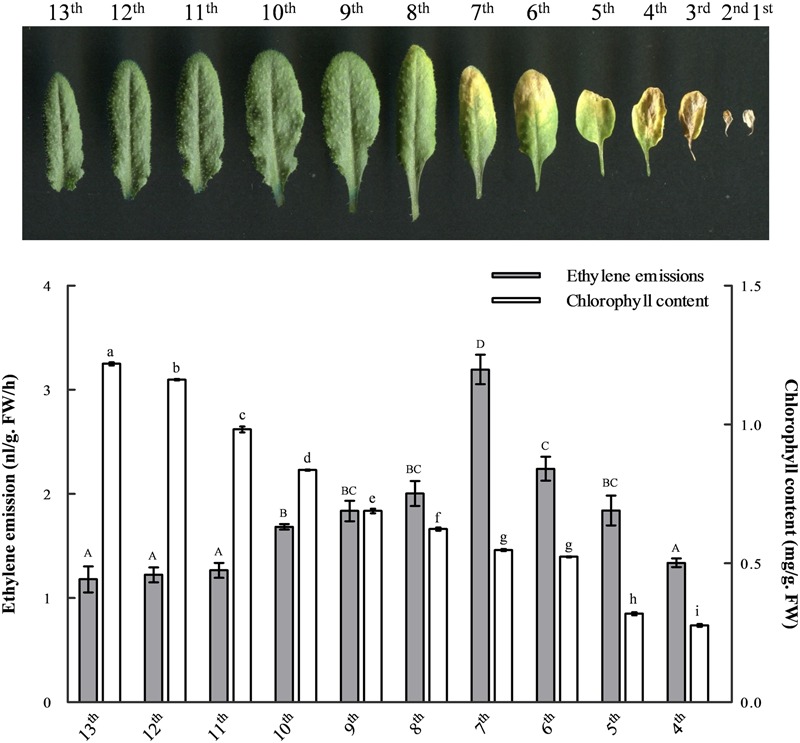
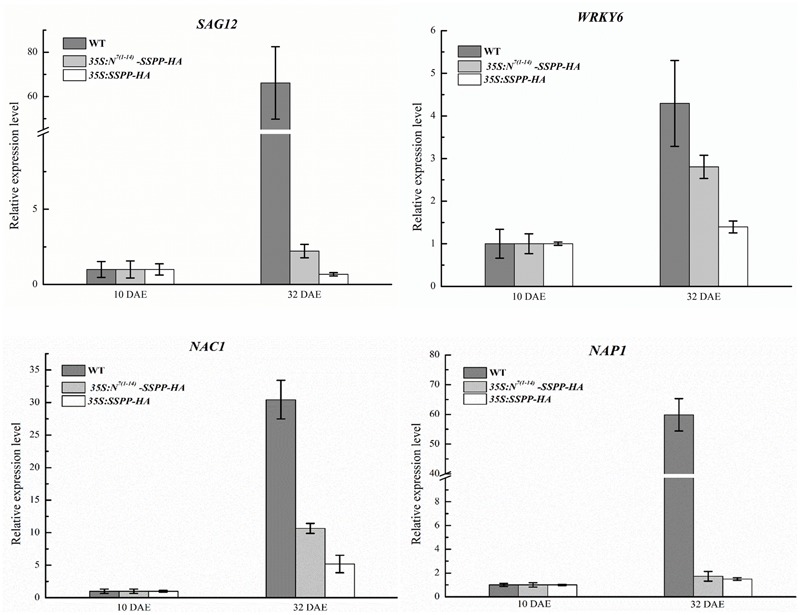
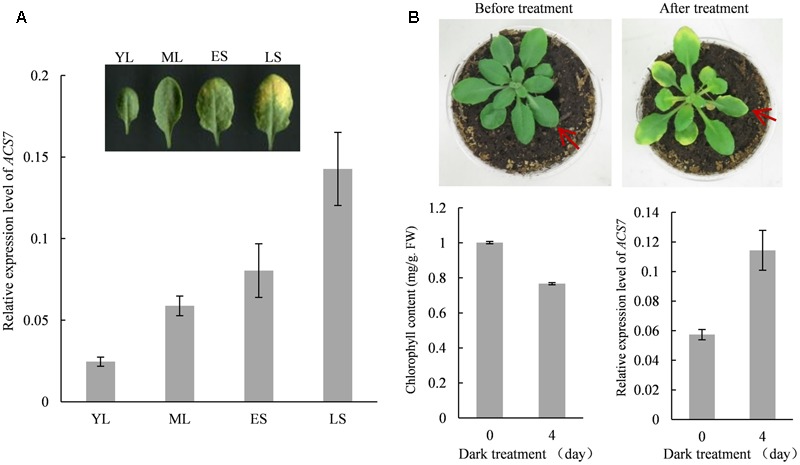
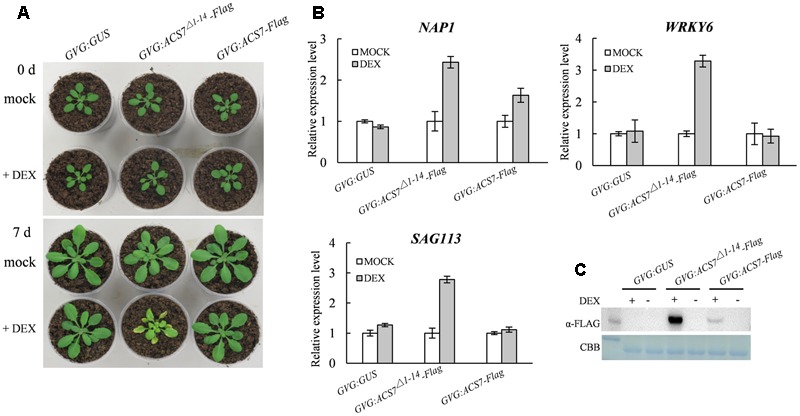
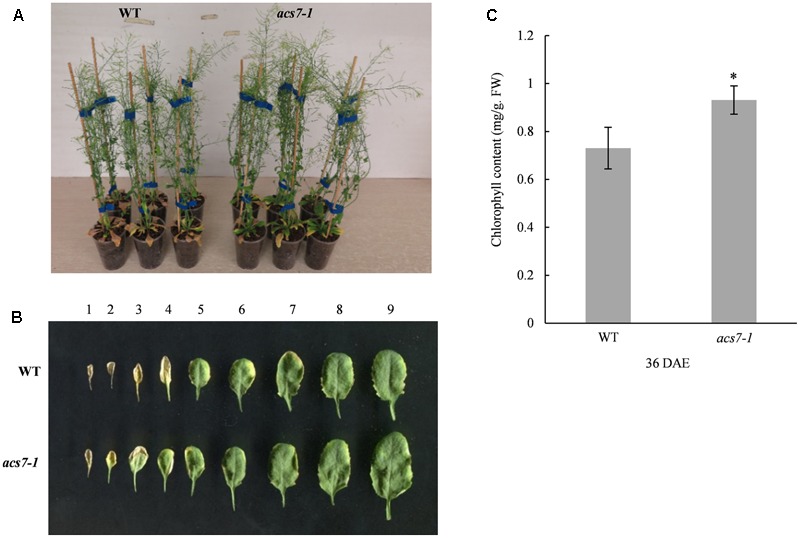
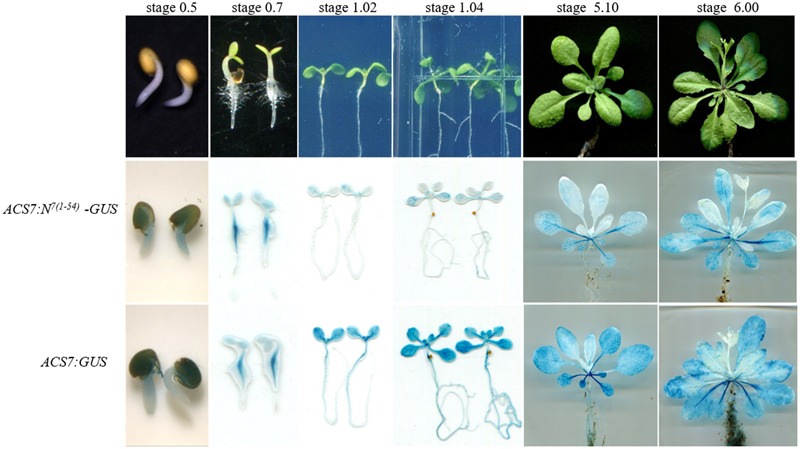
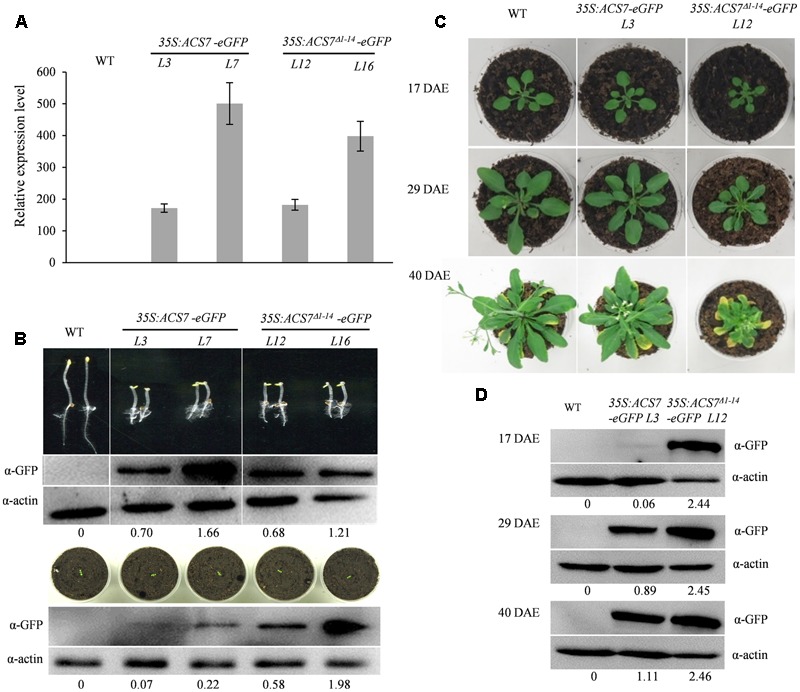
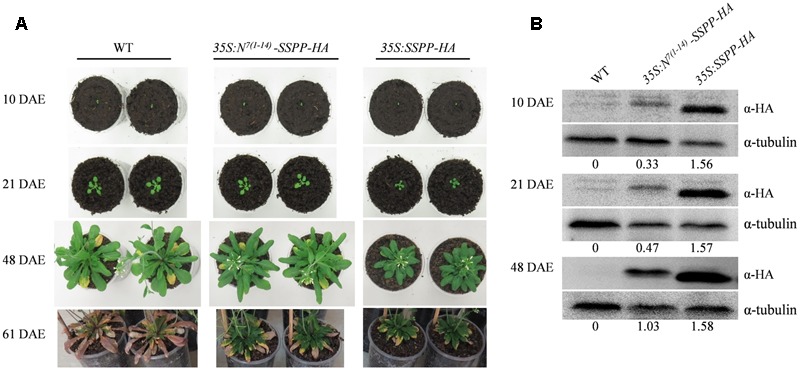
Senescence is the final phase of leaf development, characterized by key processes by which resources trapped in deteriorating leaves are degraded and recycled to sustain the growth of newly formed organs. As the gaseous hormone ethylene exerts a profound effect on the progression of leaf senescence, both the optimal timing and amount of its biosynthesis are essential for controlled leaf development. The rate-limiting enzyme that controls ethylene synthesis in higher plants is ACC synthase (ACS). In this study, we evaluated the production of ethylene and revealed an up-regulation of during leaf senescence in . We further showed that the promoter activity of was maintained at a relatively high level throughout the whole rosette development process. However, the accumulation level of ACS7 protein was extremely low in the light-grown young seedlings, and it was gradually restored as plants aging. We previously demonstrated that degradation of ACS7 is regulated by its first 14 N-terminal residues, here we compared the phenotypes of transgenic overexpressing a truncated ACS7 lacking the 14 residues with transgenic plants overexpressing the full-length protein. Results showed that seedlings overexpressing the truncated exhibited a senescence phenotype much earlier than their counterparts overexpressing the full-length gene. Fusion of the 14 residues to SSPP, a PP2C-type senescence-suppressed protein phosphatase, effectively rescued the -induced suppression of rosette growth and development but had no effect on the delayed senescence. This observation further supported that N-terminus-mediated degradation of ACS7 is negatively regulated by leaf senescence signaling. All results of this study therefore suggest that ACS7 is one of the major contributors to the synthesis of 'senescence ethylene'. And more importantly, the N-terminal 14 residue-mediated degradation of this protein is highly regulated by senescence signaling to enable plants to produce the appropriate levels of ethylene required.
衰老 是叶片发育的最后阶段,其特征在于关键过程,通过这些过程,被困在衰老叶片中的资源被降解和再循环,以维持新形成器官的生长。由于气态激素乙烯对叶片衰老进程有深远影响,其生物合成的最佳时间和量对于叶片发育的调控至关重要。控制高等植物乙烯合成的限速酶是ACC合酶(ACS)。在本研究中,我们评估了乙烯的产生,并揭示了[具体植物名称]叶片衰老过程中[相关基因或蛋白名称]的上调。我们进一步表明,[相关基因或蛋白名称]的启动子活性在整个莲座丛发育过程中保持在相对较高的水平。然而,ACS7蛋白在光照培养的幼苗中积累水平极低,并且随着植物衰老逐渐恢复。我们之前证明ACS7的降解受其N端前14个残基调控,在此我们比较了过表达缺失这14个残基的截短型ACS7的转基因[具体植物名称]与过表达全长蛋白的转基因植物的表型。结果表明,过表达截短型[相关基因或蛋白名称]的幼苗比过表达全长基因的对应幼苗更早表现出衰老表型。将这14个残基与PP2C型衰老抑制蛋白磷酸酶SSPP融合,有效地挽救了[相关基因或蛋白名称]诱导的莲座丛生长和发育抑制,但对延迟衰老没有影响。这一观察结果进一步支持了N端介导的ACS7降解受叶片衰老信号负调控。因此,本研究的所有结果表明ACS7是“衰老乙烯”合成的主要贡献者之一。更重要的是,该蛋白N端14个残基介导的降解受衰老信号高度调控,以使植物能够产生所需的适当水平的乙烯。