Wang Yu-Ting, Yuan Bo, Chen Hua-Dong, Xu Lin, Tian Yu-Nan, Zhang Ao, He Jin-Xue, Miao Ze-Hong
Division of Anti-Tumor Pharmacology, State Key Laboratory of Drug Research, Shanghai Institute of Materia Medica, Chinese Academy of Sciences, Shanghai, China.
University of Chinese Academy of Sciences, Beijing, China.
Cancer Sci. 2018 Mar;109(3):821-831. doi: 10.1111/cas.13477. Epub 2018 Jan 30.
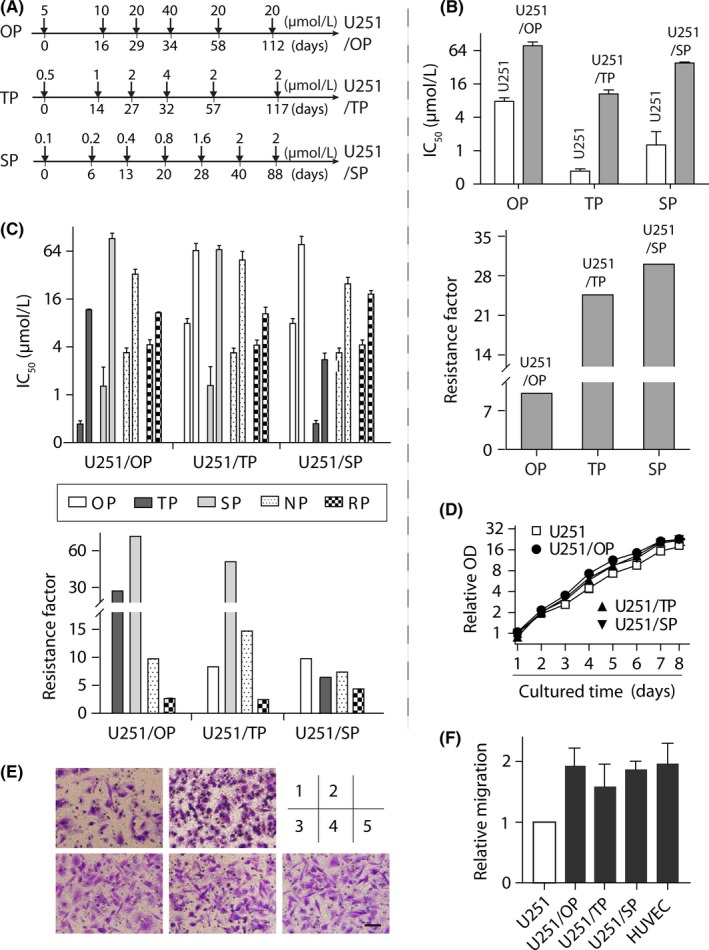
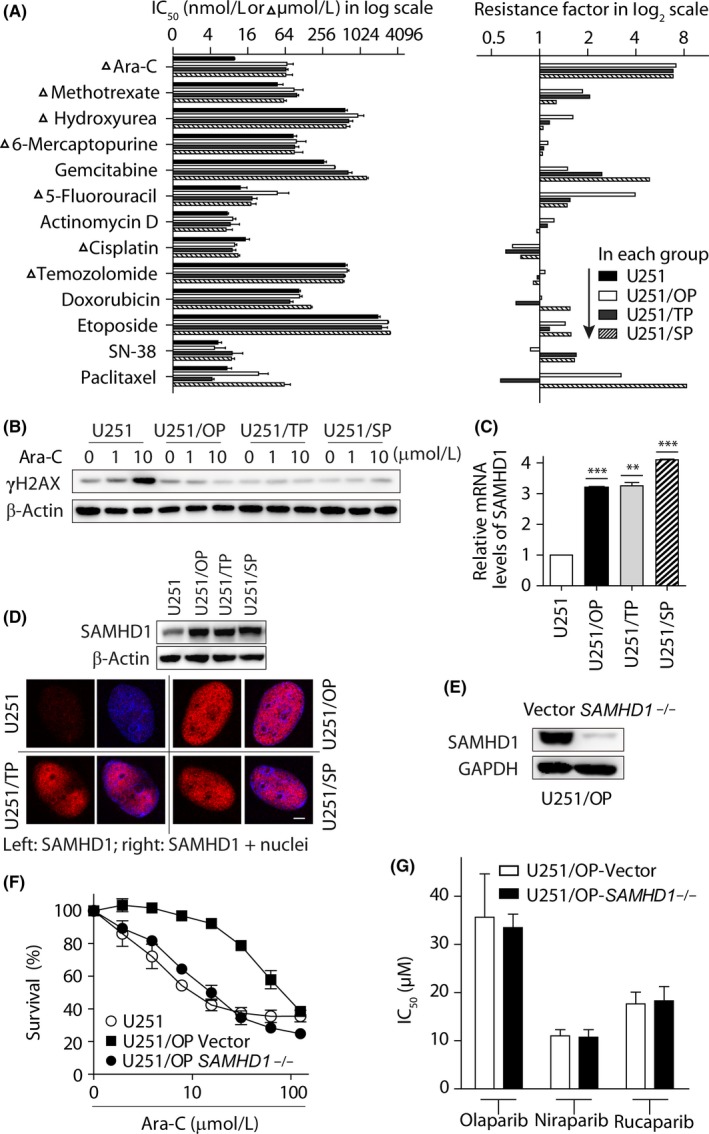
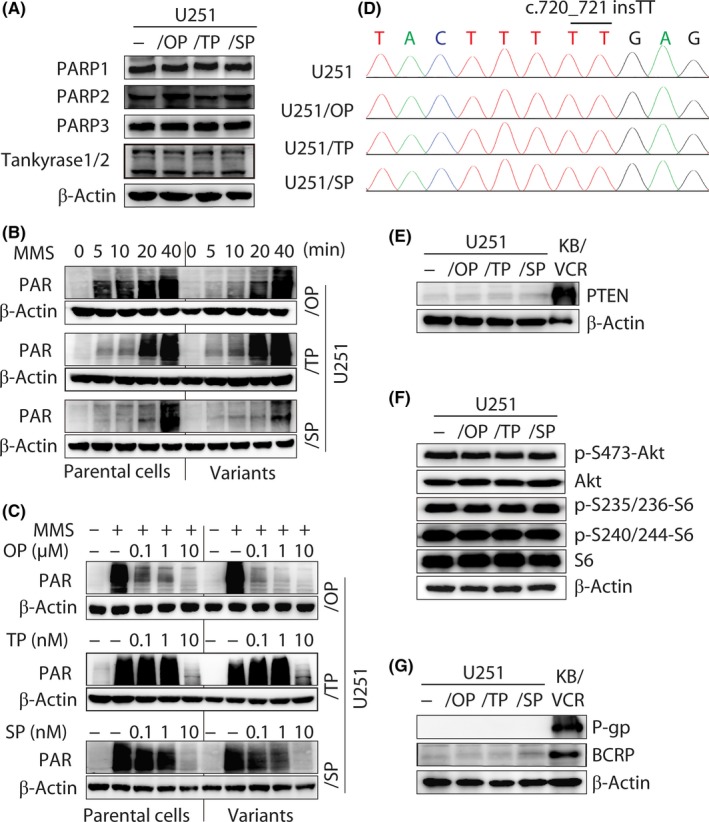
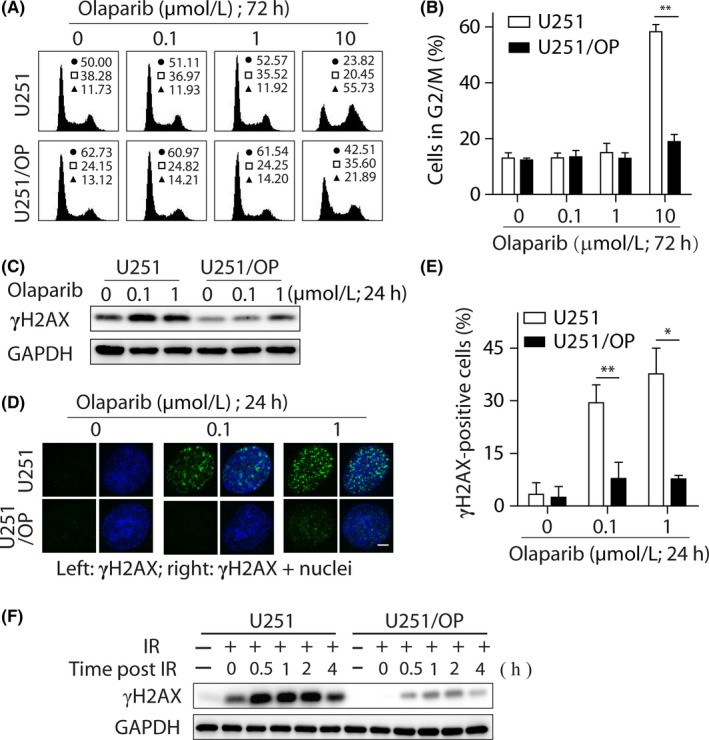
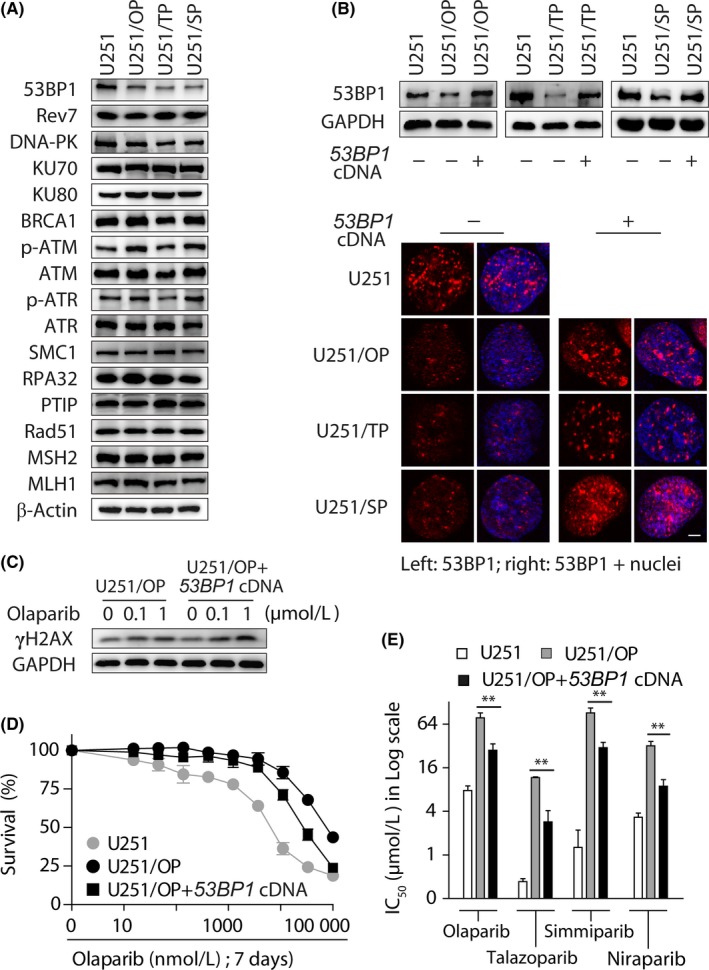
With increasing uses of poly(ADP-ribose) polymerase (PARP) inhibitors (PARPi) for cancer therapy, understanding their resistance is becoming urgent. However, acquired PARPi resistance in the phosphatase and tensin homolog (PTEN)-deficient background is poorly understood. We generated 3 PARPi-resistant PTEN-deficient glioblastoma U251 variants separately with olaparib (U251/OP), talazoparib (U251/TP) and simmiparib (U251/SP). These variants displayed consistent resistance (2.46-71.78-fold) to all 5 PARPi, including niraparib and rucaparib, and showed higher degrees of resistance to the PARPi to which the parental cells were more sensitive. The resistance was characteristic of fast emergence and high stability. However, the resistance acquirement did not cause an increasingly aggressive phenotype. The resistance was not correlated to various factors, including PTEN mutations. The PARPi-treated variants produced less γH2AX and G2/M arrest. Consistently, loss of 53BP1 occurred in all variants and its compensation enhanced their sensitivity to PARPi by approximately 76%. The variants revealed slightly different cross-resistance profiles to 13 non-PARPi anticancer drugs. All were resistant to Ara-C (6-8-fold) but showed differential resistance to 5-fluorouracil, gemcitabine and paclitaxel. Almost no resistance was observed to the rest drugs, including cisplatin. SAMHD1 was overexpressed in all the variants and its knockout completely restored their sensitivity to Ara-C but did not affect their PARPi sensitivity. The present study demonstrates a consistent resistance profile to PARPi and a unique cross-resistance profile to non-PARPi drugs in different PARPi-resistant U251 cells and reveals 53BP1 loss and SAMHD1 overexpression as the primary mechanisms responsible for their resistance to PARPi and Ara-C, respectively. These effects probably result from heritable gene change(s) caused by persistent PARPi exposure.
随着聚(ADP - 核糖)聚合酶(PARP)抑制剂(PARPi)在癌症治疗中的应用日益增加,了解其耐药性变得迫在眉睫。然而,在磷酸酶和张力蛋白同源物(PTEN)缺陷背景下获得性PARPi耐药性的情况却知之甚少。我们分别用奥拉帕利(U251/OP)、他拉唑帕利(U251/TP)和西咪帕利(U251/SP)生成了3种对PARPi耐药的PTEN缺陷型胶质母细胞瘤U251变体。这些变体对所有5种PARPi,包括尼拉帕利和鲁卡帕利,均表现出一致的耐药性(2.46 - 71.78倍),并且对亲代细胞更敏感的PARPi表现出更高程度的耐药性。这种耐药性具有快速出现和高度稳定的特点。然而,耐药性的获得并未导致侵袭性增加的表型。这种耐药性与包括PTEN突变在内的各种因素无关。经PARPi处理的变体产生的γH2AX和G2/M期阻滞较少。一致的是,所有变体中均发生了53BP1缺失,其补偿使它们对PARPi的敏感性提高了约76%。这些变体对13种非PARPi抗癌药物显示出略有不同的交叉耐药谱。所有变体均对阿糖胞苷耐药(6 - 8倍),但对5 - 氟尿嘧啶、吉西他滨和紫杉醇表现出不同程度的耐药性。对其余药物,包括顺铂,几乎未观察到耐药性。SAMHD1在所有变体中均过表达,其敲除完全恢复了它们对阿糖胞苷的敏感性,但不影响它们对PARPi的敏感性。本研究证明了不同PARPi耐药的U251细胞对PARPi具有一致的耐药谱以及对非PARPi药物具有独特的交叉耐药谱,并揭示了53BP1缺失和SAMHD1过表达分别是它们对PARPi和阿糖胞苷耐药的主要机制。这些效应可能是由持续暴露于PARPi引起的可遗传基因变化导致的。