Choi Kevin J, Cheng Tracy, Cobb Mary Ih, Sajisevi Mirabelle B, Gonzalez L Fernando, Ryan Marisa A
Division of Head and Neck Surgery & Communication Sciences, Department of Surgery, Duke University Hospital, Durham, NC, USA.
Duke University School of Medicine, Durham, NC, USA.
Acta Otolaryngol Case Rep. 2017;2(1):103-106. doi: 10.1080/23772484.2017.1330122. Epub 2017 May 26.
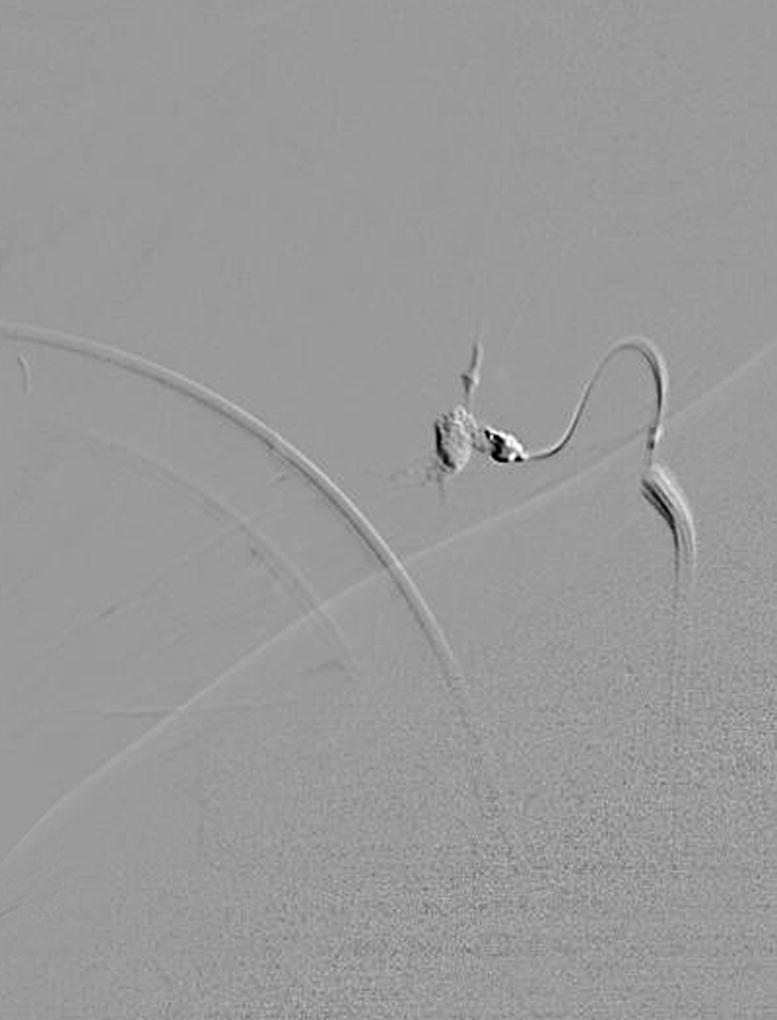
This is a report of an illustrative case of recurrent post-tonsillectomy bleeding that was caused by an iatrogenic facial artery pseudoaneurysm and controlled by endovascular embolization. A 37 year-old female who underwent bilateral tonsillectomy for chronic tonsillitis had recurrent secondary hemorrhage despite multiple operative interventions to control the bleeding. Because of the recurrent nature of the bleeding, an angiography of the external carotid artery was performed demonstrating a pseudoaneurysm of the left facial artery with active extravasation. This was successfully embolized with ethylene vinyl alcohol copolymer and the bleeding did not recur. Most post-operative bleeds can be managed with bedside or intraoperative interventions. However, pseudoaneurysms should be considered in the differential diagnosis of recurrent bleeds refractory to surgical control.
这是一例扁桃体切除术后复发性出血的典型病例报告,该出血由医源性面动脉假性动脉瘤引起,通过血管内栓塞得以控制。一名37岁女性因慢性扁桃体炎接受双侧扁桃体切除术,尽管进行了多次手术干预以控制出血,但仍反复出现继发性出血。由于出血的复发性,对外颈动脉进行了血管造影,显示左面部动脉有假性动脉瘤并伴有活动性外渗。用乙烯 - 乙烯醇共聚物成功栓塞后,出血未再复发。大多数术后出血可通过床边或术中干预进行处理。然而,对于手术控制难以奏效的复发性出血,鉴别诊断时应考虑假性动脉瘤。