Key Laboratory of Cardiovascular Disease and Molecular Intervention, Department of Physiology, Nanjing Medical University, Nanjing 210029, China.
Department of Pediatrics, The Fourth Clinical Medical College of Nanjing Medical University, Nanjing 210029, China.
Int J Mol Sci. 2017 Dec 27;19(1):59. doi: 10.3390/ijms19010059.
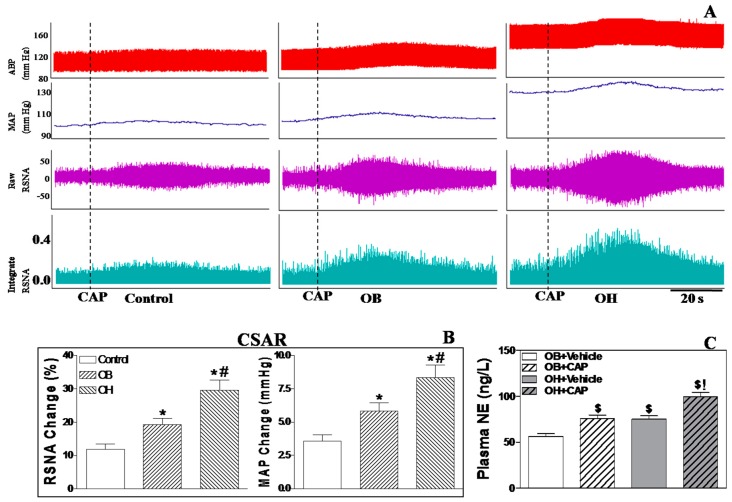
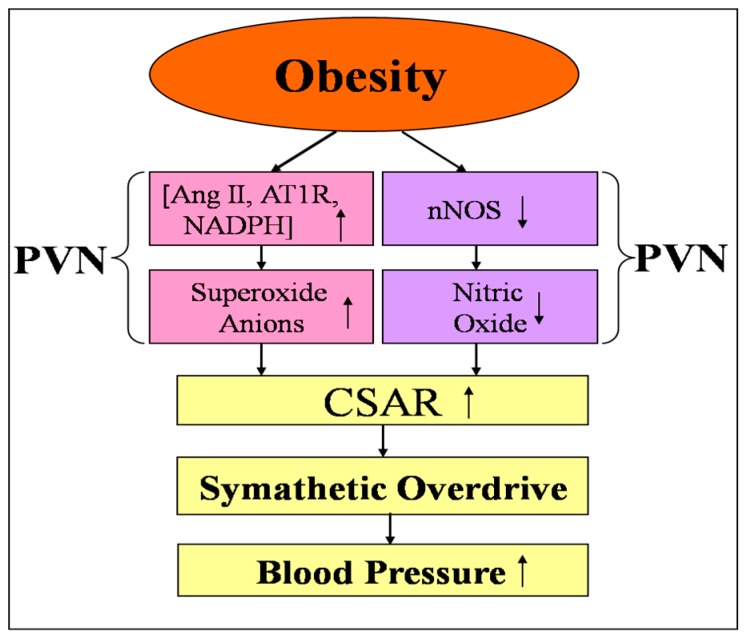
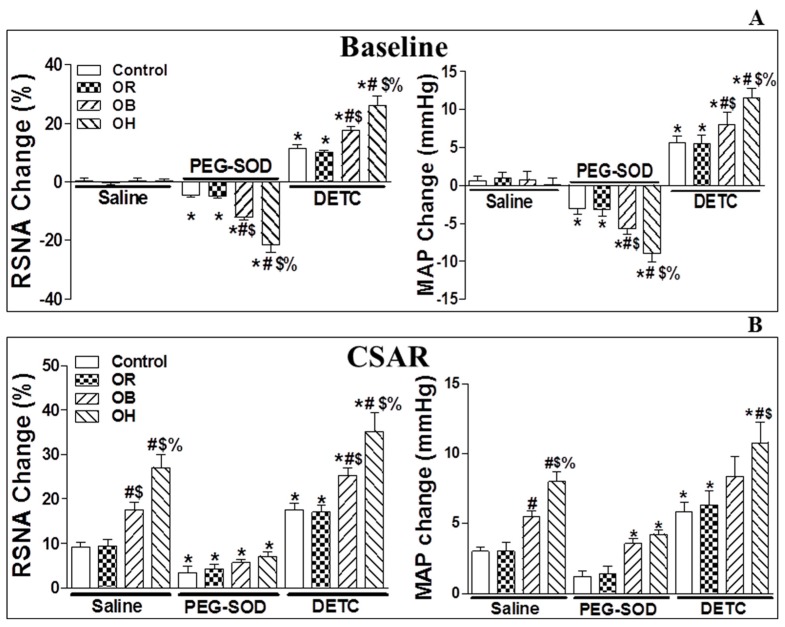
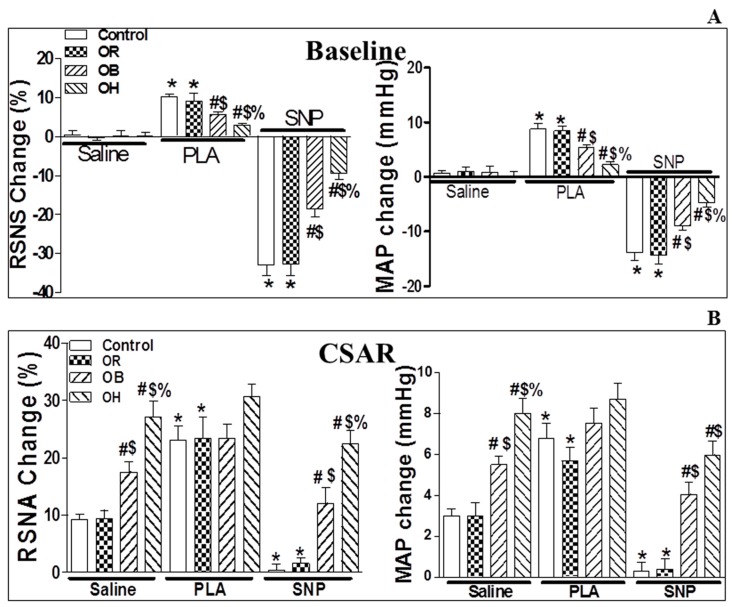
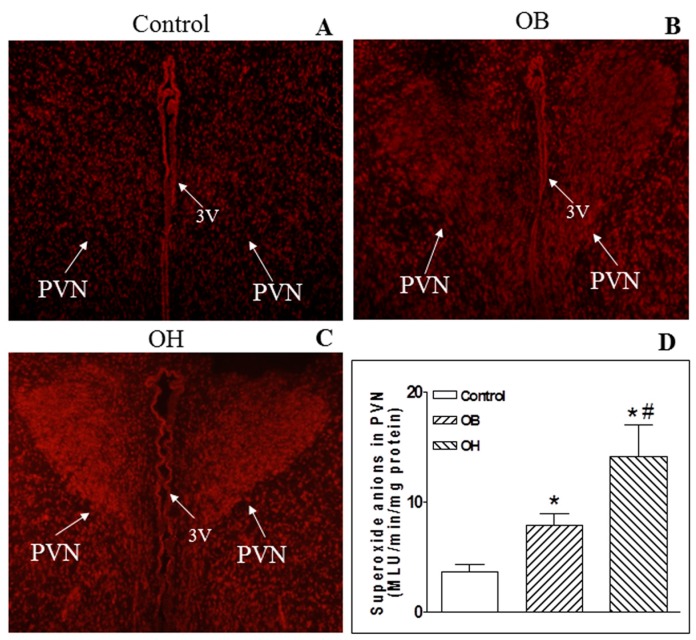
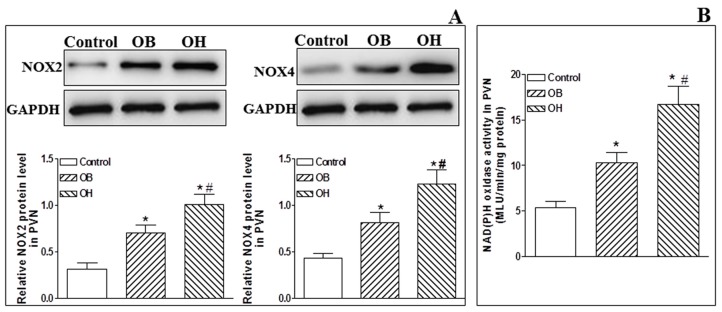
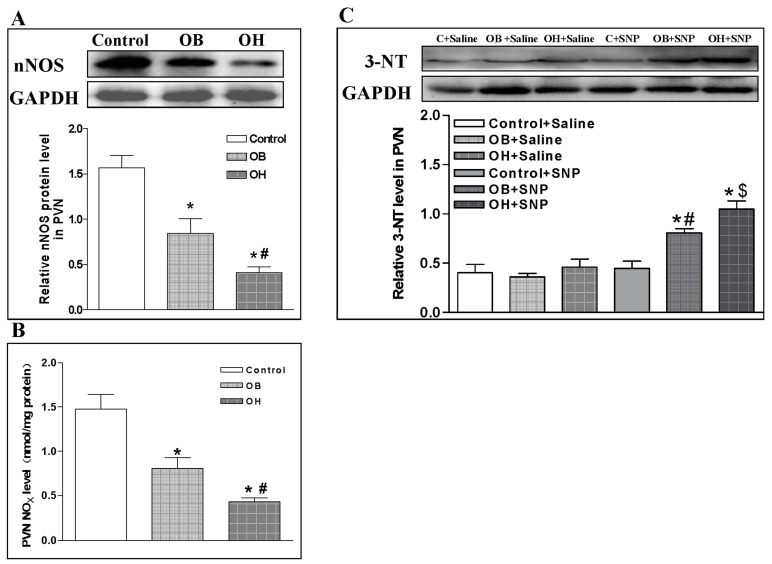
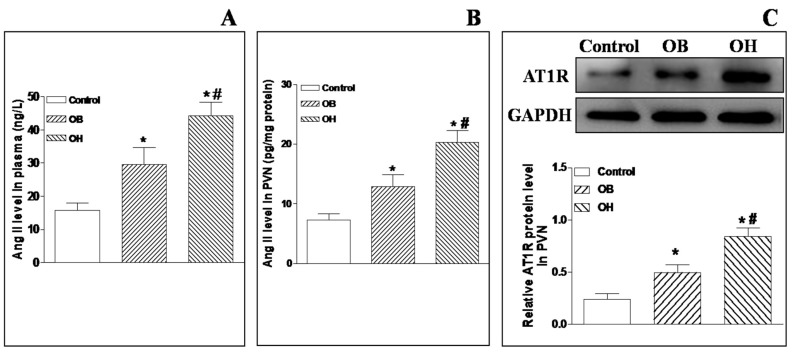
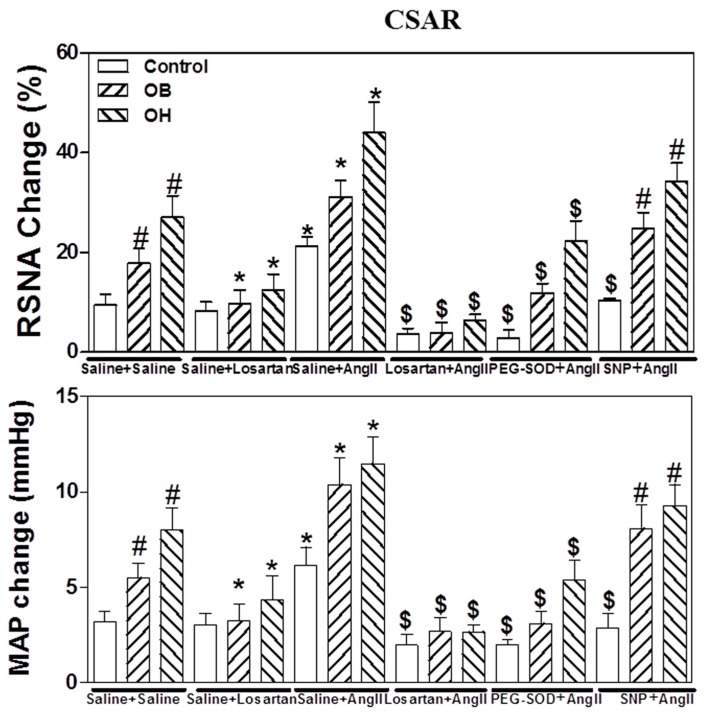
This study was conducted to explore the hypothesis that the endogenous superoxide anions (O₂) and nitric oxide (NO) system of the paraventricular nucleus (PVN) regulates the cardiac sympathetic afferent reflex (CSAR) contributing to sympathoexcitation in obese rats induced by a high-fat diet (42% kcal as fat) for 12 weeks. CSAR was evaluated by monitoring the changes of renal sympathetic nerve activity (RSNA) and the mean arterial pressure (MAP) responses to the epicardial application of capsaicin (CAP) in anaesthetized rats. In obese rats with hypertension (OH group) or without hypertension (OB group), the levels of PVN O₂, angiotensinII (Ang II), Ang II type 1 receptor (AT1R), and nicotinamide adenine dinucleotide phosphate (NADPH) oxidase were elevated, whereas neural NO synthase (nNOS) and NO were significantly reduced. Moreover, CSAR was markedly enhanced, which promoted the elevation of plasma norepinephrine levels. The enhanced CSAR was attenuated by PVN application of the superoxide scavenger polyethylene glycol-superoxide dismutase (PEG-SOD) and the NO donor sodium nitroprusside (SNP), and was strengthened by the superoxide dismutase inhibitor diethyldithiocarbamic acid (DETC) and the nNOS inhibitor N(ω)-propyl-l-arginine hydrochloride (PLA); conversely, there was a smaller CSAR response to PLA or SNP in rats that received a low-fat (12% kcal) diet. Furthermore, PVN pretreatment with the AT1R antagonist losartan or with PEG-SOD, but not SNP, abolished Ang II-induced CSAR enhancement. These findings suggest that obesity alters the PVN O₂ and NO system that modulates CSAR and promotes sympathoexcitation.
这项研究旨在探讨内源性超氧阴离子(O₂)和一氧化氮(NO)系统是否调节室旁核(PVN),从而调节肥胖大鼠由高脂肪饮食(42%热量来自脂肪)诱导的心脏交感传入反射(CSAR),这种饮食可导致交感神经兴奋,实验时长为 12 周。CSAR 通过监测麻醉大鼠心脏表面应用辣椒素(CAP)时肾交感神经活动(RSNA)和平均动脉压(MAP)的变化来评估。在伴有高血压(OH 组)或不伴有高血压(OB 组)的肥胖大鼠中,PVN 的 O₂、血管紧张素 II(Ang II)、Ang II 型 1 受体(AT1R)和烟酰胺腺嘌呤二核苷酸磷酸(NADPH)氧化酶水平升高,而神经型一氧化氮合酶(nNOS)和 NO 显著减少。此外,CSAR 明显增强,导致血浆去甲肾上腺素水平升高。PVN 应用超氧化物清除剂聚乙二醇-超氧化物歧化酶(PEG-SOD)和一氧化氮供体硝普钠(SNP)可减弱增强的 CSAR,应用超氧化物歧化酶抑制剂二乙基二硫代氨基甲酸钠(DETC)和 nNOS 抑制剂 N(ω)-丙基-L-精氨酸盐酸盐(PLA)则可增强 CSAR;相反,接受低脂肪(12%热量)饮食的大鼠,其 PLA 或 SNP 引起的 CSAR 反应较小。此外,用 AT1R 拮抗剂 losartan 或用 PEG-SOD 预处理 PVN,但不用 SNP,可消除 Ang II 诱导的 CSAR 增强。这些发现表明,肥胖改变了调节 CSAR 并促进交感神经兴奋的 PVN O₂和 NO 系统。