Brown Kemar, Legros Stephanie, Ortega Francis A, Dai Yunkai, Doss Michael Xavier, Christini David J, Robinson Richard B, Foley Ann C
Greenberg Division of Cardiology, Weill Medical College of Cornell University, New York, New York, United States of America.
Department of Bioengineering, Clemson University, Charleston, SC, United States of America.
PLoS One. 2017 Dec 27;12(12):e0189818. doi: 10.1371/journal.pone.0189818. eCollection 2017.
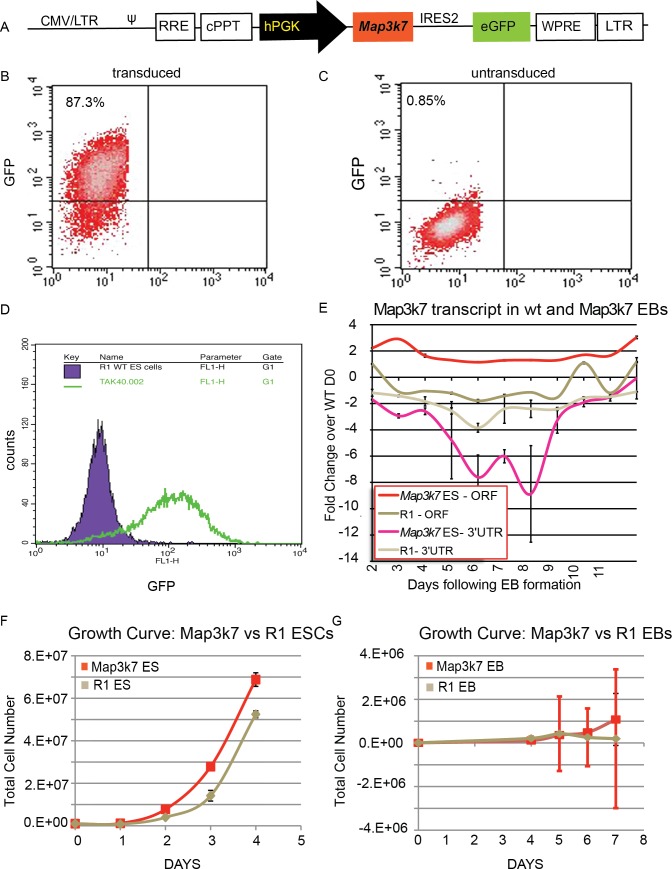
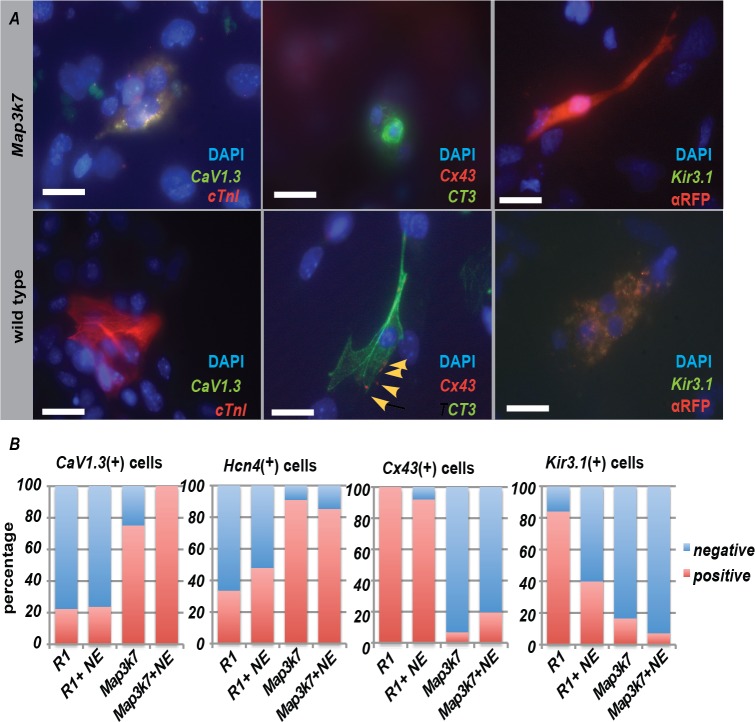
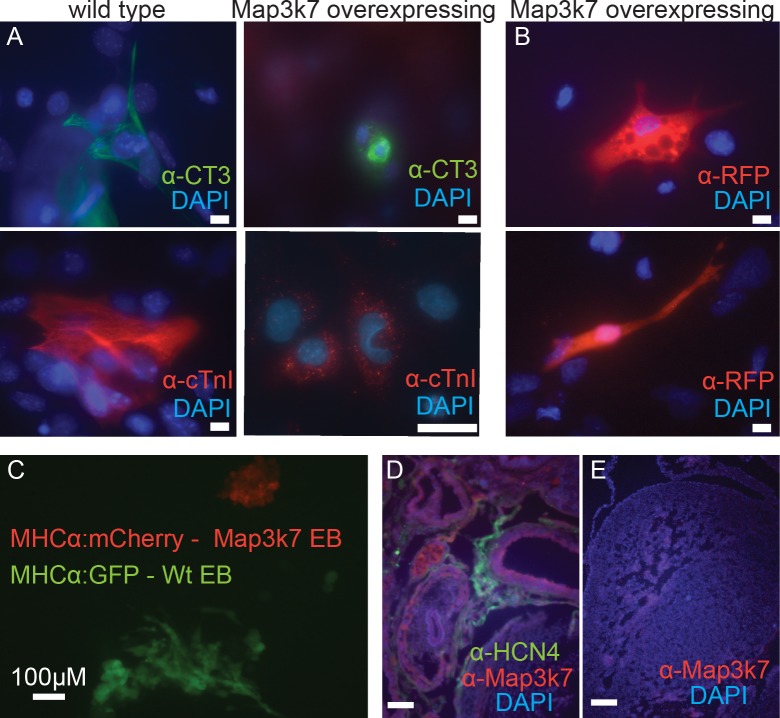
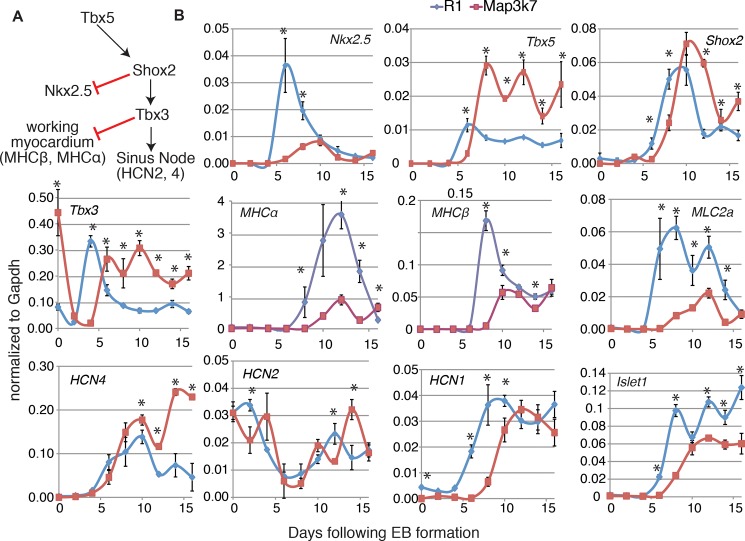
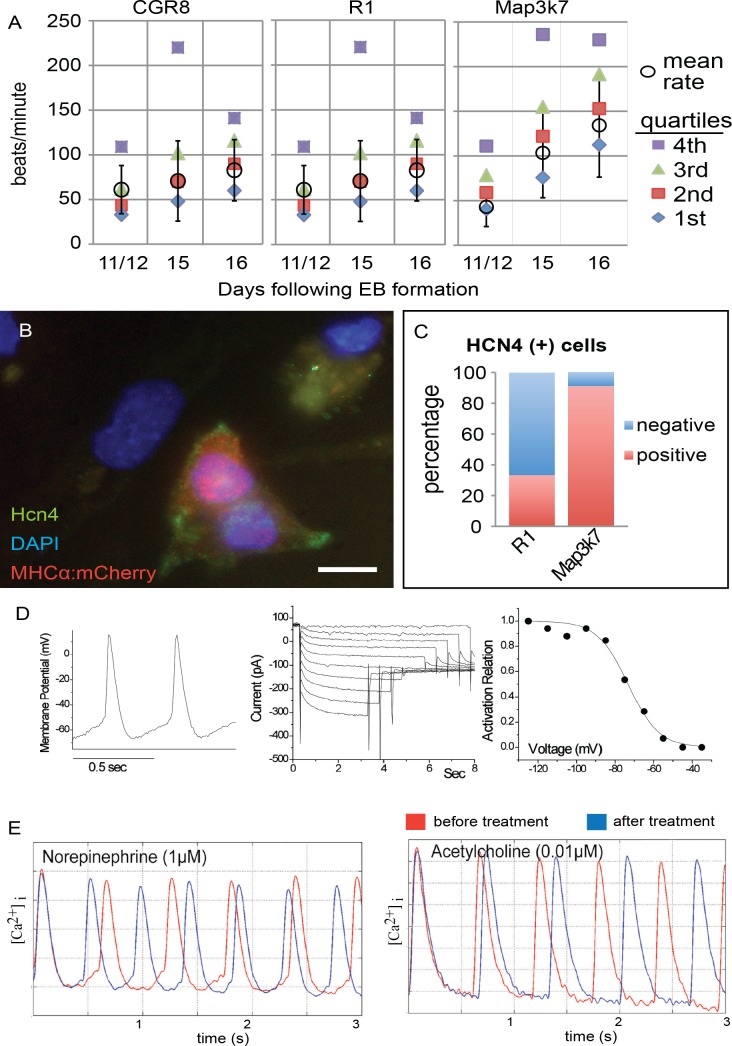
In vivo, cardiomyocytes comprise a heterogeneous population of contractile cells defined by unique electrophysiologies, molecular markers and morphologies. The mechanisms directing myocardial cells to specific sub-lineages remain poorly understood. Here we report that overexpression of TGFβ-Activated Kinase (TAK1/Map3k7) in mouse embryonic stem (ES) cells faithfully directs myocardial differentiation of embryoid body (EB)-derived cardiac cells toward the sinoatrial node (SAN) lineage. Most cardiac cells in Map3k7-overexpressing EBs adopt markers, cellular morphologies, and electrophysiological behaviors characteristic of the SAN. These data, in addition to the fact that Map3k7 is upregulated in the sinus venous-the source of cells for the SAN-suggest that Map3k7 may be an endogenous regulator of the SAN fate.
在体内,心肌细胞是由具有独特电生理学、分子标志物和形态学特征的收缩细胞组成的异质群体。指导心肌细胞分化为特定亚谱系的机制仍知之甚少。在此,我们报告在小鼠胚胎干细胞(ES细胞)中过表达转化生长因子β激活激酶(TAK1/Map3k7)可忠实地将胚状体(EB)来源的心脏细胞的心肌分化导向窦房结(SAN)谱系。过表达Map3k7的EB中的大多数心脏细胞采用了SAN特有的标志物、细胞形态和电生理行为。这些数据,再加上Map3k7在静脉窦(SAN细胞的来源)中上调这一事实,表明Map3k7可能是SAN命运的内源性调节因子。