New England Inflammation and Tissue Protection Institute, Northeastern University, Boston, MA 02115, USA.
New England Inflammation and Tissue Protection Institute, Northeastern University, Boston, MA 02115, USA.
Cell Rep. 2017 Dec 26;21(13):3672-3680. doi: 10.1016/j.celrep.2017.12.014.
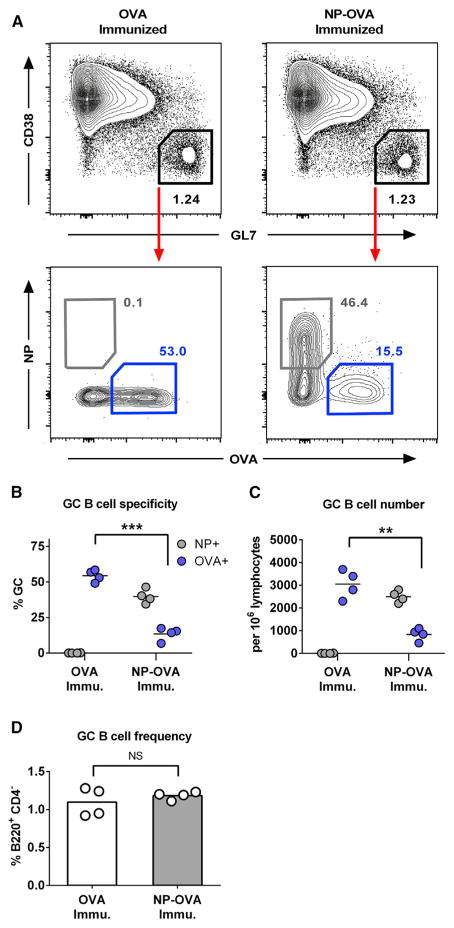
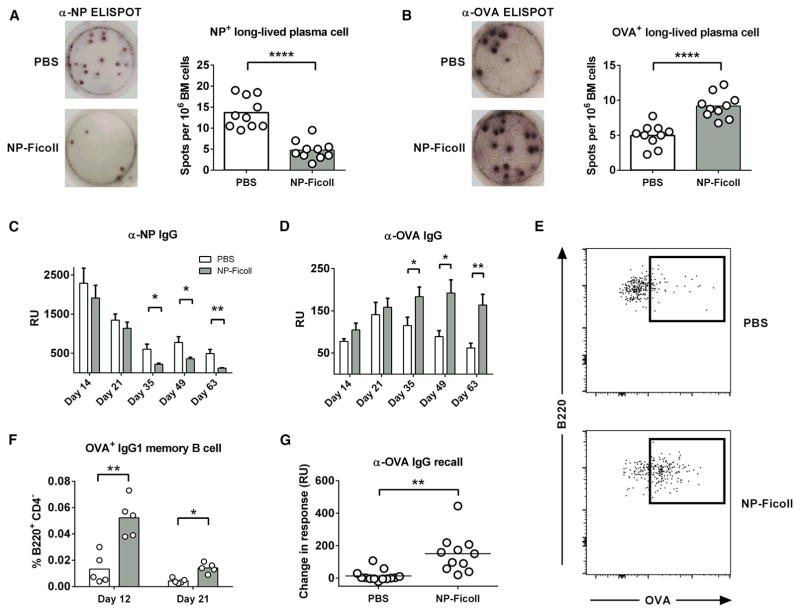
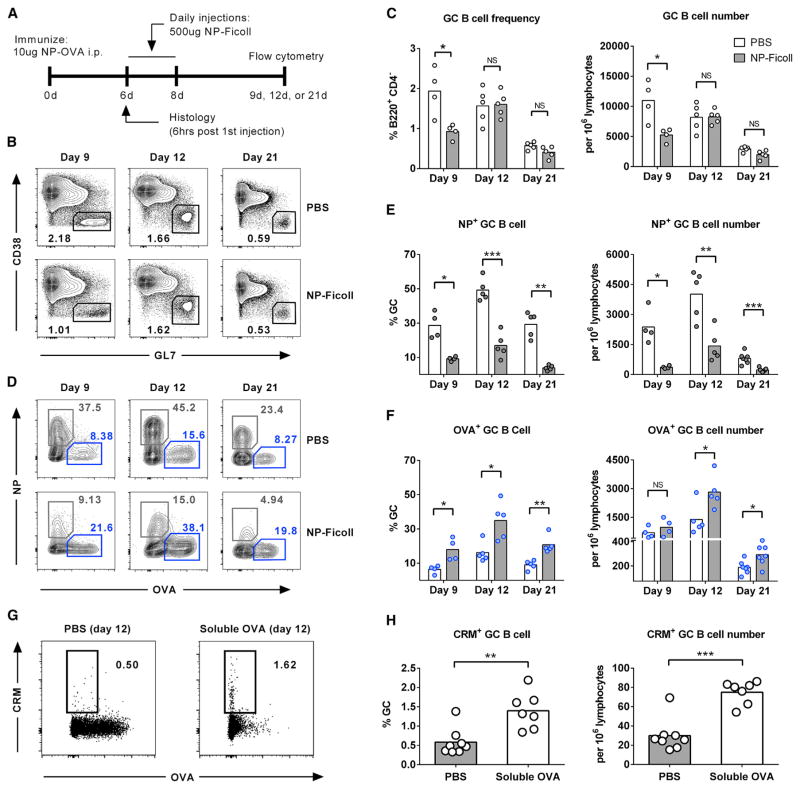
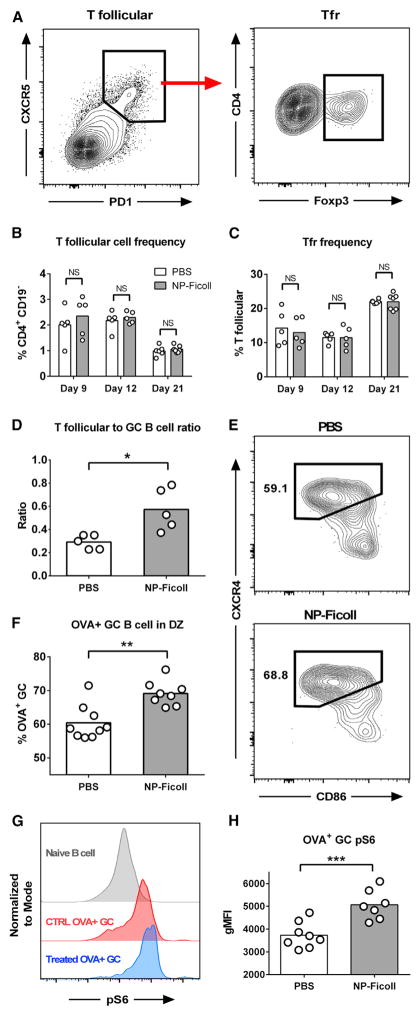
Rapidly evolving pathogens such as HIV or influenza can quickly mutate their antigenic profiles, reducing the efficacy of conventional vaccines. Despite this challenge, functionally required epitopes are highly conserved among heterologous viral strains and represent a key vulnerability that could be targeted during vaccine development. As the antigenicity of these conserved epitopes is frequently subdominant, there is a critical need for innovative vaccination strategies designed to target these neutralizing epitopes. Here, we immunized mice with antigens containing discrete immunodominant and subdominant moieties and show that treatment with soluble heterologous antigen bearing only the immunodominant epitope selectively suppresses these germinal center (GC) B cells. By exploiting this intrinsic tolerance mechanism, we promote the expansion of subdominant B cells in the GC and the subsequent long-lived components of the humoral response. We propose that this strategy may be applied to elicit preferential expansion of subdominant B cells that recognize weakly immunogenic epitopes on microbial pathogens.
迅速进化的病原体,如 HIV 或流感,可以快速改变其抗原表型,降低传统疫苗的效果。尽管存在这一挑战,但功能性必需表位在不同的病毒株之间高度保守,是疫苗开发过程中可以靶向的一个关键弱点。由于这些保守表位的抗原性通常是次要的,因此迫切需要设计针对这些中和表位的创新疫苗接种策略。在这里,我们用含有离散的免疫显性和次要部分的抗原免疫小鼠,并表明仅含有免疫显性表位的可溶性异源抗原处理选择性地抑制这些生发中心 (GC) B 细胞。通过利用这种内在的耐受机制,我们促进了 GC 中次要 B 细胞的扩增和随后的体液反应的长寿成分。我们提出,该策略可以用于诱导识别微生物病原体上弱免疫原性表位的次要 B 细胞的优先扩增。