School and Graduate Institute of Physical Therapy, College of Medicine, National Taiwan University, Taipei 10055, Taiwan.
Department of Kinesiology and Community Health, College of Applied Health Science, University of Illinois Urbana-Champaign, Champaign, IL 61801, USA.
Int J Mol Sci. 2017 Dec 28;19(1):90. doi: 10.3390/ijms19010090.
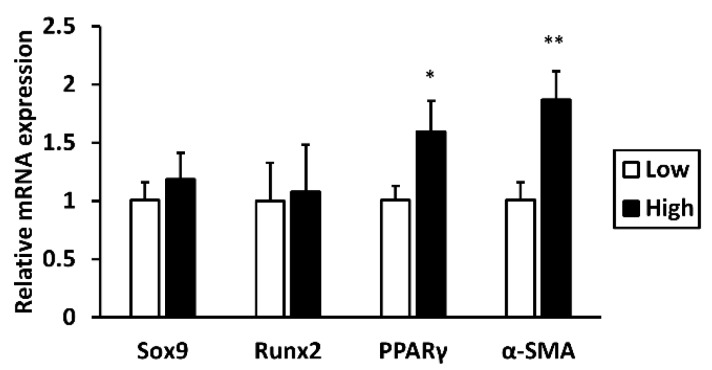
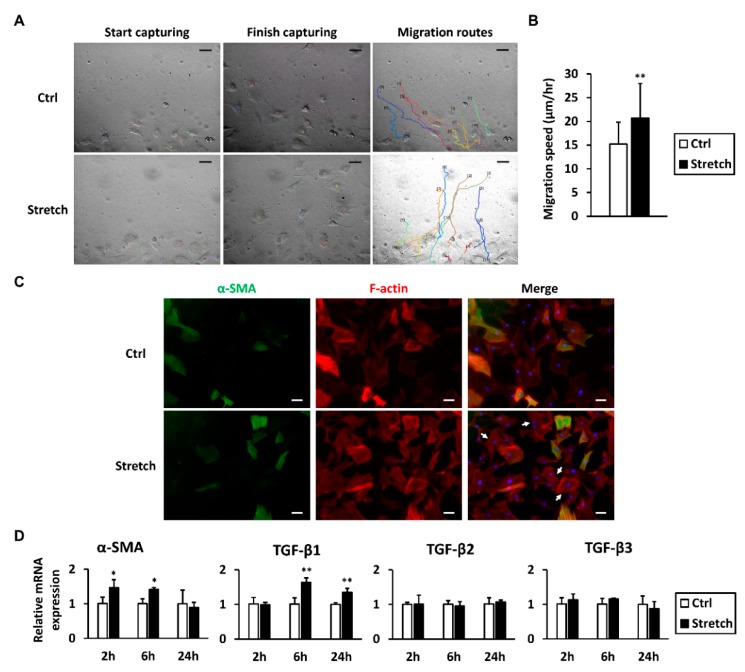
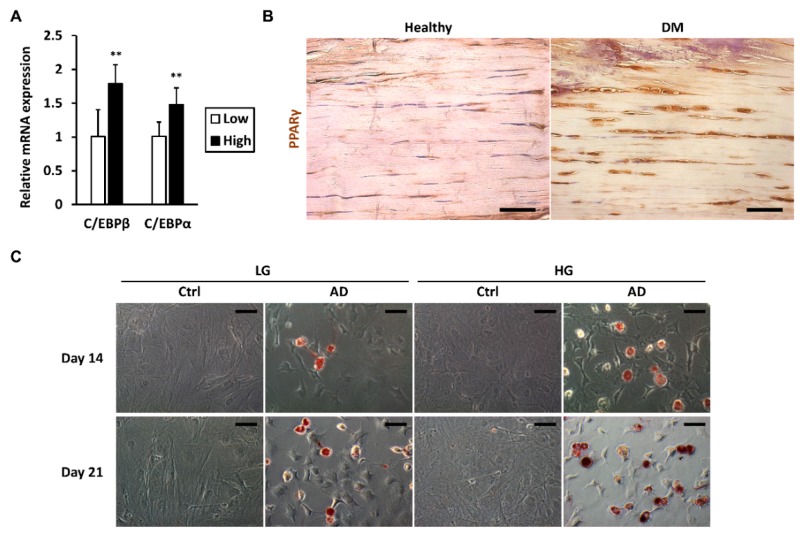
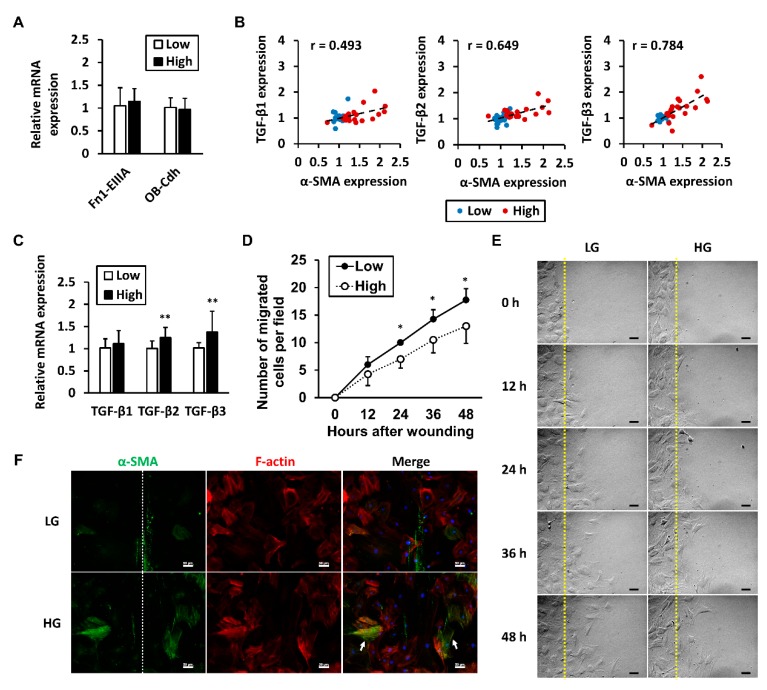
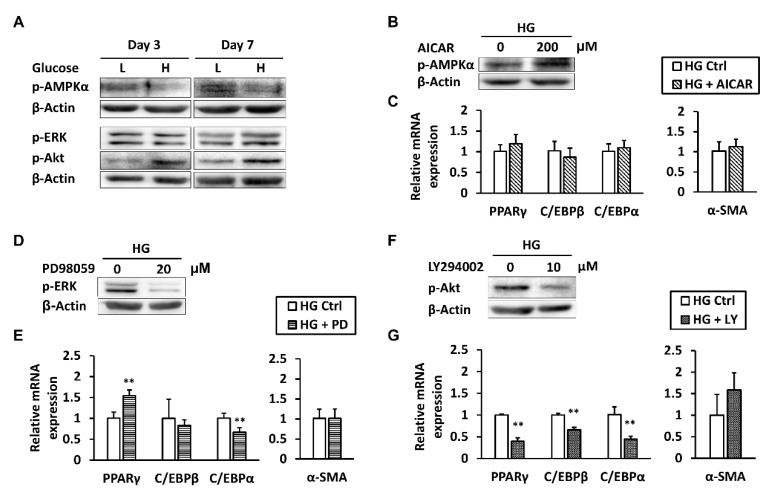
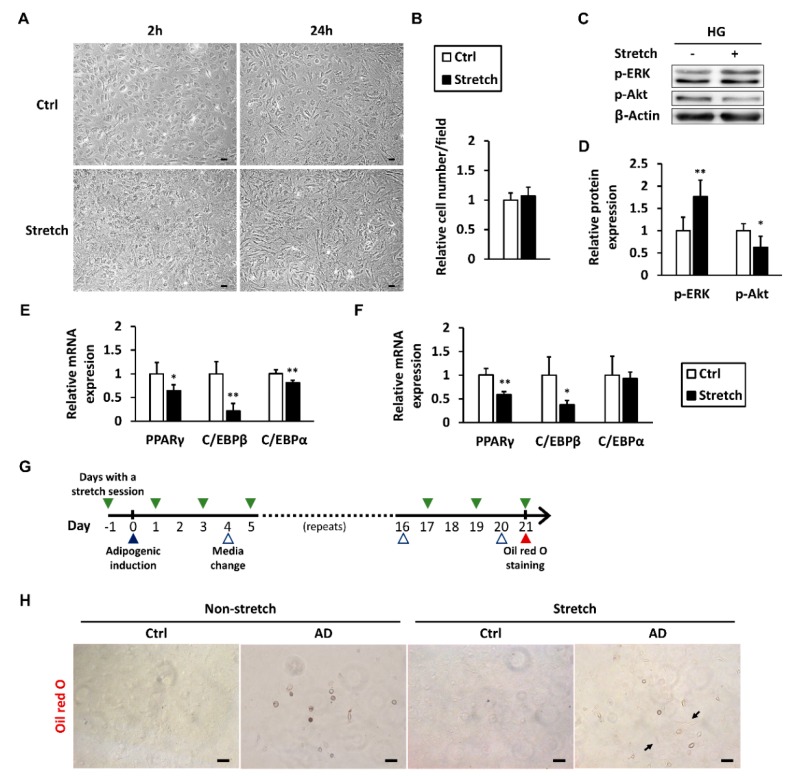
Diabetes mellitus is associated with damage to tendons, which may result from cellular dysfunction in response to a hyperglycemic environment. Tenocytes express diminished levels of tendon-associated genes under hyperglycemic conditions. In contrast, mechanical stretch enhances tenogenic differentiation. However, whether hyperglycemia increases the non-tenogenic differentiation potential of tenocytes and whether this can be mitigated by mechanical stretch remains elusive. We explored the in vitro effects of high glucose and mechanical stretch on rat primary tenocytes. Specifically, non-tenogenic gene expression, adipogenic potential, cell migration rate, filamentous actin expression, and the activation of signaling pathways were analyzed in tenocytes treated with high glucose, followed by the presence or absence of mechanical stretch. We analyzed tenocyte phenotype in vivo by immunohistochemistry using an STZ (streptozotocin)-induced long-term diabetic mouse model. High glucose-treated tenocytes expressed higher levels of the adipogenic transcription factors γ and C/EBPs. PPARγ was also highly expressed in diabetic tendons. In addition, increased adipogenic differentiation and decreased cell migration induced by high glucose implicated a fibroblast-to-adipocyte phenotypic change. By applying mechanical stretch to tenocytes in high-glucose conditions, adipogenic differentiation was repressed, while cell motility was enhanced, and fibroblastic morphology and gene expression profiles were strengthened. In part, these effects resulted from a stretch-induced activation of ERK (extracellular signal-regulated kinases) and a concomitant inactivation of Akt. Our results show that mechanical stretch alleviates the augmented adipogenic transdifferentiation potential of high glucose-treated tenocytes and helps maintain their fibroblastic characteristics. The alterations induced by high glucose highlight possible pathological mechanisms for diabetic tendinopathy. Furthermore, the beneficial effects of mechanical stretch on tenocytes suggest that an appropriate physical load possesses therapeutic potential for diabetic tendinopathy.
糖尿病与肌腱损伤有关,这可能是由于高血糖环境下细胞功能障碍所致。高血糖条件下,肌腱细胞表达的肌腱相关基因水平降低。相比之下,机械拉伸增强了肌腱细胞的分化。然而,高血糖是否会增加肌腱细胞的非肌腱分化潜能,以及机械拉伸是否可以减轻这种影响,目前仍不清楚。我们探讨了高糖和机械拉伸对大鼠原代肌腱细胞的体外影响。具体来说,分析了高糖处理后的肌腱细胞中非肌腱基因的表达、脂肪生成潜能、细胞迁移率、丝状肌动蛋白表达以及信号通路的激活情况,并在存在或不存在机械拉伸的情况下进行了分析。我们通过 STZ(链脲佐菌素)诱导的长期糖尿病小鼠模型,对体内肌腱细胞表型进行了免疫组织化学分析。高糖处理后的肌腱细胞表达更高水平的脂肪生成转录因子γ和 C/EBP。PPARγ 在糖尿病肌腱中也高度表达。此外,高糖诱导的脂肪生成分化增加和细胞迁移减少表明发生了成纤维细胞向脂肪细胞的表型变化。在高糖条件下对肌腱细胞施加机械拉伸可抑制脂肪生成分化,同时增强细胞迁移能力,并增强成纤维细胞形态和基因表达谱。在某种程度上,这些效应是由于拉伸诱导的 ERK(细胞外信号调节激酶)激活和 Akt 失活所致。我们的结果表明,机械拉伸减轻了高糖处理后的肌腱细胞增强的脂肪生成转分化潜能,并有助于维持其成纤维细胞特征。高糖引起的这些改变突出了糖尿病性肌腱病的可能病理机制。此外,机械拉伸对肌腱细胞的有益影响表明适当的物理负荷对糖尿病性肌腱病具有治疗潜力。