State Key Laboratory of Molecular Vaccinology and Molecular Diagnostics, School of Public Health, Xiamen University, Xiamen 361102, China.
National Institute of Diagnostics and Vaccine Development in Infectious Diseases, School of Life Science, Xiamen University, Xiamen 361102, China.
Theranostics. 2018 Jan 1;8(2):549-562. doi: 10.7150/thno.20047. eCollection 2018.
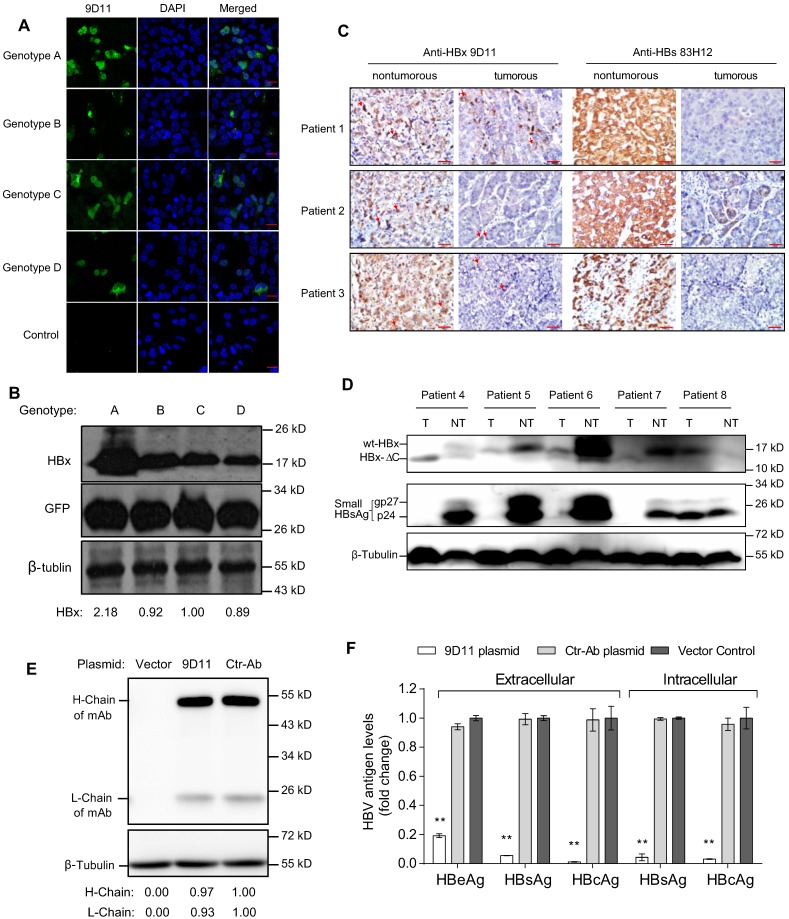
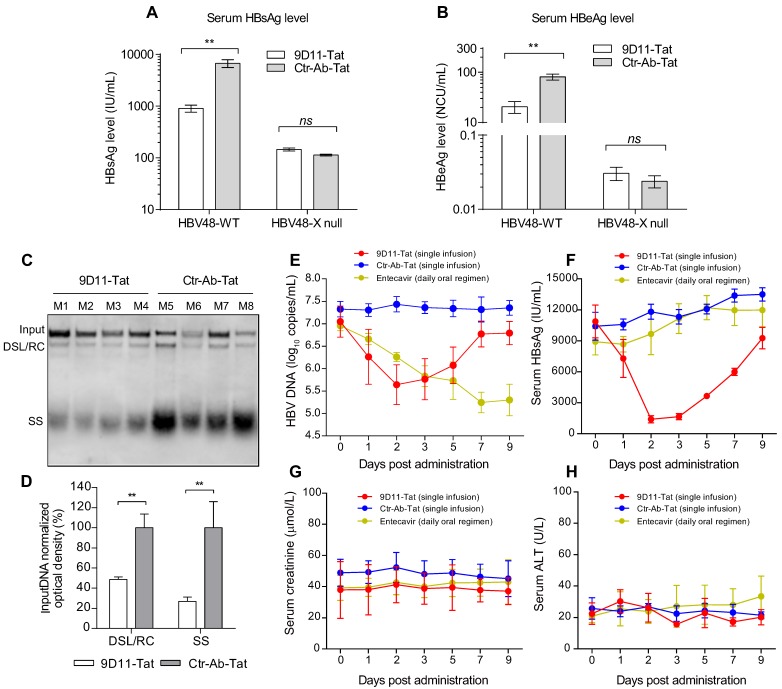
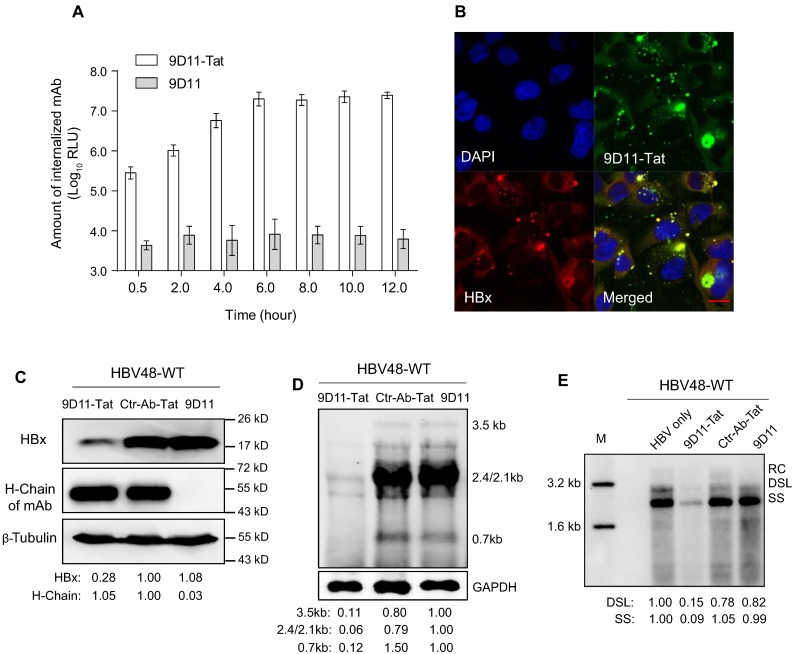
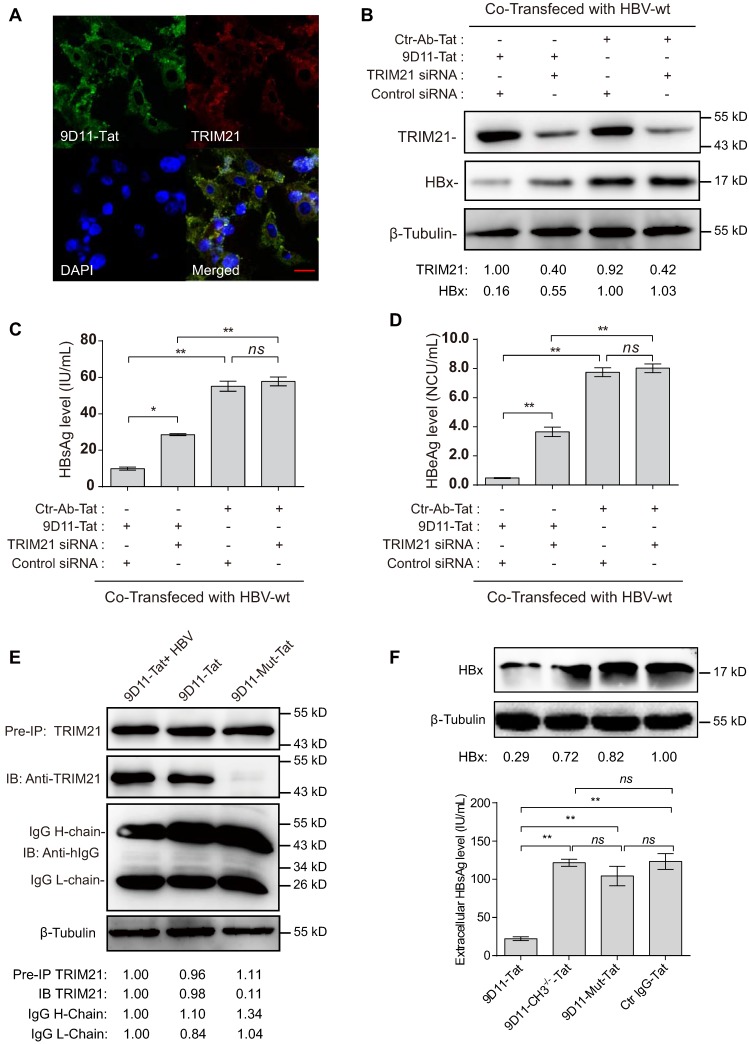
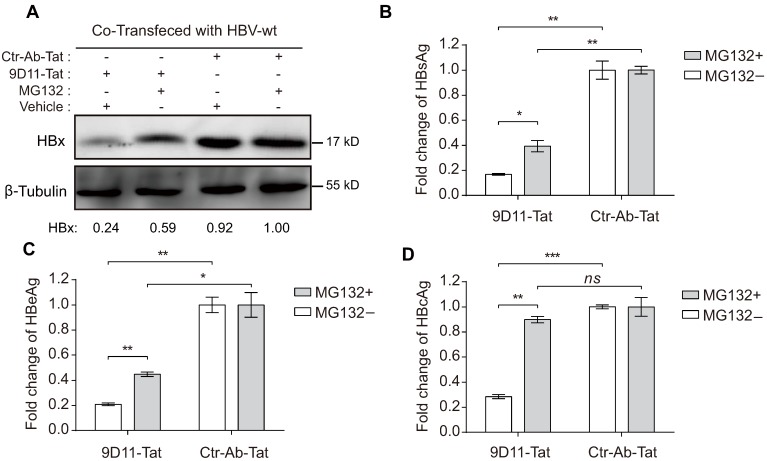
Monoclonal antibodies (mAbs) mostly targeting extracellular or cell surface molecules have been widely used in the treatment of various diseases. However, mAbs cannot pass through the cell membrane as efficiently as small compounds, thus limiting their use against intracellular targets. Methods to shuttle antibodies into living cells may largely expand research and application in areas based on mAbs. Hepatitis B virus X protein (HBx) is an important intracellular multi-functional viral protein in the life cycle of hepatitis B virus (HBV). HBx plays essential roles in virus infection and replication and is strongly associated with HBV-related carcinogenesis. In this study, we developed a cell-penetrating whole molecule antibody targeting HBx (9D11-Tat) by the fusion of a cell penetrating peptide (CPP) on the C-terminus of the heavy chain of a potent mAb specific to HBx (9D11). The anti-HBV effect and mechanism of 9D11-Tat were investigated in cell and mouse models mimicking chronic HBV infection. Our results demonstrated that the recombinant 9D11-Tat antibody could efficiently internalize into living cells and significantly suppress viral transcription, replication, and protein production both and . Further analyses suggested the internalized 9D11-Tat antibody could greatly reduce intracellular HBx via Fc binding receptor TRIM21-mediated protein degradation. This process simultaneously stimulated the activations of NF-κB, AP-1, and IFN-β, which promoted an antiviral state of the host cell. In summary, our study offers a new approach to target intracellular pathogenesis-related protein by engineered cell-penetrating mAb expanding their potential for therapeutic applications. Moreover, the 9D11-Tat antibody may provide a novel therapeutic agent against human chronic HBV infection.
单克隆抗体(mAbs)主要针对细胞外或细胞表面分子,已广泛用于治疗各种疾病。然而,mAbs 不能像小分子化合物那样有效地穿过细胞膜,因此限制了它们对细胞内靶标的应用。将抗体运送到活细胞中的方法可能会极大地扩展基于 mAbs 的研究和应用领域。乙型肝炎病毒 X 蛋白(HBx)是乙型肝炎病毒(HBV)生命周期中一种重要的细胞内多功能病毒蛋白。HBx 在病毒感染和复制中发挥重要作用,与 HBV 相关的致癌作用密切相关。在这项研究中,我们通过在针对 HBx 的强效 mAb(9D11)的重链 C 末端融合细胞穿透肽(CPP),开发了一种针对 HBx 的细胞穿透全分子抗体(9D11-Tat)。在模拟慢性 HBV 感染的细胞和小鼠模型中,研究了 9D11-Tat 的抗 HBV 作用及其机制。我们的结果表明,重组 9D11-Tat 抗体能够有效地进入活细胞,并显著抑制病毒转录、复制和蛋白表达。进一步的分析表明,内化的 9D11-Tat 抗体可以通过 Fc 结合受体 TRIM21 介导的蛋白降解大大减少细胞内 HBx。这一过程同时刺激了 NF-κB、AP-1 和 IFN-β 的激活,促进了宿主细胞的抗病毒状态。总之,我们的研究提供了一种通过工程化细胞穿透 mAb 靶向细胞内发病相关蛋白的新方法,扩大了它们在治疗应用中的潜力。此外,9D11-Tat 抗体可能为人类慢性 HBV 感染提供一种新的治疗药物。