Dilly Ashok K, Honick Brendon D, Lee Yong J, Guo Zong S, Zeh Herbert J, Bartlett David L, Choudry Haroon A
Department of Surgery, University of Pittsburgh Medical Center, Pittsburgh PA 15232, USA.
Department of Pharmacology and Chemical Biology, University of Pittsburgh Medical Center, Pittsburgh PA 15232, USA.
Oncotarget. 2017 Nov 6;8(63):106888-106900. doi: 10.18632/oncotarget.22455. eCollection 2017 Dec 5.
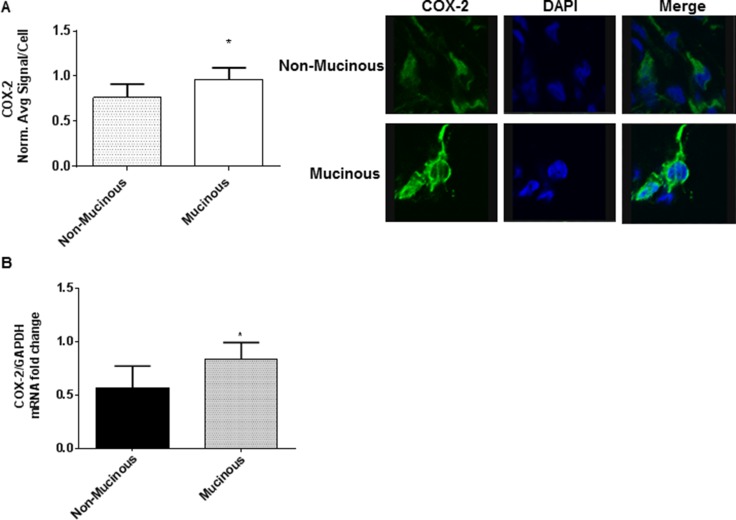
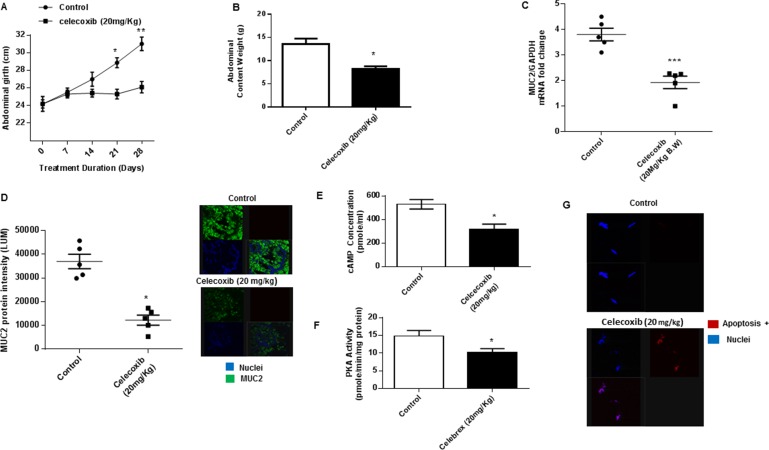
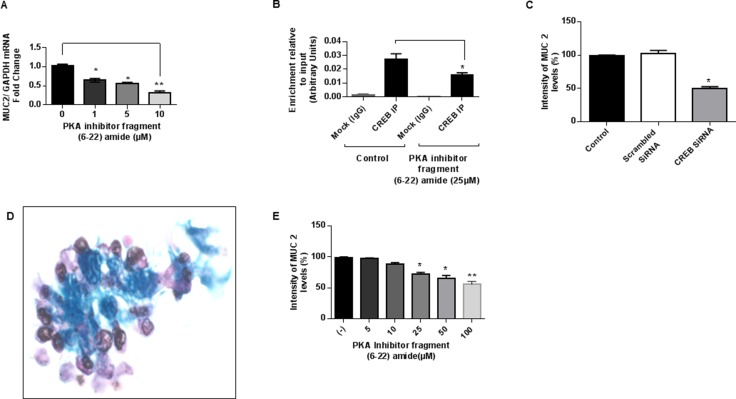
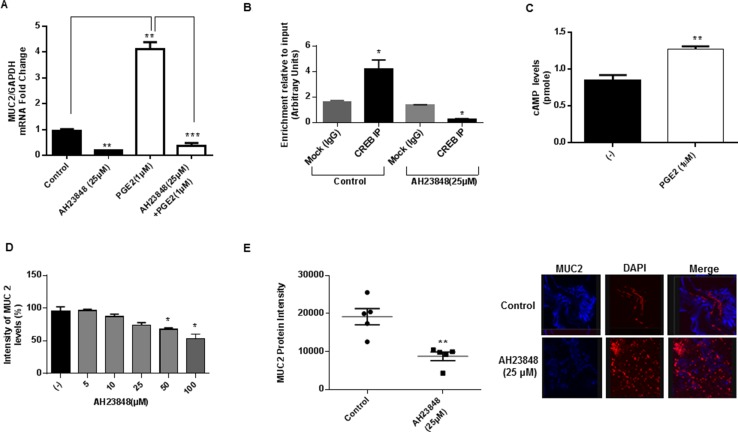
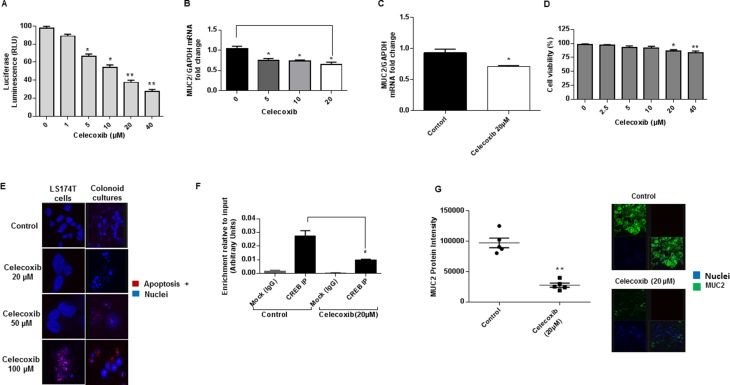
Cancer cells aberrantly express mucins to enhance their survival. Relative chemoresistance of appendiceal pseudomyxoma peritonei (PMP) is attributed to abundant extracellular mucin 2 (MUC2) protein production. We hypothesized that simultaneous MUC2 inhibition and apoptosis induction would be effective against mucinous tumors. studies were conducted using LS174T cells (MUC2-secreting human colorectal cancer cells), PMP explant tissue, and epithelial organoid cultures (colonoids) derived from mucinous appendix cancers. studies were conducted using murine intraperitoneal patient-derived xenograft model of PMP. We found COX-2 over-expression in PMP explant tissue, which is known to activate G-protein coupled EP4/cAMP/PKA/CREB signaling pathway. MUC2 expression was reduced by small molecule inhibitors targeting EP4/PKA/CREB molecules and celecoxib (COX-2 inhibitor), and this was mediated by reduced CREB transcription factor binding to the promoter. While celecoxib (5-40 µM) reduced MUC2 expression in a dose-dependent fashion, only high-dose celecoxib (≥ 20 µM) decreased cell viability and induced apoptosis. Chronic oral administration of celecoxib decreased mucinous tumor growth in our PMP model via a combination of MUC2 inhibition and induction of apoptosis. We provide a preclinical rationale for using drugs that simultaneously inhibit MUC2 production and induce apoptosis to treat patients with PMP.
癌细胞异常表达黏蛋白以提高其存活率。阑尾黏液性腹膜假黏液瘤(PMP)的相对化疗耐药性归因于大量细胞外黏蛋白2(MUC2)的产生。我们假设同时抑制MUC2和诱导凋亡对黏液性肿瘤有效。使用LS174T细胞(分泌MUC2的人结肠癌细胞)、PMP外植体组织以及源自黏液性阑尾癌的上皮类器官培养物(结肠类器官)进行了研究。使用PMP的小鼠腹腔患者来源异种移植模型进行了研究。我们发现在PMP外植体组织中COX-2过表达,已知其可激活G蛋白偶联的EP4/cAMP/PKA/CREB信号通路。通过靶向EP4/PKA/CREB分子的小分子抑制剂和塞来昔布(COX-2抑制剂)可降低MUC2表达,这是由CREB转录因子与启动子结合减少介导的。虽然塞来昔布(5 - 40 μM)以剂量依赖性方式降低MUC2表达,但只有高剂量塞来昔布(≥ 20 μM)可降低细胞活力并诱导凋亡。在我们的PMP模型中,塞来昔布的慢性口服给药通过抑制MUC2和诱导凋亡的联合作用降低了黏液性肿瘤的生长。我们为使用同时抑制MUC2产生并诱导凋亡的药物治疗PMP患者提供了临床前理论依据。