Fan Fan, Wang Rui, Boulbes Delphine R, Zhang Huiyuan, Watowich Stephanie S, Xia Ling, Ye Xiangcang, Bhattacharya Rajat, Ellis Lee M
Department of Surgical Oncology, University of Texas MD Anderson Cancer Center, Holcombe Boulevard, Houston, Texas, United States of America.
Department of Immunology, University of Texas MD Anderson Cancer Center, Holcombe Boulevard, Houston, Texas, United States of America.
PLoS One. 2018 Jan 2;13(1):e0190070. doi: 10.1371/journal.pone.0190070. eCollection 2018.
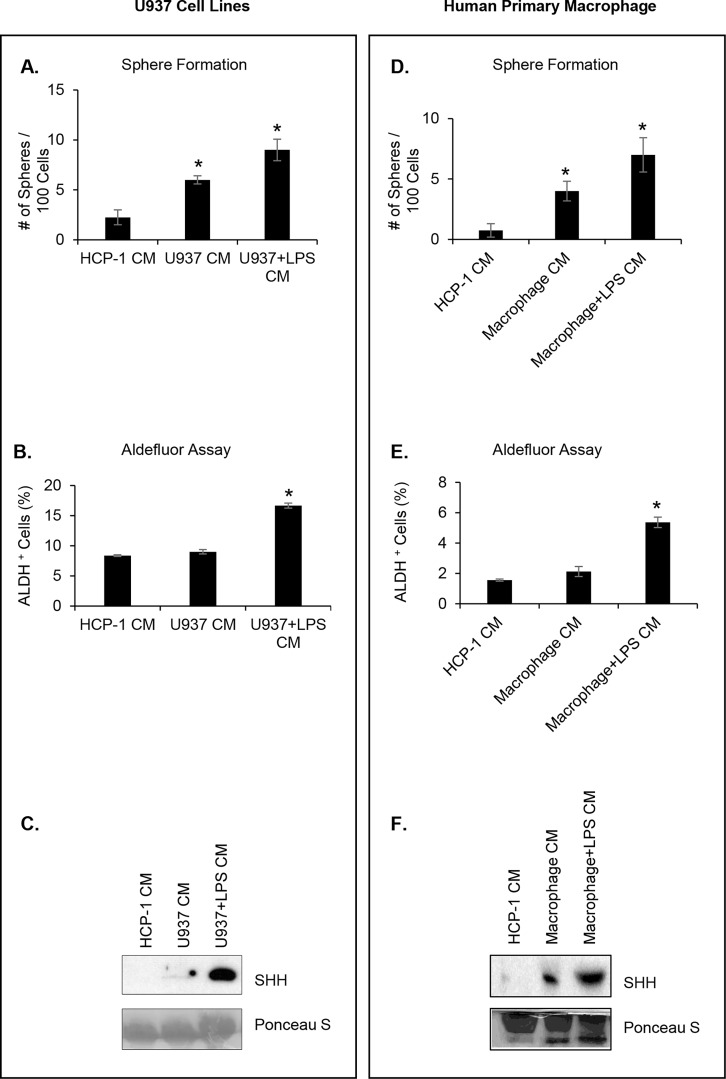
There is conflicting data on the role of macrophages in colorectal cancer (CRC); some studies have shown that macrophages can exert an anti-tumor effect whereas others show that macrophages are tumor promoting. We sought to determine the role of conditioned medium (CM) from macrophages, in particular classically activated macrophages, on the development of the CSC phenotype in CRC cells, which is believed to mediate tumor growth and chemoresistance.
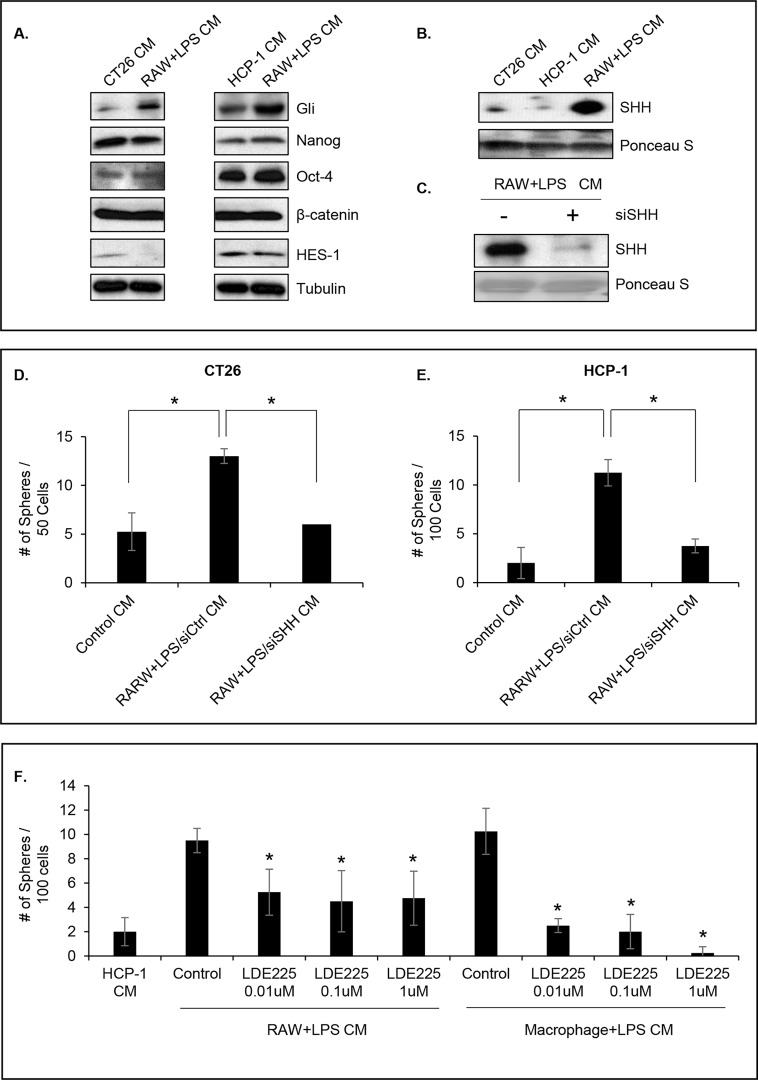
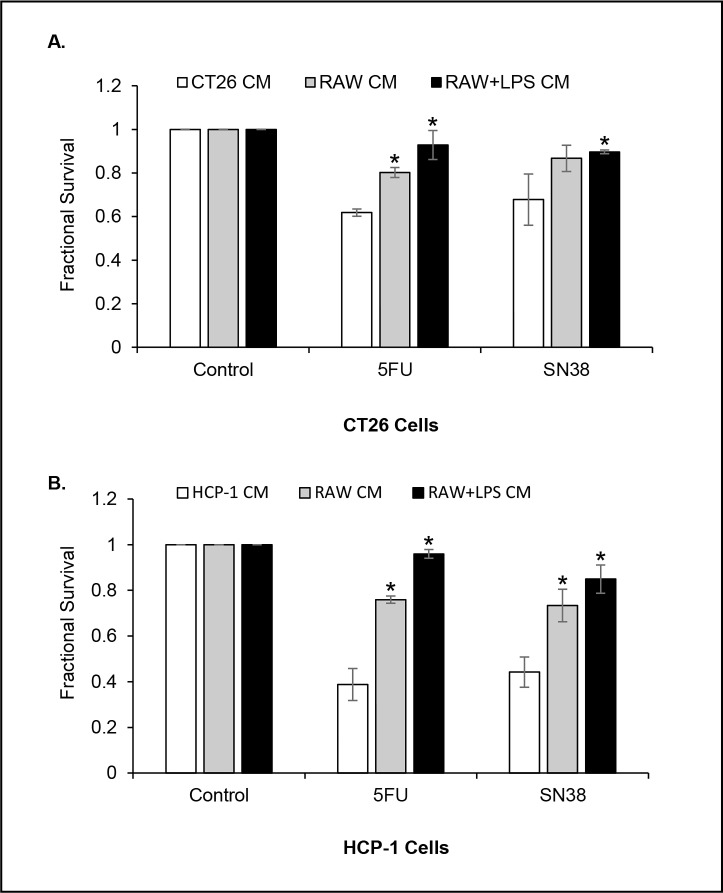
Murine (CT26) and human (HCP-1) CRC cell lines were treated with CM from lipopolysaccharide (LPS)-activated murine macrophages. The CSC population was assessed using the sphere-forming assay and aldehyde dehydrogenase assay. Chemoresistance studies were performed using the MTT assay. CSC transcription factors and SHH protein were analyzed by Western blotting.
The results showed that LPS-activated macrophage CM induced the CSC phenotype in CRC cells. Further studies showed that the CSC phenotype was mediated by the sonic hedgehog (SHH)-Gli signaling pathway, which is known to drive self-renewal; these effects were blocked by depletion of SHH in macrophage CM. In addition, LPS-activated macrophage CM enhanced chemoresistance.
LPS-activated macrophages play an active role in promoting the CSC phenotype through activation of the SHH-Gli signaling pathway in CRC cells.
关于巨噬细胞在结直肠癌(CRC)中的作用存在相互矛盾的数据;一些研究表明巨噬细胞可发挥抗肿瘤作用,而其他研究则表明巨噬细胞具有促肿瘤作用。我们试图确定巨噬细胞条件培养基(CM),特别是经典激活的巨噬细胞条件培养基,对CRC细胞中CSC表型发展的作用,据信该表型介导肿瘤生长和化疗耐药性。
用脂多糖(LPS)激活的小鼠巨噬细胞的CM处理小鼠(CT26)和人(HCP-1)CRC细胞系。使用成球试验和醛脱氢酶试验评估CSC群体。使用MTT试验进行化疗耐药性研究。通过蛋白质印迹分析CSC转录因子和SHH蛋白。
结果表明,LPS激活的巨噬细胞CM诱导CRC细胞中的CSC表型。进一步研究表明,CSC表型由已知驱动自我更新的音猬因子(SHH)-Gli信号通路介导;巨噬细胞CM中SHH的缺失可阻断这些作用。此外,LPS激活的巨噬细胞CM增强了化疗耐药性。
LPS激活的巨噬细胞通过激活CRC细胞中的SHH-Gli信号通路在促进CSC表型方面发挥积极作用。