Balamurali G S, Nicholls Elizabeth, Somanathan Hema, Hempel de Ibarra Natalie
School of Biology, Indian Institute of Science Education and Research, Thiruvananthapuram, India.
Centre for Research in Animal Behaviour, Department of Psychology, University of Exeter, Exeter, EX4 4QG, UK.
Naturwissenschaften. 2018 Jan 2;105(1-2):8. doi: 10.1007/s00114-017-1531-z.
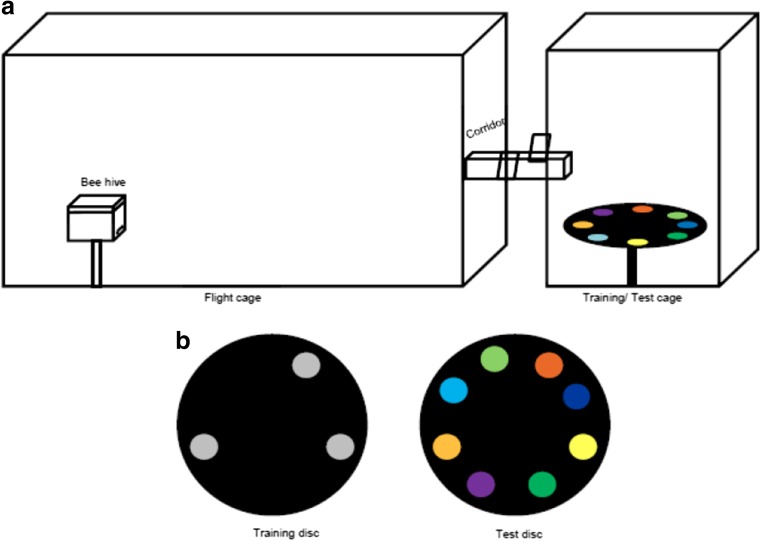
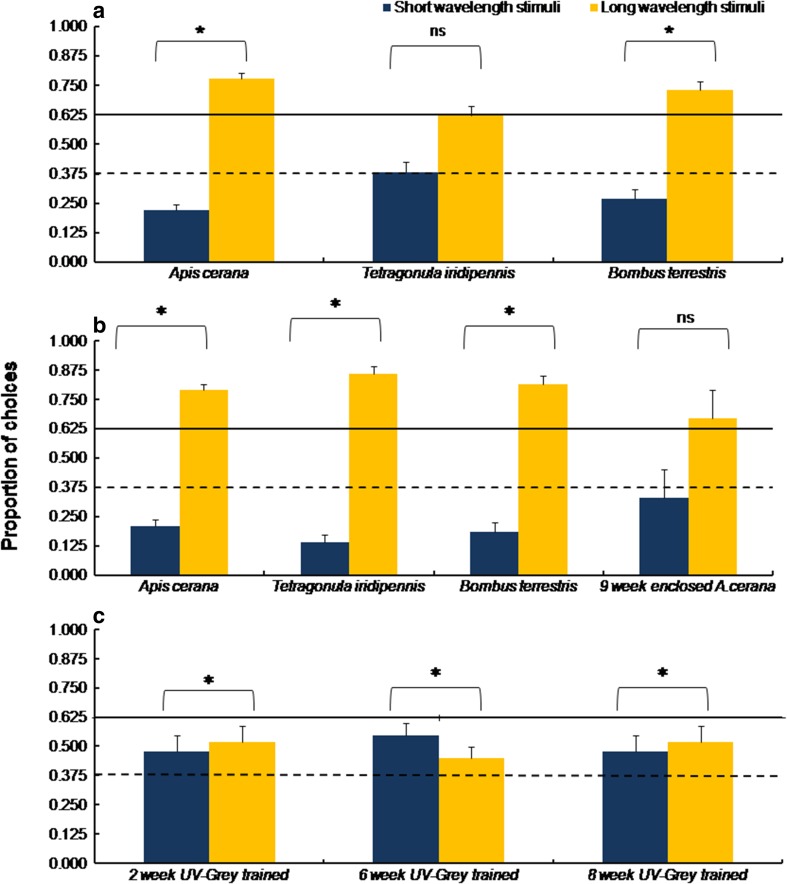
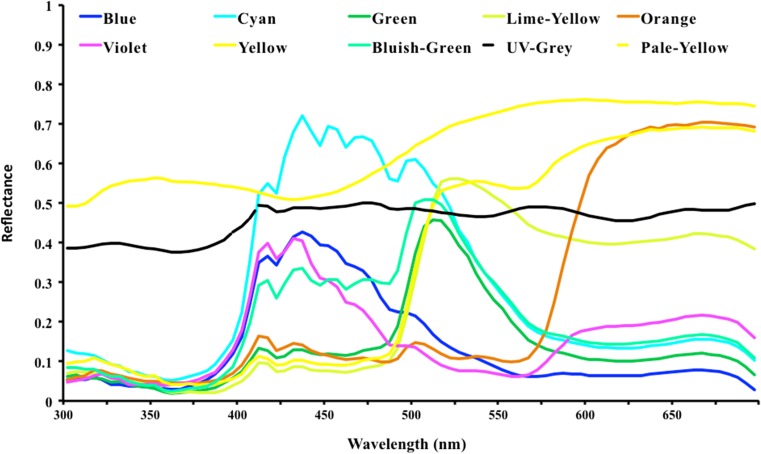
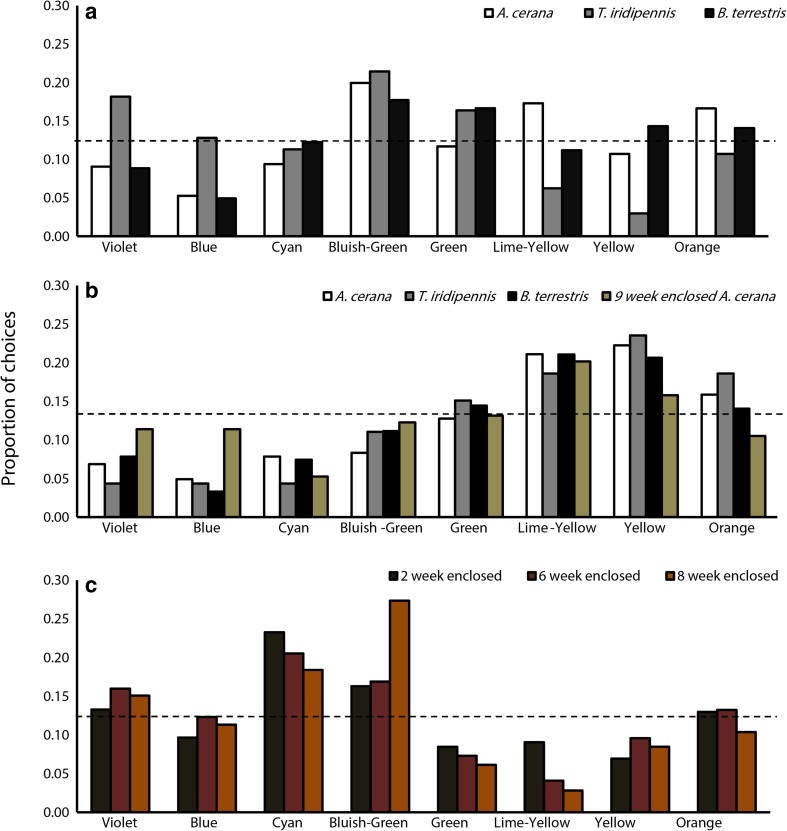
The spontaneous occurrence of colour preferences without learning has been demonstrated in several insect species; however, the underlying mechanisms are still not understood. Here, we use a comparative approach to investigate spontaneous and learned colour preferences in foraging bees of two tropical and one temperate species. We hypothesised that tropical bees utilise different sets of plants and therefore might differ in their spontaneous colour preferences. We tested colour-naive bees and foragers from colonies that had been enclosed in large flight cages for a long time. Bees were shortly trained with triplets of neutral, UV-grey stimuli placed randomly at eight locations on a black training disk to induce foraging motivation. During unrewarded tests, the bees' responses to eight colours were video-recorded. Bees explored all colours and displayed an overall preference for colours dominated by long or short wavelengths, rather than a single colour stimulus. Naive Apis cerana and Bombus terrestris showed similar choices. Both inspected long-wavelength stimuli more than short-wavelength stimuli, whilst responses of the tropical stingless bee Tetragonula iridipennis differed, suggesting that resource partitioning could be a determinant of spontaneous colour preferences. Reward on an unsaturated yellow colour shifted the bees' preference curves as predicted, which is in line with previous findings that brief colour experience overrides the expression of spontaneous preferences. We conclude that rather than determining foraging behaviour in inflexible ways, spontaneous colour preferences vary depending on experimental settings and reflect potential biases in mechanisms of learning and decision-making in pollinating insects.
在几种昆虫物种中已证明,颜色偏好可在无学习的情况下自发出现;然而,其潜在机制仍不清楚。在此,我们采用比较方法来研究两种热带蜜蜂和一种温带蜜蜂在觅食时的自发颜色偏好和习得颜色偏好。我们假设热带蜜蜂利用不同的植物种类,因此它们的自发颜色偏好可能存在差异。我们测试了来自长期封闭在大型飞行笼中的蜂群的未接触过颜色的蜜蜂和觅食蜜蜂。用放置在黑色训练盘上八个位置的中性紫外灰色刺激三元组对蜜蜂进行短暂训练,以激发其觅食动机。在无奖励测试期间,对蜜蜂对八种颜色的反应进行了视频记录。蜜蜂探索了所有颜色,并对长波长或短波长主导的颜色表现出总体偏好,而不是单一颜色刺激。未接触过颜色的中华蜜蜂和熊蜂表现出相似的选择。两者对长波长刺激的检查都多于短波长刺激,而热带无刺蜂虹彩无刺蜂的反应则不同,这表明资源分配可能是自发颜色偏好的一个决定因素。如预期的那样,不饱和黄色上的奖励改变了蜜蜂的偏好曲线,这与之前的研究结果一致,即短暂的颜色体验会凌驾于自发偏好的表达之上。我们得出结论,自发颜色偏好并非以僵化的方式决定觅食行为,而是会因实验设置而有所不同,并反映了传粉昆虫学习和决策机制中的潜在偏差。