Tjin Caroline Chandra, Otley Kate D, Baguley Tyler D, Kurup Pradeep, Xu Jian, Nairn Angus C, Lombroso Paul J, Ellman Jonathan A
Department of Chemistry, Yale University, New Haven, Connecticut 06520, United States.
The Child Study Center, Yale University School of Medicine, New Haven, Connecticut 06520, United States.
ACS Cent Sci. 2017 Dec 27;3(12):1322-1328. doi: 10.1021/acscentsci.7b00486. Epub 2017 Dec 6.
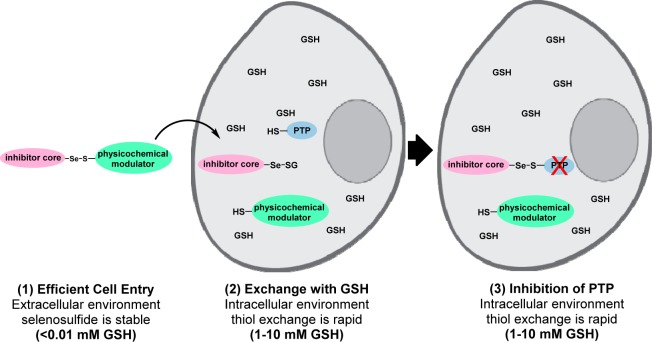
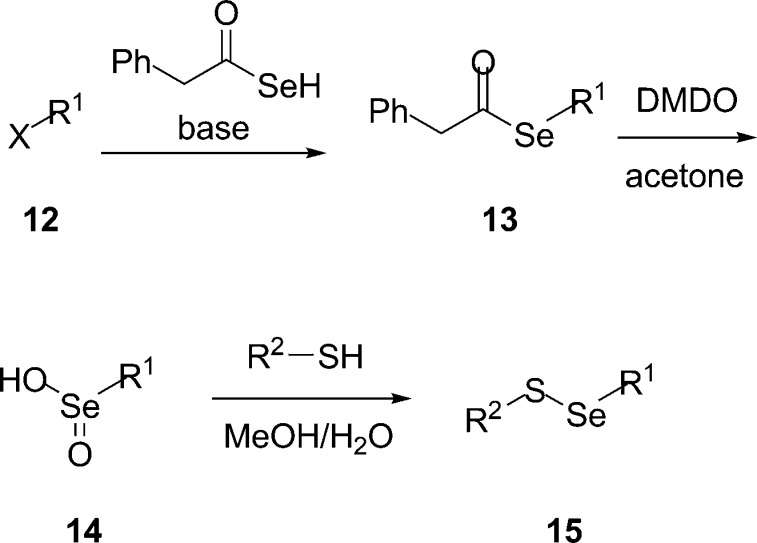
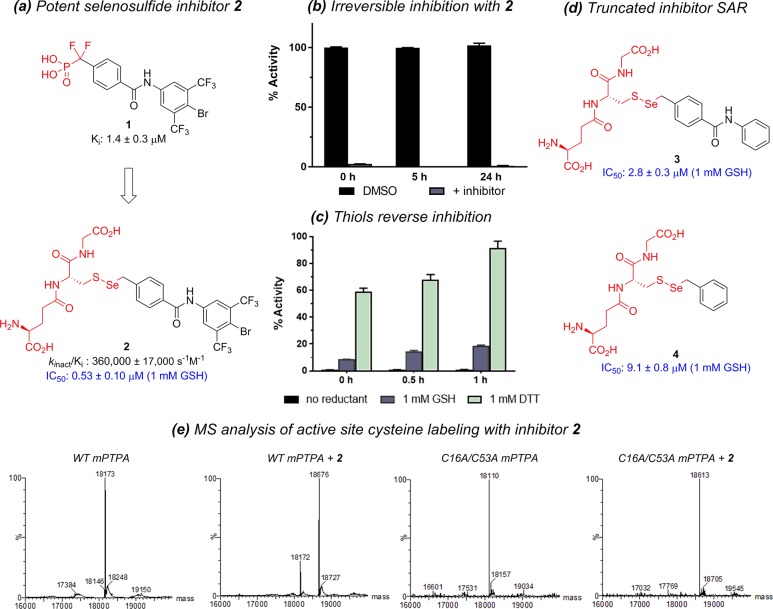
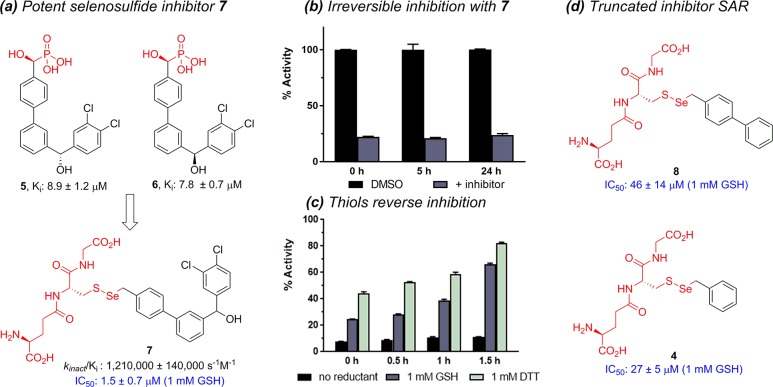
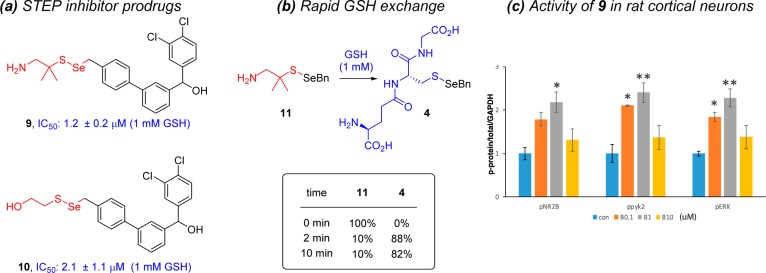
Dysregulation of protein tyrosine phosphorylation has been implicated in a number of human diseases, including cancer, diabetes, and neurodegenerative diseases. As a result of their essential role in regulating protein tyrosine phosphorylation levels, protein tyrosine phosphatases (PTPs) have emerged as important yet challenging therapeutic targets. Here we report on the development and application of a glutathione-responsive motif to facilitate the efficient intracellular delivery of a novel class of selenosulfide phosphatase inhibitors for the selective active site directed inhibition of the targeted PTP by selenosulfide exchange with the active site cysteine. The strategy leverages the large difference in extracellular and intracellular glutathione levels to deliver selenosulfide phosphatase inhibitors to cells. As an initial exploration of the prodrug platform and the corresponding selenosulfide covalent inhibitor class, potent and selective inhibitors were developed for two therapeutically relevant PTP targets: the virulence factor PTPA and the CNS-specific tyrosine phosphatase, striatal-enriched protein tyrosine phosphatase (STEP). The lead selenosulfide inhibitors enable potent and selective inhibition of their respective targets over a panel of human PTPs and a representative cysteine protease. Kinetic parameters of the inhibitors were characterized, including reversibility of inhibition and rapid rate of GSH exchange at intracellular GSH concentrations. Additionally, active site covalent inhibitor-labeling with an PTPA inhibitor was rigorously confirmed by mass spectrometry, and cellular activity was demonstrated with a STEP prodrug inhibitor in cortical neurons.
蛋白质酪氨酸磷酸化失调与多种人类疾病有关,包括癌症、糖尿病和神经退行性疾病。由于蛋白质酪氨酸磷酸酶(PTP)在调节蛋白质酪氨酸磷酸化水平中起关键作用,它们已成为重要但具有挑战性的治疗靶点。在此,我们报告了一种谷胱甘肽响应基序的开发和应用,以促进一类新型硒代硫化物磷酸酶抑制剂的高效细胞内递送,通过与活性位点半胱氨酸进行硒代硫化物交换,对靶向PTP进行选择性活性位点定向抑制。该策略利用细胞外和细胞内谷胱甘肽水平的巨大差异将硒代硫化物磷酸酶抑制剂递送至细胞。作为对前药平台和相应硒代硫化物共价抑制剂类别的初步探索,针对两个与治疗相关的PTP靶点开发了强效且选择性的抑制剂:毒力因子PTPA和中枢神经系统特异性酪氨酸磷酸酶、纹状体富集蛋白酪氨酸磷酸酶(STEP)。先导硒代硫化物抑制剂能够在一组人类PTP和一种代表性半胱氨酸蛋白酶中对其各自的靶点进行强效且选择性的抑制。对抑制剂的动力学参数进行了表征,包括抑制的可逆性以及在细胞内谷胱甘肽浓度下谷胱甘肽交换的快速速率。此外,通过质谱严格证实了用PTPA抑制剂进行的活性位点共价抑制剂标记,并在皮质神经元中用STEP前药抑制剂证明了细胞活性。